
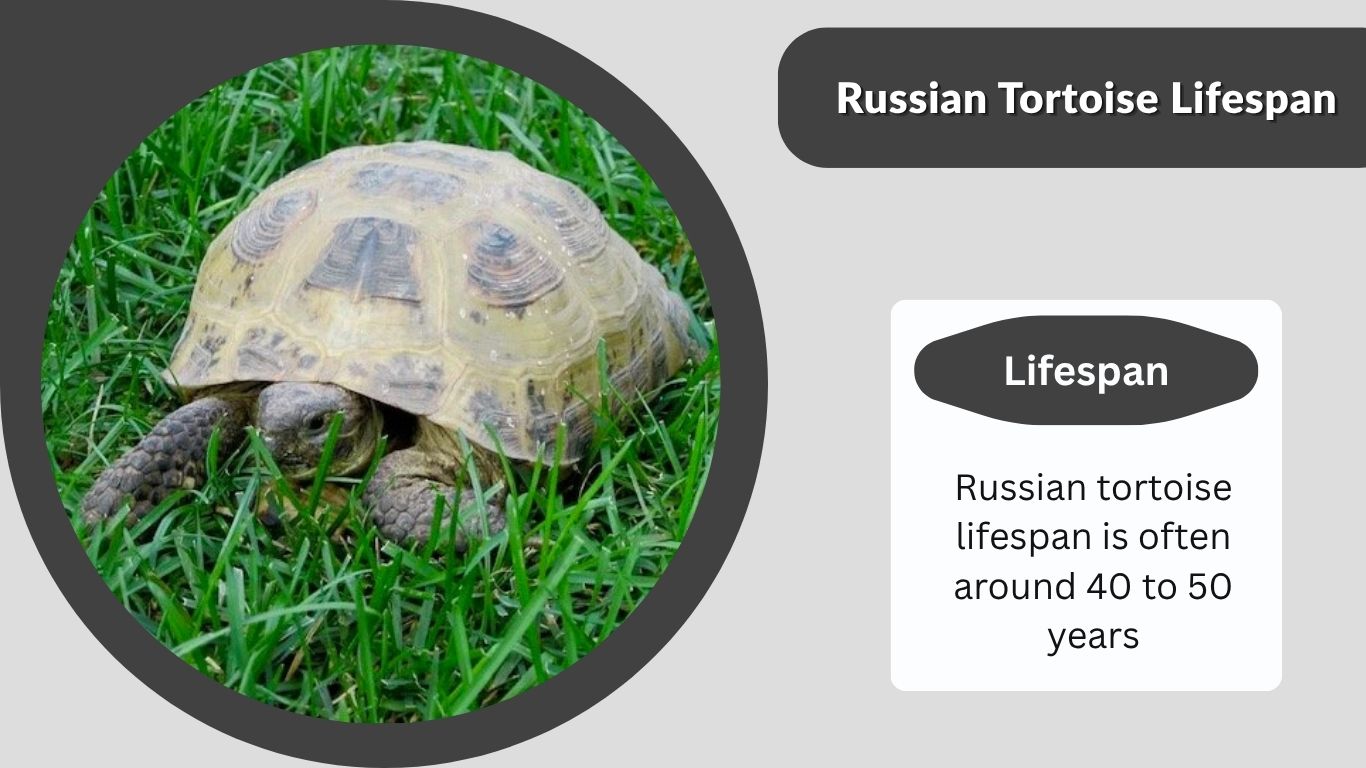
Russian tortoises are small, hardy pets, but their lifespan is anything but short. With proper care, a Russian tortoise can live for several decades, often becoming a lifelong companion. Their exact lifespan depends on genetics, diet, enclosure quality, UVB lighting, temperature, hydration, and veterinary care. Understanding what affects longevity helps owners create a healthier, safer life for these active land tortoises.
How Long Do Russian Tortoises Live?
The average Russian tortoise lifespan is often around 40 to 50 years in captivity when the animal receives good care. Some may live longer, especially with excellent diet, safe housing, proper lighting, and regular health monitoring. In poor conditions, however, their lifespan can be much shorter.
Russian tortoises are also known as Horsfield tortoises. Some people search for “Russian box tortoise lifespan,” but Russian tortoises are not true box turtles. They are land tortoises with a compact body, strong legs, and a naturally long life expectancy.
Russian Tortoise Lifespan in Captivity
The lifespan of a Russian tortoise in captivity can be impressive because pet tortoises are protected from many wild dangers. They do not have to face predators, food shortages, harsh weather, or injuries from rough terrain. However, captivity only helps when the owner provides the right care.
A pet Russian tortoise may live 40 years or more if its enclosure supports natural behaviors. It needs space to walk, dig, bask, hide, and regulate body temperature. A small tank with poor lighting, soft food, and little exercise can cause long-term health problems.
Russian Tortoise Lifespan in the Wild
Wild Russian tortoises live in dry, rugged regions of Central Asia. Their environment can be harsh, with extreme temperatures and seasonal food availability. They are naturally adapted to survive tough conditions, but wild life also brings risks.
Predators, disease, injury, drought, and habitat disruption can reduce lifespan. A wild Russian tortoise may have strong survival instincts, but it does not always receive the safety and steady nutrition that a well-kept pet can have.
Average Lifespan of a Russian Tortoise
The average lifespan of a Russian tortoise depends on how the tortoise is raised and maintained. A healthy captive tortoise may live for several decades, while one kept in poor conditions may develop preventable disease early in life.
| Situation | Expected Lifespan Range | Main Factors |
| Poor captive care | Under 20 years | Bad diet, weak UVB, wrong temperatures, dehydration |
| Average pet care | 30–40 years | Basic diet and housing, but some care gaps |
| Good captive care | 40–50+ years | Proper enclosure, diet, UVB, hydration, vet care |
| Excellent long-term care | 50+ years | Consistent husbandry, outdoor access, prevention-focused care |
These ranges are not guarantees. A tortoise’s lifespan can vary based on genetics, early-life health, past neglect, and whether it was captive-bred or wild-caught.
What Affects Russian Tortoise Lifespan?
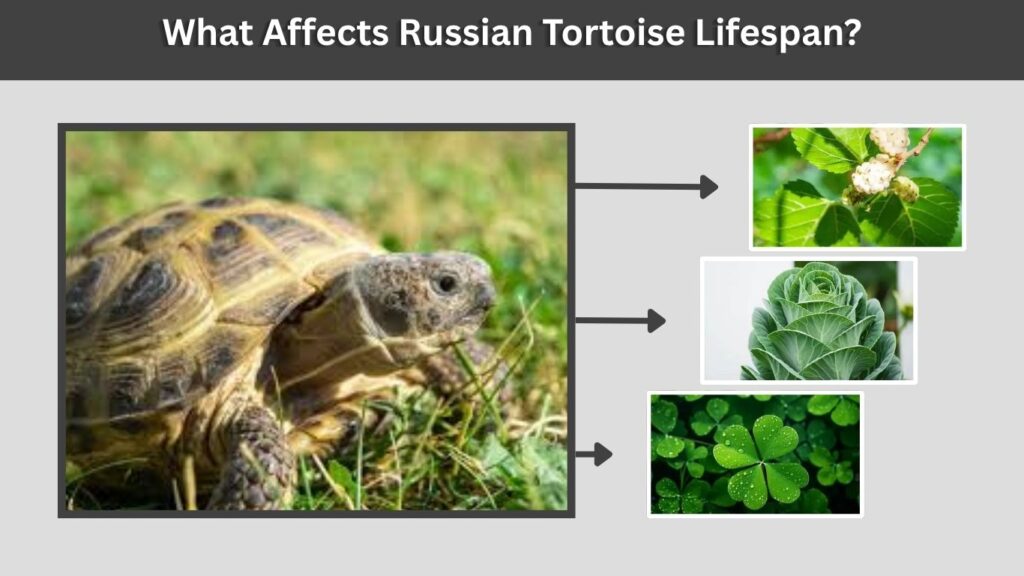
A Russian tortoise’s long-term health is shaped by daily care. Many lifespan problems do not happen overnight. They build slowly from years of poor food, weak lighting, incorrect temperatures, or lack of space.
Diet and Nutrition
Diet is one of the biggest lifespan factors. Russian tortoises are herbivores that need a high-fiber, low-sugar, plant-based diet. Their meals should be built around safe weeds, leafy greens, flowers, and fibrous plants.
Good food choices include:
- Dandelion greens and flowers
- Plantain weed
- Clover
- Endive
- Escarole
- Turnip greens
- Mustard greens
- Collard greens
- Hibiscus leaves and flowers
- Grape leaves
- Mulberry leaves
- Cactus pad in small amounts
Fruit should not be a regular part of the diet. Russian tortoises are not fruit-eating tropical species. Too much fruit can upset digestion and encourage picky eating. High-protein foods such as dog food, cat food, meat, eggs, and dairy should also be avoided.
A poor diet can contribute to obesity, shell issues, digestive trouble, and metabolic bone disease. A varied, calcium-rich diet supports a stronger shell, healthier bones, and better overall lifespan.
UVB Lighting and Calcium
Russian tortoises need UVB light to use calcium properly. Without UVB exposure, the body cannot maintain healthy bones and shell growth. This is especially important for indoor tortoises.
Owners should use a high-quality reptile UVB lamp and replace it on schedule, even if the bulb still produces visible light. UVB output weakens over time. Natural sunlight in a secure outdoor enclosure can also be very helpful, but glass and plastic block UVB rays.
Calcium support also matters. Many owners provide a cuttlebone in the enclosure and lightly dust food with calcium powder as needed. Calcium, UVB, and diet must work together.
Temperature and Basking Area
A Russian tortoise needs a temperature gradient. This means one warm basking area and one cooler side of the enclosure. The tortoise moves between these zones to control body temperature.
If the enclosure is too cold, digestion slows and the immune system may weaken. If it is too hot with no cooler escape area, the tortoise may become stressed or dehydrated. Incorrect temperatures over time can reduce health and lifespan.
Space and Exercise
Russian tortoises are active animals. They walk, dig, climb, explore, and search for food. A cramped enclosure can lead to stress, obesity, weak muscles, and boredom.
A long-lived pet Russian tortoise needs room to move. Outdoor pens are excellent when the climate is suitable and the enclosure is secure. Indoor enclosures should be much larger than a small glass tank. These tortoises also dig, so the enclosure should prevent escape.
Hydration and Soaking
Russian tortoises come from dry habitats, but they still need water. A shallow water dish should be available, and it should be cleaned regularly. Young tortoises and newly acquired tortoises may benefit from routine soaking.
Dehydration can contribute to digestive problems, kidney stress, and general weakness. A hydrated tortoise is more likely to eat, pass waste normally, and stay active.
Signs of a Healthy Long-Lived Russian Tortoise
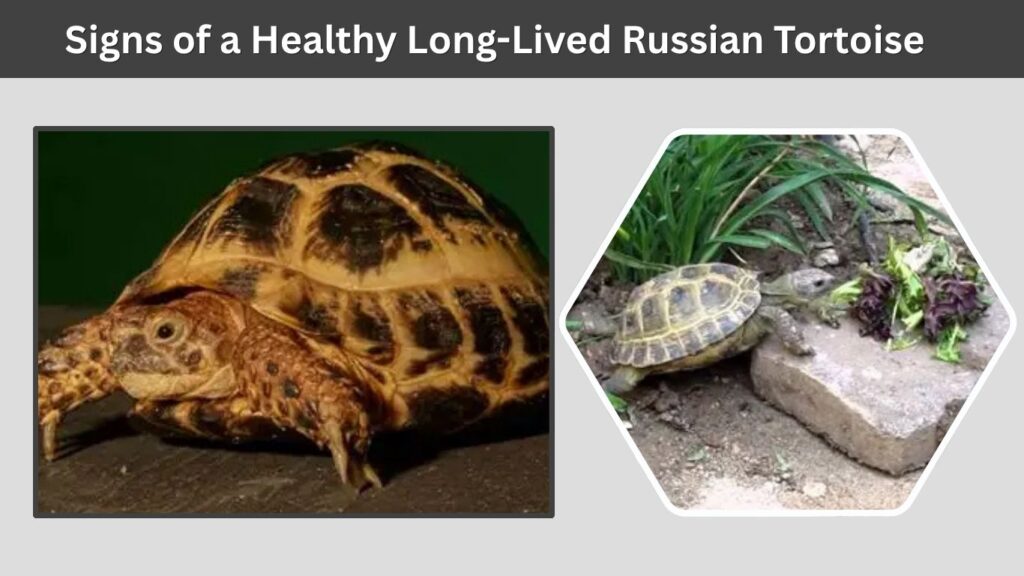
A healthy Russian tortoise is usually alert, active, and interested in food. It should have clear eyes, a firm shell, steady movement, and normal droppings. Its weight should remain stable over time.
Healthy signs include:
- Strong appetite during active periods
- Clear, bright eyes
- Smooth breathing with no bubbles
- Firm shell and beak
- Regular walking and digging
- Normal stool and urates
- Stable weight
- Good response to basking and light
Tortoises can hide illness well. By the time symptoms look obvious, the problem may already be advanced. Regular observation is one of the best ways to protect lifespan.
Common Problems That Shorten Lifespan
Many Russian tortoise health issues are preventable. They often come from incorrect husbandry rather than bad luck. Owners who understand the risks can avoid the most common mistakes.
Poor Diet
A diet based on lettuce, fruit, pellets, or random vegetables can cause nutritional imbalance. Russian tortoises need rough, fibrous plant material, not soft, sugary foods. Iceberg lettuce is especially poor as a main food because it offers little nutrition.
Weak UVB or No UVB
Without proper UVB, a tortoise may develop weak bones, shell deformities, and metabolic bone disease. Indoor tortoises need reliable UVB lighting and proper basking temperatures.
Damp or Dirty Housing
Russian tortoises do not thrive in constantly damp, dirty enclosures. Poor hygiene may increase the risk of respiratory infections, shell problems, parasites, and stress. The enclosure should be cleaned regularly and kept dry enough for the species.
Overfeeding
Overfeeding can cause fast growth and weight problems. A Russian tortoise should grow slowly and steadily. Rapid growth, especially with poor calcium or UVB, may lead to shell problems.
No Veterinary Care
A reptile veterinarian can catch issues that owners may miss. Parasites, respiratory infections, beak overgrowth, shell damage, and nutritional problems should be handled early. Preventive care can make a major difference in lifespan.
Male vs Female Russian Tortoise Lifespan
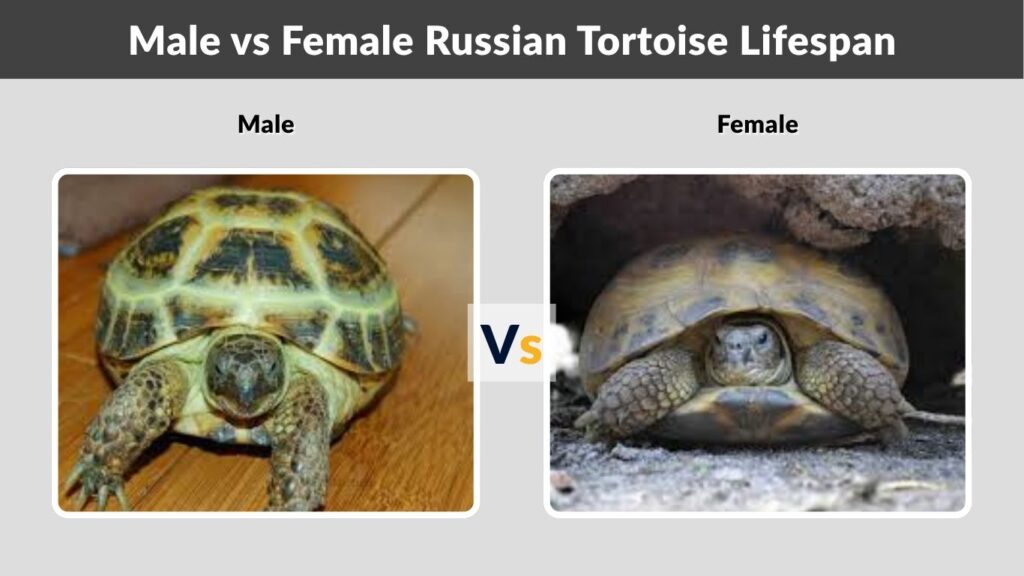
Male and female Russian tortoises can both live for decades. There is no simple rule that one sex always lives much longer than the other. Care quality matters far more than sex.
Females may face extra risks related to egg production, especially if they do not have proper nesting areas or calcium support. Egg binding can become serious. Males may become stressed or aggressive if housed with other males or kept in crowded conditions.
For both sexes, the best lifespan support includes a proper enclosure, good diet, hydration, UVB lighting, and low-stress handling.
Russian Tortoise Lifespan and Size
Russian tortoises are small compared with many other pet tortoises. Adults are often around 6 to 10 inches long, with females usually larger than males. Their small size can make people think they are easy, short-term pets, but their lifespan says otherwise.
A Russian tortoise may remain with a family for decades. This means owners should think beyond the first enclosure. Long-term planning is important, including future housing, veterinary access, and care arrangements if the owner moves or can no longer keep the tortoise.
How to Help a Russian Tortoise Live Longer
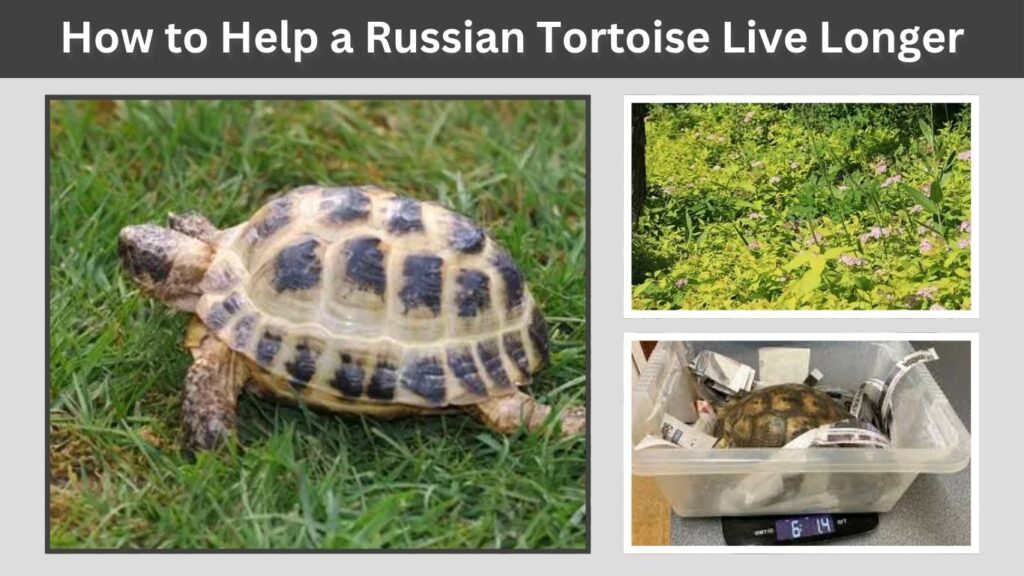
A long lifespan starts with consistent care. Russian tortoises do best when their daily routine matches their natural needs.
To support a longer life:
- Feed a varied diet of weeds, greens, and flowers.
- Avoid fruit, animal protein, and processed foods.
- Provide strong UVB lighting indoors.
- Offer a warm basking area and cooler zone.
- Give the tortoise plenty of space to walk and dig.
- Keep a shallow water dish available.
- Maintain clean, dry, secure housing.
- Weigh the tortoise regularly.
- Schedule checkups with a reptile veterinarian.
- Avoid frequent handling that causes stress.
Outdoor time can be beneficial when conditions are safe. A secure outdoor enclosure should protect against predators, escape, pesticides, extreme temperatures, and toxic plants.
Should You Get a Russian Tortoise as a Long-Term Pet?
A Russian tortoise can be a rewarding pet, but it is a serious commitment. Its lifespan may be longer than many dogs, cats, rabbits, or birds. Before getting one, owners should ask whether they can provide proper care for decades.
These tortoises are best for people who enjoy observing natural behaviors rather than handling a pet constantly. Russian tortoises usually prefer walking, grazing, basking, and digging over being picked up. They can become familiar with their owner, but they are not cuddly animals.
Anyone considering a pet Russian tortoise should also look for a healthy captive-bred animal when possible. Wild-caught tortoises may arrive stressed, dehydrated, or carrying parasites. Starting with a healthy tortoise improves the chance of a long life.
FAQs
What is the lifespan of a Russian tortoise?
A Russian tortoise can often live around 40 to 50 years in captivity with proper care. Some may live longer under excellent conditions. Lifespan depends on diet, UVB lighting, temperature, enclosure size, hydration, genetics, and access to reptile veterinary care.
What is the average lifespan of a Russian tortoise in captivity?
The average lifespan of a Russian tortoise in captivity is commonly several decades, often around 40 years or more with good care. Captive tortoises may live longer than wild ones when they are protected from predators, injury, food shortages, and harsh weather.
Do male Russian tortoises live longer than females?
Male Russian tortoises do not always live longer than females. Both sexes can live for decades with proper care. Females may need extra attention during egg-laying years, while males may need careful housing to prevent stress or aggression with other males.
What shortens a Russian tortoise’s lifespan?
Poor diet, lack of UVB lighting, wrong temperatures, dehydration, small enclosures, dirty housing, overfeeding, and untreated illness can shorten a Russian tortoise’s lifespan. Many serious problems develop slowly, so consistent care and early veterinary help are important for long-term health.
How can I help my Russian tortoise live longer?
You can help your Russian tortoise live longer by feeding safe weeds and leafy greens, providing UVB light, offering proper basking temperatures, keeping the enclosure clean, giving enough space, and watching for health changes. Regular reptile vet checkups also help prevent small issues from becoming serious.