
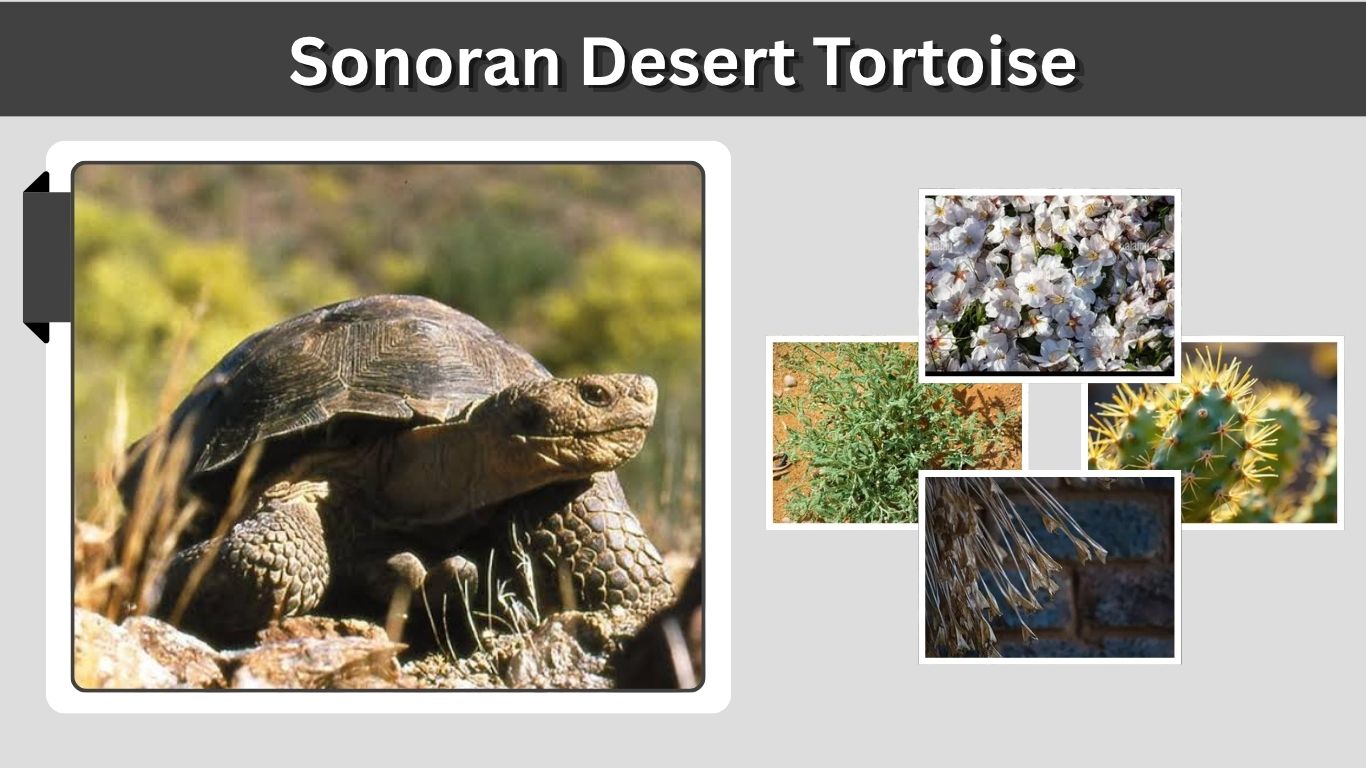
The Sonoran desert tortoise is a rugged, slow-moving reptile perfectly adapted to Arizona’s rocky desert landscapes. Its high-domed shell, powerful legs, and ability to conserve water help it survive intense heat, extended drought, and unpredictable rainfall. Although it is not federally listed as endangered, it remains protected in Arizona and faces threats from habitat loss, wildfire, roads, disease, and illegal collection. Understanding its natural behavior is essential for protecting wild tortoises and responsibly caring for legally adopted animals.
What Is a Sonoran Desert Tortoise?
The Sonoran desert tortoise, scientifically named Gopherus morafkai, is a terrestrial, plant-eating tortoise native to the Sonoran Desert. Its range includes western, central, and southern Arizona and northwestern Sonora, Mexico. It generally occurs south and east of the Colorado River, which helps separate its range from that of the Mojave desert tortoise.
The Sonoran and Mojave desert tortoises were once treated as populations of the same species. Scientific research eventually supported recognizing the Sonoran tortoise as Gopherus morafkai, while the Mojave species retained the name Gopherus agassizii.
| Classification | Information |
| Common name | Sonoran desert tortoise |
| Scientific name | Gopherus morafkai |
| Family | Testudinidae |
| Diet | Herbivore |
| Native range | Arizona and northwestern Mexico |
| Federal ESA status | Not federally listed |
| Arizona status | Protected native wildlife |
Sonoran Desert Tortoise Identification
A Sonoran desert tortoise has a compact body, thick legs, and a rounded shell that blends well with desert rocks and soil. Its forelimbs are covered with heavy scales and equipped with claws used for digging, climbing, and moving across rugged ground.
Key Identification Features
- Brown, grayish, tan, or olive high-domed shell
- Shell commonly measuring about 9 to 15 inches
- Thick, elephant-like hind legs
- Flattened front legs covered with large scales
- Short tail and toothless, beak-shaped mouth
- Concentric growth lines on the shell plates
- Strong claws suited to rocky desert terrain
- Yellowish, brown, or gray skin
Shell growth lines should not be used to determine an individual’s exact age. Weather, nutrition, injuries, and periods of slow growth can all affect their appearance.
Male vs. Female Sonoran Desert Tortoise
Adult males usually have longer tails, extended throat shields, and a noticeably concave plastron—the lower portion of the shell. Females generally have shorter tails and flatter undersides. Males may also become more territorial and ram one another during the breeding season.
How Big Do Sonoran Desert Tortoises Get?
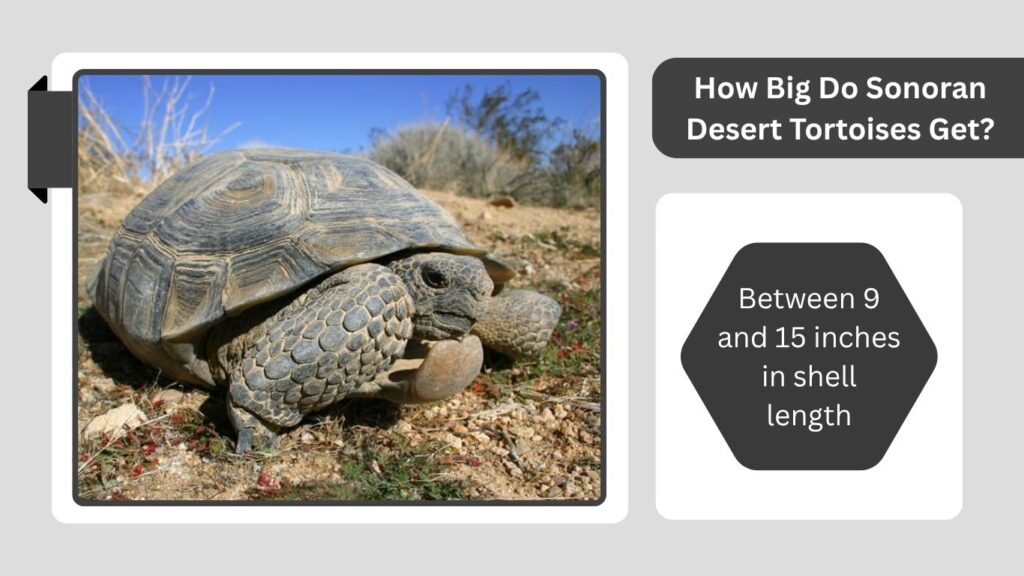
Adult Sonoran desert tortoises commonly grow between 9 and 15 inches in shell length, although many measure closer to 14 inches or less. Hatchlings are only about 2 to 2½ inches long when they emerge. Adult size depends on age, sex, health, nutrition, and environmental conditions.
Their sturdy appearance can make them seem extremely heavy, but most adults remain relatively manageable in weight. Males often grow larger than females and develop more pronounced features associated with mating and territorial behavior.
Sonoran Desert Tortoise Habitat and Range
Sonoran tortoises are closely associated with rocky hillsides, mountain foothills, canyons, bajadas, desert washes, and slopes containing natural cavities. They also occur in some desert grasslands and tropical deciduous forest habitats in Mexico.
In Arizona, they are especially associated with areas where rocks, shrubs, caves, and overhangs provide protection from the sun. Their habitat frequently includes palo verde, mesquite, creosote bush, brittlebush, ocotillo, prickly pear cactus, and seasonal wildflowers.
Burrows and Shelters
Sonoran desert tortoises use burrows, rock crevices, overhangs, shallow depressions, and caves to regulate their body temperature. Because they are ectothermic, they depend on their surroundings rather than internally producing enough heat to maintain a constant body temperature.
Unlike Mojave tortoises, which often dig long burrows in relatively open soil, Sonoran tortoises frequently use shelters among rocky slopes and canyon walls. These retreats protect them from summer heat, winter cold, predators, and dehydration.
What Do Sonoran Desert Tortoises Eat?
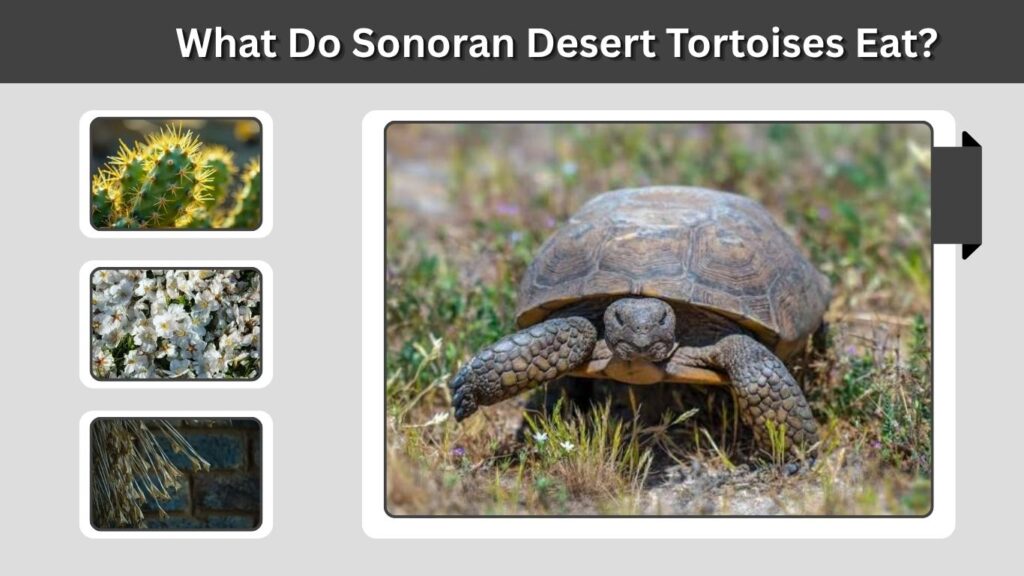
The Sonoran desert tortoise is an herbivore that consumes a wide variety of seasonal vegetation. Its diet changes as different plants become available during spring growth and summer monsoon rains.
Common natural foods include:
- Native grasses
- Desert wildflowers
- Leaves and tender shoots
- Annual herbs
- Cactus flowers and fruit
- Prickly pear pads
- Fallen blossoms
- Dry plant material
- Small amounts of mineral-rich soil or bone
Fresh native plants supply both nutrition and moisture. Tortoises can also eat dry forage when green vegetation is scarce, but their most active feeding periods often follow rainfall.
Captive tortoises should not live mainly on iceberg lettuce, fruit, commercial pellets, or high-protein foods. A legally adopted animal needs a diverse, high-fiber diet based largely on grasses, weeds, flowers, and approved tortoise-safe plants.
Sonoran Desert Tortoise Adaptations
Life in the Sonoran Desert requires surviving extreme temperatures and long periods with little surface water. The tortoise combines physical adaptations with seasonal changes in behavior.
- Water storage: Its bladder can hold water for use during dry periods.
- Strong limbs: Powerful legs help it climb rocky slopes and excavate shelters.
- High-domed shell: The shell provides protection from predators and injuries.
- Slow metabolism: Low energy use allows survival when food is limited.
- Seasonal inactivity: It remains sheltered during extreme heat, cold, or drought.
- Moisture conservation: Its body tolerates high urea levels, reducing the need to urinate.
- Monsoon activity: Many tortoises become particularly active during summer rains.
A frightened tortoise may empty its bladder when handled. Losing this stored water can leave a wild animal dangerously dehydrated, which is one reason visitors should avoid touching or picking it up.
Sonoran Desert Tortoise Lifespan
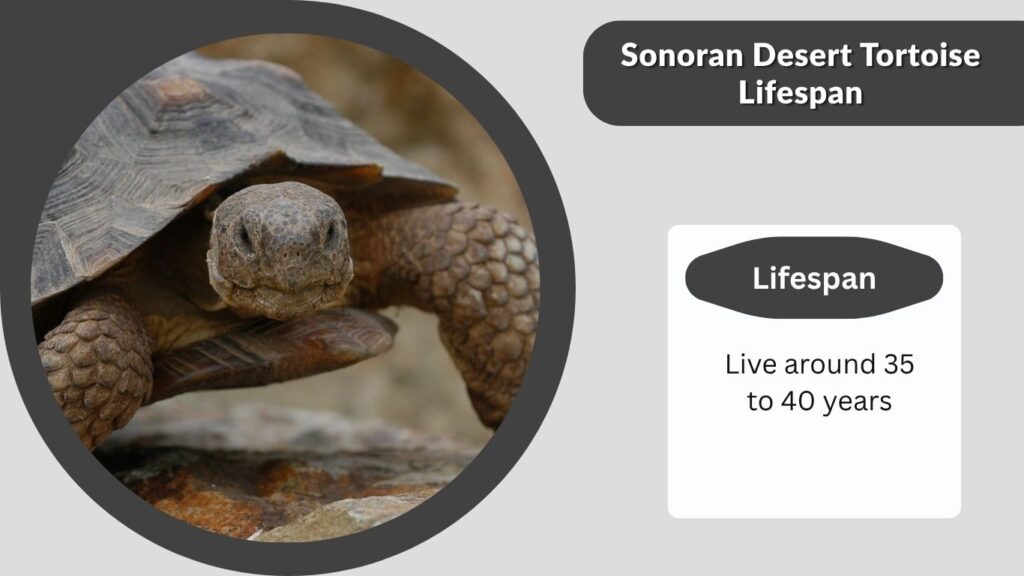
Wild Sonoran desert tortoises commonly live around 35 to 40 years, although some survive considerably longer. Broader estimates suggest desert tortoises may live 50 years or more when they avoid disease, vehicles, predators, habitat destruction, and prolonged nutritional stress.
They grow slowly and require many years to reach reproductive maturity. Their low reproductive rate means the survival of adults is especially important. Losing mature tortoises faster than young animals reach adulthood can cause long-term population declines.
Eggs and Baby Tortoises
Females usually lay eggs around the beginning of Arizona’s summer rainy season. A typical nest may contain 2 to 14 eggs, depending partly on the female’s age and body size. Females can retain viable sperm and may produce fertile eggs years after mating.
Baby Sonoran desert tortoises have delicate shells and face predation from ravens, coyotes, foxes, badgers, Gila monsters, roadrunners, and other animals. Domestic dogs can also severely injure both juvenile and adult tortoises.
Is the Sonoran Desert Tortoise Endangered?
The Sonoran desert tortoise is not currently listed as threatened or endangered under the federal Endangered Species Act. A 2022 U.S. A Fish and Wildlife Service review concluded that the species continued to occupy much of its historical range and did not warrant federal listing at that time.
However, the IUCN assessment categorizes Gopherus morafkai as Vulnerable. In Arizona, both Sonoran and Mojave desert tortoises are protected, and it is illegal to capture, collect, harm, kill, or remove a wild tortoise.
Main Threats
- Urban development and habitat fragmentation
- Road collisions
- Prolonged drought and extreme heat
- Wildfire and invasive grasses
- Off-highway vehicle activity
- Illegal collection
- Attacks by domestic dogs
- Release of captive tortoises
- Respiratory disease
- Loss of native food plants
Captive animals must never be released because they may carry respiratory pathogens, disrupt locally adapted genetics, or compete with wild tortoises for limited shelter and food.
Sonoran vs. Mojave Desert Tortoise
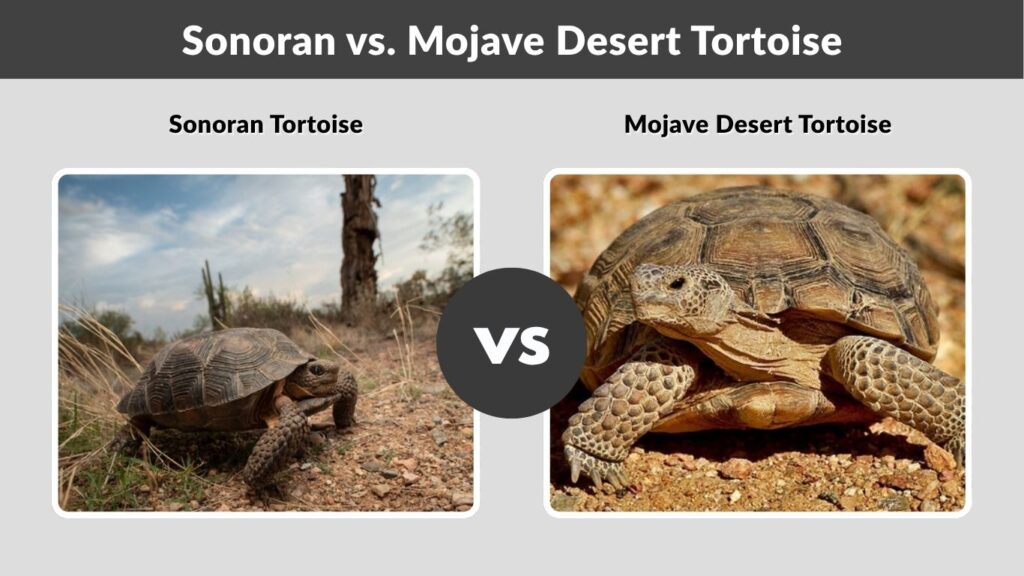
Although these desert tortoises look similar, they are separate species occupying different environments.
| Feature | Sonoran desert tortoise | Mojave desert tortoise |
| Scientific name | Gopherus morafkai | Gopherus agassizii |
| Main range | South and east of Colorado River | North and west of Colorado River |
| Typical habitat | Rocky slopes and canyons | Valleys, flats and alluvial fans |
| Common shelter | Rock cavities and hillside burrows | Long burrows dug in soil |
| Peak activity | Summer monsoon season | Primarily spring and early fall |
| Federal status | Not federally listed | Federally threatened |
Location and habitat are often more reliable than appearance for distinguishing the two species. Arizona contains populations of both, particularly near the Colorado River and transition areas.
Sonoran Desert Tortoise Adoption and Care
Wild tortoises are not pets and must never be collected. Arizona residents interested in keeping one should apply through an approved adoption program rather than searching for a Sonoran desert tortoise for sale. Captive tortoises available for adoption are generally former pets that cannot safely return to nature.
An adult needs a secure outdoor enclosure containing edible plants, sunny and shaded areas, drinking water, and a properly designed burrow. The Arizona-Sonora Desert Museum recommends at least 120 square feet for one adult. Walls must prevent digging, climbing, and escape, while pools, toxic plants, chemicals, and dogs must be excluded.
Arizona rules limit possession to one desert tortoise per person per household, prohibit captive breeding, and require native tortoises to remain within the state. Anyone unable to keep an adopted animal should contact the adoption program rather than releasing or informally relocating it.
What to Do When You Find a Wild Tortoise
- Leave it alone when it is in its natural habitat.
- Never take it home or move it to another area.
- Keep dogs and children at a safe distance.
- Do not feed it or place it in water.
- Observe without touching or blocking its path.
- Contact wildlife officials when it appears injured or is found in a populated area.
- Report sightings with the location and a photograph taken without handling it.
A tortoise crossing a road is usually trying to reach habitat on the other side. Interference should be avoided unless there is immediate danger, and local wildlife officials should be contacted for guidance.
FAQs
How big does a Sonoran desert tortoise get?
An adult normally reaches about 9 to 15 inches in shell length. Hatchlings are only 2 to 2½ inches long. Males may become somewhat larger than females and generally develop longer tails, extended throat shields, and more concave undersides.
How long do Sonoran desert tortoises live?
Many wild individuals live approximately 35 to 40 years, but some survive for 50 years or longer. Lifespan depends on habitat quality, rainfall, nutrition, disease, predators, traffic, and human disturbance.
Are Sonoran desert tortoises endangered?
They are not federally listed as threatened or endangered, although the IUCN classifies the species as Vulnerable. Sonoran desert tortoises are protected under Arizona law, making it illegal to capture, collect, harm, or kill them.
Can you adopt a Sonoran desert tortoise?
Arizona residents may apply to adopt a captive tortoise through an authorized program. Applicants need an approved outdoor enclosure and burrow. Wild animals cannot legally be collected, and adopted tortoises must never be released.
Do Sonoran desert tortoises hibernate?
They undergo a winter period of inactivity commonly described as hibernation or brumation. They remain inside protected shelters during cold weather and may also become inactive during extremely hot or dry summer periods before emerging with monsoon rainfall.