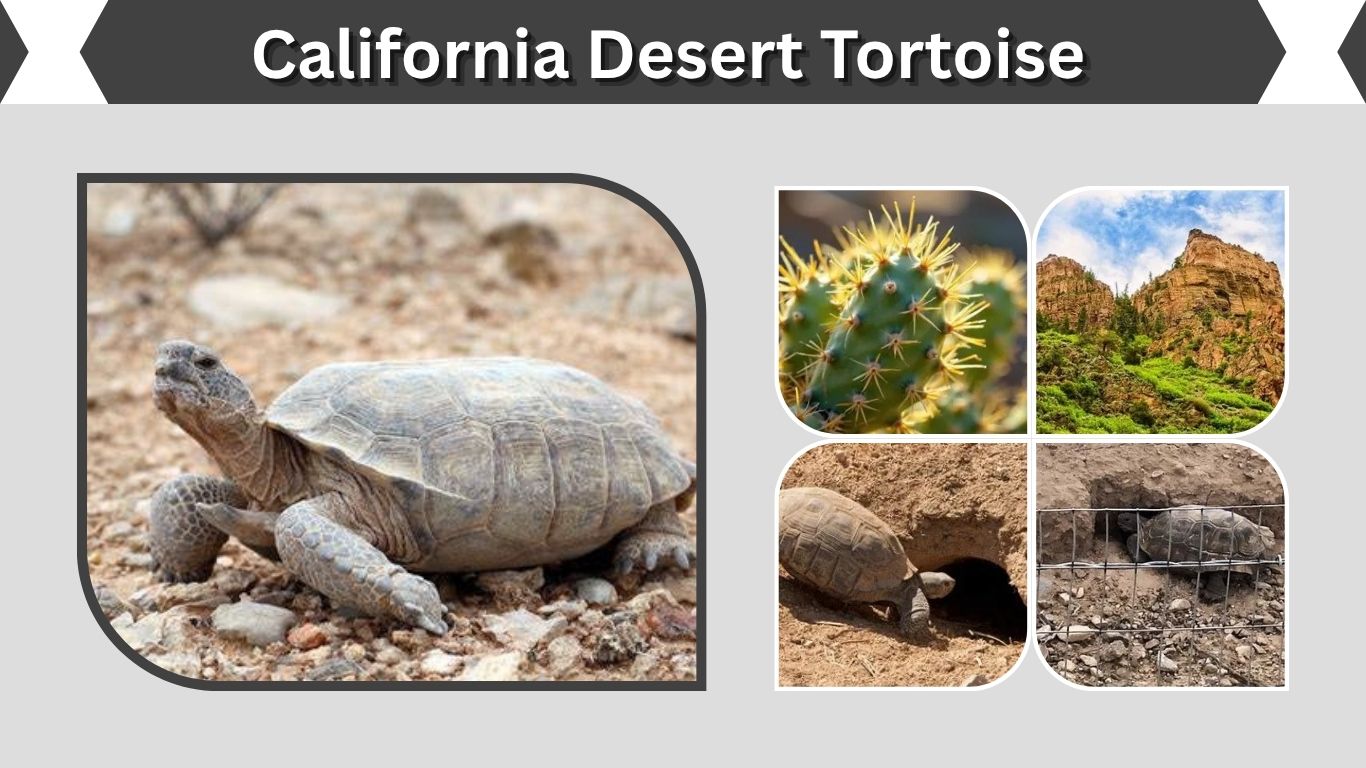
The California desert tortoise is a long-lived reptile adapted to the dry valleys, rocky foothills, and extreme temperatures of the Mojave Desert. Recognizable by its domed shell and powerful digging legs, it survives drought by conserving water and spending most of its life inside protective burrows. California residents may sometimes adopt captive tortoises through an authorized program, but wild individuals are legally protected and must never be collected. Habitat loss, disease, roads, invasive plants, wildfire, and predators continue to threaten the species.
What Is a California Desert Tortoise?
“California desert tortoise” usually refers to the Mojave desert tortoise, scientifically known as Gopherus agassizii. It occurs north and west of the Colorado River in southeastern California, southern Nevada, southwestern Utah, and northwestern Arizona. In California, it inhabits portions of the Mojave and Colorado deserts.
The desert tortoise was designated California’s official state reptile in 1972. Its ability to survive in an extremely dry environment has made it an important symbol of the state’s desert ecosystems.
| Feature | Information |
| Common name | California or Mojave desert tortoise |
| Scientific name | Gopherus agassizii |
| Diet | Herbivorous |
| Adult shell length | Approximately 8–15 inches |
| Adult weight | About 8–15 pounds |
| Typical lifespan | Roughly 50–80 years |
| Federal status | Threatened |
| California status | Endangered |
| Main California habitat | Mojave and Colorado desert regions |
These measurements and biological details vary among individuals according to age, sex, health, rainfall, and available food.
California Desert Tortoise Identification
A California desert tortoise has a sturdy body and a high, rounded shell that may be brown, gray, tan, or nearly black. The lower shell, called the plastron, is generally lighter. Its coloration helps it blend into sandy soil, gravel, rocks, and dry vegetation.
Identification Features
- High-domed shell measuring approximately 8–15 inches long
- Flattened front legs covered with heavy scales
- Strong claws designed for digging
- Thick, elephant-like hind legs
- Short tail and toothless, beak-shaped mouth
- Brown, gray, black, or tan upper shell
- Concentric growth lines on individual shell plates
- Extended throat shields, especially noticeable in adult males
Adult males commonly have longer tails, more prominent throat shields, and a concave plastron. Females normally have shorter tails and flatter undersides. Shell rings cannot reliably determine age because growth changes with food, rainfall, health, and environmental conditions.
How Big Do California Desert Tortoises Get?
A full-grown California desert tortoise normally reaches 8–15 inches in shell length and weighs approximately 8–15 pounds. Males may be larger and develop more pronounced throat shields than females.
Hatchlings are only a few inches long and have relatively delicate shells. They grow slowly and may not reach reproductive maturity until they are approximately 13–20 years old. This delayed maturity makes adult survival especially important to the population.
California Desert Tortoise Habitat and Range
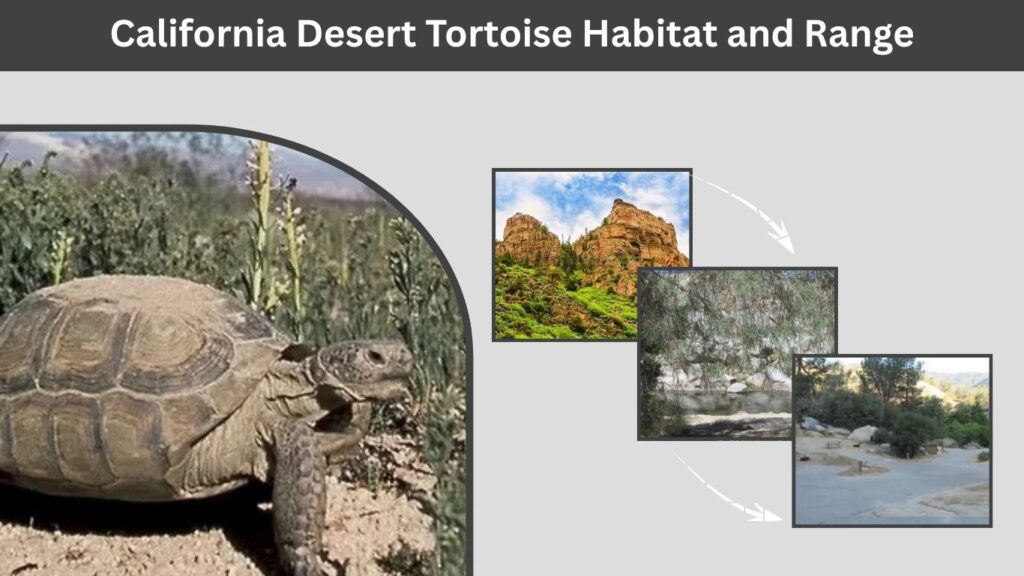
California desert tortoises live in sandy flats, rocky foothills, washes, canyons, alluvial fans, and shrub-covered desert valleys. Suitable habitat must provide edible vegetation, soils that can support burrows, and protection from extreme temperatures.
Important California habitat occurs in and around Mojave National Preserve, Joshua Tree National Park, the Desert Tortoise Natural Area, and other protected or managed desert lands. However, protected boundaries do not eliminate threats from roads, development, invasive plants, disease, or nearby human activity.
Why Burrows Are Important
A desert tortoise may spend about 95 percent of its life underground. Burrows provide shelter from intense summer heat, freezing winter nights, dry winds, and predators. Tortoises may use several shelters within their home range rather than relying on only one.
Their flattened front legs and strong claws allow them to dig into desert soil. During drought or extreme temperatures, a tortoise can remain sheltered for long periods while reducing its metabolism and conserving energy and water.
What Do California Desert Tortoises Eat?
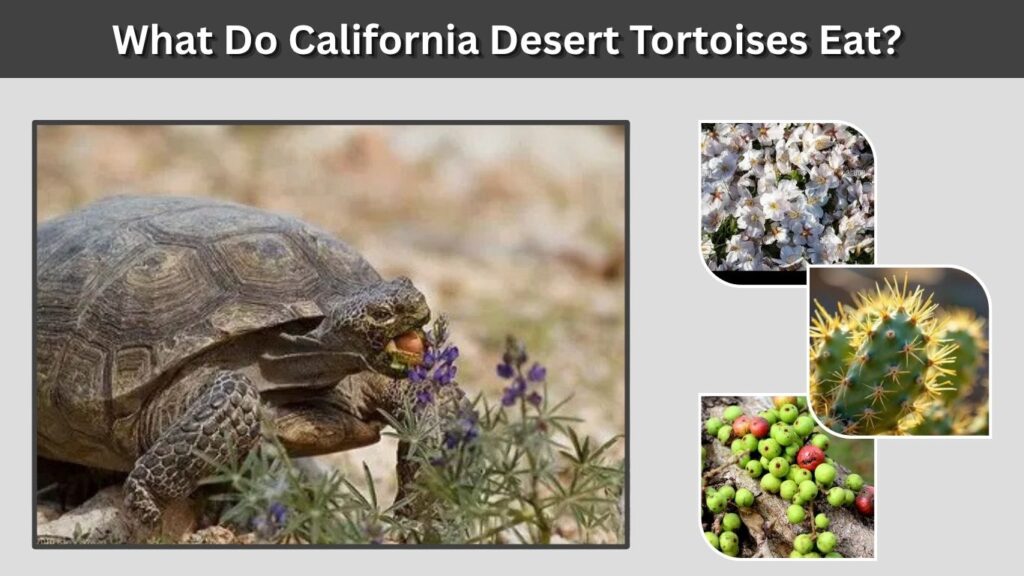
California desert tortoises are herbivores. Their natural diet changes throughout the year depending on rainfall and plant growth. Spring and post-rain feeding periods are especially important because fresh plants supply both moisture and nutrients.
Common natural foods include:
- Native grasses
- Desert wildflowers
- Annual herbs
- Tender leaves and shoots
- Cactus pads
- Cactus flowers and fruit
- Dry grasses and plant material
- Other native, low-growing vegetation
Wildflowers, grasses, herbs, and cacti form the main natural diet. Tortoises obtain much of their moisture from plants but may drink heavily when rainwater collects on the ground.
Captive tortoises should not depend mainly on fruit, iceberg lettuce, meat, dog food, or other high-protein foods. A properly planned diet emphasizes grasses, weeds, leafy plants, and edible flowers. Owners should use care information from their adoption organization and a veterinarian experienced with tortoises rather than relying on a single commercial food.
Adaptations to California’s Desert Climate
The California desert tortoise has several adaptations that help it survive long droughts and large temperature changes.
Conserving Water
Its bladder can store valuable water, some of which may be reabsorbed when conditions are dry. Handling or frightening a wild tortoise may cause it to empty its bladder, potentially reducing the water available for survival.
Avoiding Extreme Temperatures
Burrows allow the tortoise to escape both summer heat and winter cold. Rather than remaining active every day, it adjusts its behavior according to temperature, rainfall, and food availability.
Slow Metabolism
During drought, heat, or cold weather, the tortoise can reduce its activity and energy use. This allows it to survive extended periods with little food or surface water.
Powerful Digging Legs
Its heavily scaled front legs and claws are adapted for excavating shelters. The shell protects mature animals from many predators, although eggs and young tortoises remain vulnerable.
Lifespan, Eggs and Baby Tortoises
California desert tortoises generally live for about 50–80 years, although some may survive longer under favorable conditions. They grow slowly and reproduce relatively late in life.
Females dig nests in soil and deposit hard-shelled eggs. Incubation time and hatching success are influenced by temperature, moisture, predators, and nest location. Hatchlings face significant danger from ravens, mammals, reptiles, and environmental extremes.
Adult tortoises have hardened shells, but baby California desert tortoises are much less protected. Because few young animals survive to reproduce, losses among mature adults can have effects lasting for decades.
When Do California Desert Tortoises Hibernate?
Desert tortoises enter a cold-season period of inactivity more accurately called brumation. They normally retreat into burrows during fall as temperatures decline and emerge when conditions warm in spring. The U.S. Fish and Wildlife Service reports that they may remain in burrows for up to nine months and are commonly most active from March through June and again from September through October.
Weather and location influence the exact schedule. A tortoise may briefly emerge during mild winter weather or remain sheltered longer during a cold, dry spring.
Captive brumation requires careful preparation because illness, low body weight, flooding, freezing, overheating, and unstable temperatures can be dangerous. Owners should not force a sick or newly adopted tortoise into hibernation without guidance from an experienced reptile veterinarian or authorized adoption organization.
Is the California Desert Tortoise Endangered?
The Mojave desert tortoise has been federally listed as threatened under the Endangered Species Act since 1990. At the state level, California changed its classification to endangered, with the listing taking effect on July 15, 2025.
Major threats include:
- Destruction and fragmentation of desert habitat
- Vehicle collisions and off-road driving
- Urban, energy, mining, and infrastructure development
- Respiratory disease
- Invasive grasses and increased wildfire risk
- Predation on eggs and juveniles by ravens
- Illegal collection and handling
- Prolonged drought and extreme temperatures
- Attacks by free-roaming dogs
- Loss of native food plants
Federal recovery programs focus on habitat protection, research, population monitoring, disease management, raven management, and coordinated conservation across the tortoise’s range.
Can You Own a Desert Tortoise in California?
It is not legal to capture a wild California desert tortoise and take it home. Wild tortoises, their eggs, and their habitat are protected, and activities involving handling or possession may require state and federal authorization.
However, California residents may be able to adopt a captive desert tortoise through an authorized adoption and permit process. The California Department of Fish and Wildlife provides a desert tortoise application and directs prospective adopters to recognized tortoise organizations.
A listing advertising a California desert tortoise “for sale” should not automatically be assumed legal. The responsible route is to contact CDFW or an authorized adoption organization, complete the required documentation, and adopt an animal that cannot be returned to the wild.
Basic Care for an Adopted Desert Tortoise
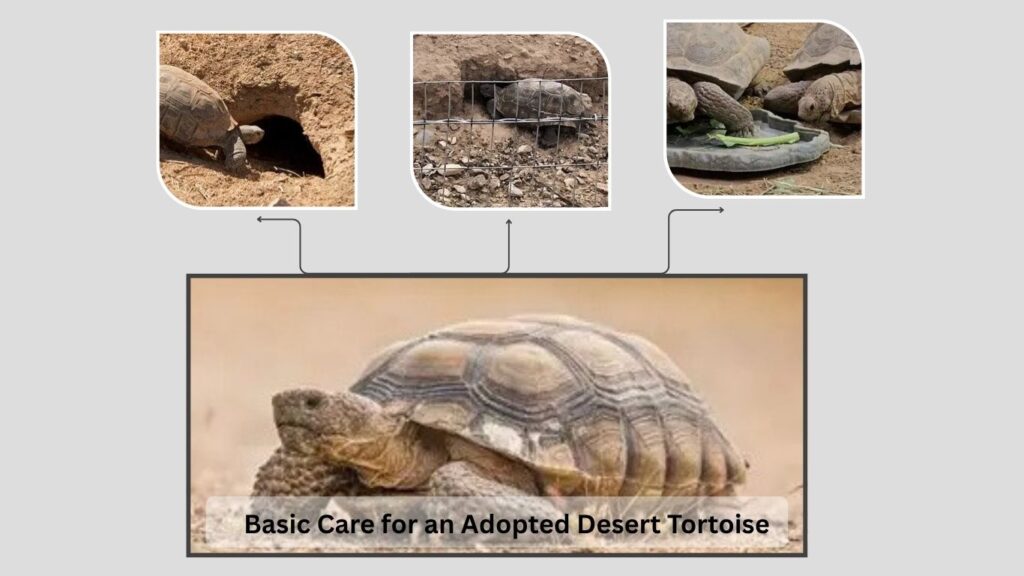
A legally adopted tortoise needs long-term outdoor housing suited to its natural behavior. Because it may live for many decades, adoption is a lifetime commitment.
A suitable setup generally includes:
- Secure walls that prevent climbing or digging out
- A dry, well-drained burrow
- Sunny basking areas
- Shade from shrubs or a shelter
- Native or tortoise-safe edible plants
- Protection from dogs, ravens, rats, and other predators
- A shallow, accessible source of clean water
- Soil suitable for walking and digging
Outdoor housing is generally preferable in an appropriate California climate. The enclosure must contain adequate vegetation, secure boundaries, shade, and safe soil for burrowing.
Captive tortoises must never be released into the desert. They may carry disease, lack knowledge of local resources, or interfere with wild populations.
What to Do If You Find a Wild Tortoise
Leave a tortoise alone when it is safely moving through natural habitat. Do not feed, bathe, relocate, or take it home. Keep dogs away and observe from a respectful distance.
When a tortoise is crossing a road, stop only when it is safe to do so. Untrained handling can injure the animal or move it away from familiar shelter and feeding areas. Contact park staff or wildlife authorities when a tortoise is injured, trapped, or in immediate danger.
FAQs
How big do California desert tortoises get?
Adults normally reach approximately 8–15 inches in shell length and weigh around 8–15 pounds. Males are frequently larger than females and may have longer tails, extended throat shields, and noticeably concave lower shells.
How long do California desert tortoises live?
California desert tortoises commonly live for 50–80 years, and some may live longer. Their slow growth and late maturity mean that anyone adopting one must be prepared for several decades of housing, feeding, veterinary care, and seasonal management.
Are desert tortoises illegal to own in California?
Taking a wild tortoise is illegal. Certain captive tortoises can be legally kept through California’s authorized adoption and documentation process. Prospective owners should contact CDFW or a recognized adoption organization before acquiring or moving a tortoise.
What do California desert tortoises eat?
Their natural diet consists mainly of grasses, wildflowers, herbs, cactus, and other desert plants. Captive animals need a varied, high-fiber plant diet rather than large quantities of fruit, lettuce, processed food, or animal protein.
Why is the desert tortoise California’s state reptile?
The desert tortoise represents California’s distinctive desert environment and its specially adapted wildlife. It has served as the official state reptile since 1972 and is now also an important symbol of desert habitat protection and endangered-species conservation.