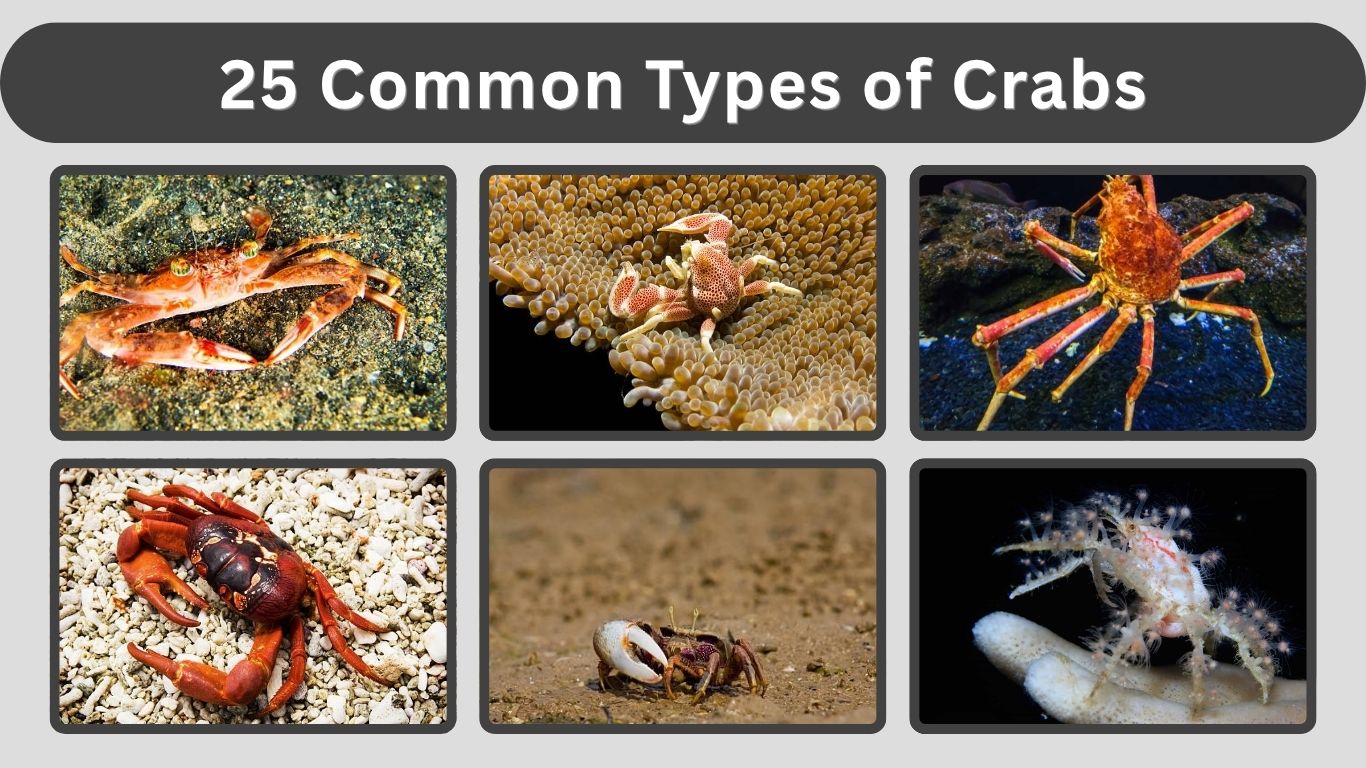
Crabs are among the most diverse and recognizable crustaceans in the world. They live in oceans, rivers, mangrove forests, sandy beaches, rocky shores, and even tropical forests. Some species are excellent swimmers, while others spend most of their lives on land or hidden beneath rocks and mud. Crabs also vary greatly in size, color, shape, and behavior. This guide covers 25 common types of crabs, including their identification features, habitats, diets, and interesting facts to help you recognize and understand each species.
1. Blue Crab
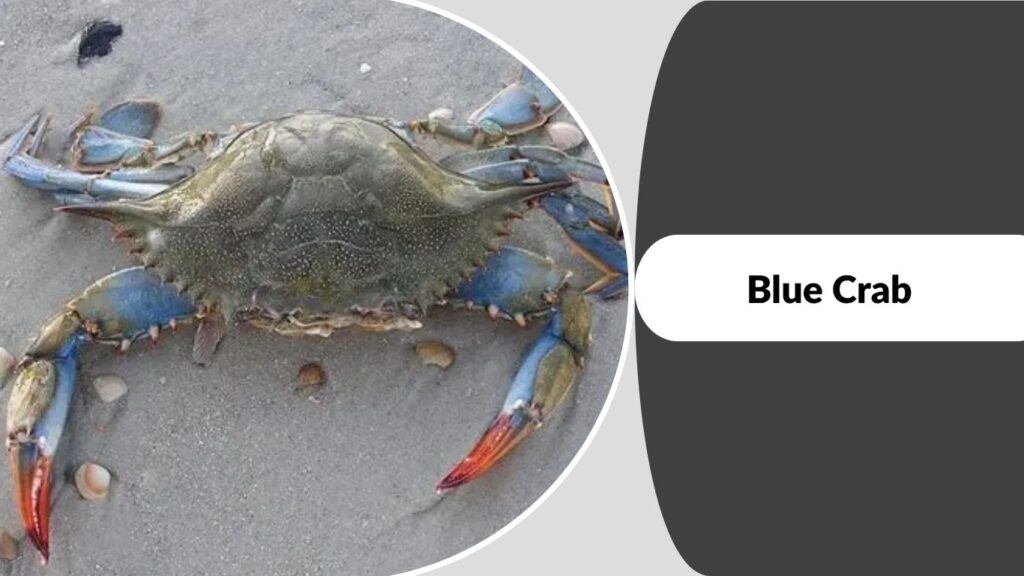
The blue crab is one of the most recognizable coastal crabs in North America. Its scientific name is Callinectes sapidus, meaning “beautiful savory swimmer.” It is especially common along the Atlantic and Gulf coasts, where it lives in bays, estuaries, salt marshes, and shallow coastal waters.
Identification
- Olive-green to brown upper shell
- Bright blue legs and claws
- Females often have red-tipped claws
- Wide shell with sharp side spines
- Paddle-shaped rear legs for swimming
- Usually grows about 5 to 9 inches across
Habitat and Distribution
Blue crabs prefer brackish water, where fresh water mixes with salt water. They are commonly found in muddy or sandy areas, seagrass beds, tidal creeks, and coastal marshes. Their natural range extends from the Atlantic coast of North America to parts of South America.
Diet and Feeding Habits
Blue crabs are opportunistic omnivores. They eat clams, oysters, small fish, worms, shrimp, aquatic plants, and dead animals. Their strong claws help them crush hard shells and tear food apart. They may also eat smaller blue crabs when food is limited.
Behavior and Interesting Facts
Blue crabs are active swimmers and can move quickly using their flattened rear legs. They may become aggressive when threatened and often raise their claws defensively. Females usually mate only once but can store sperm for several spawning seasons. Blue crabs are also commercially important and are widely harvested for their sweet, tender meat.
2. Dungeness Crab
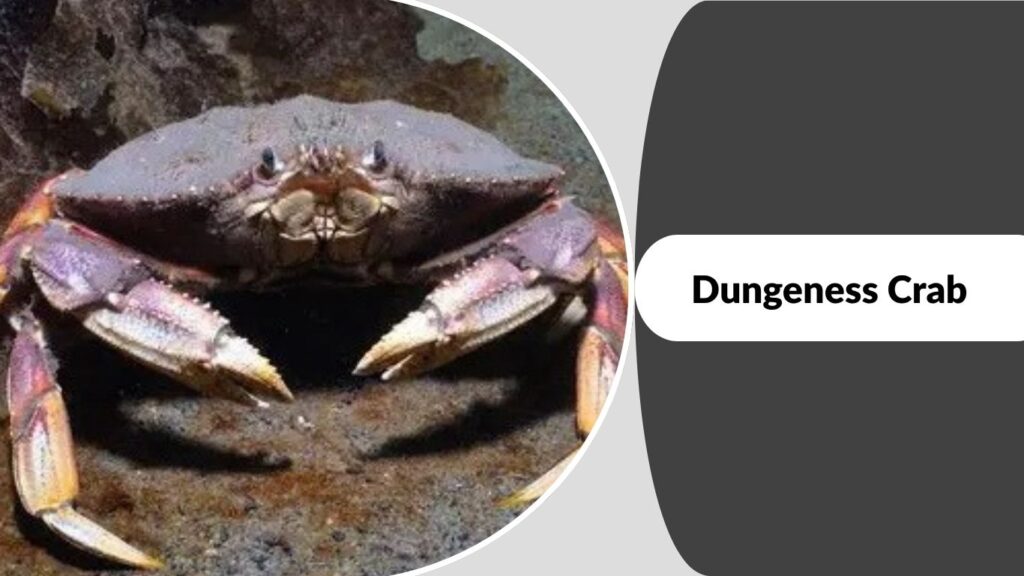
The Dungeness crab is a large edible crab found along the Pacific coast of North America. Its scientific name is Metacarcinus magister. It is valued for its sweet meat and is commonly harvested in coastal waters from Alaska to California.
Identification
- Broad, oval-shaped shell
- Reddish-brown to purple-brown color
- White-tipped claws
- Ten legs, including two strong claws
- Shell usually measures 6 to 8 inches wide
- Jagged teeth along the front edge of the shell
Habitat and Distribution
Dungeness crabs live in bays, estuaries, and shallow coastal waters. They prefer sandy or muddy bottoms where they can partially bury themselves. Younger crabs often remain in protected bays, while adults may move into deeper offshore waters.
Diet and Feeding Habits
These crabs are omnivorous scavengers. They eat clams, small fish, shrimp, worms, squid, and other crustaceans. They also consume dead marine animals and organic material found on the seafloor.
Behavior and Interesting Facts
Dungeness crabs usually walk sideways along the bottom rather than swim. They hide beneath sand to avoid predators. Females can carry millions of eggs beneath their abdomen until they hatch. This species is an important part of the Pacific seafood industry.
3. King Crab
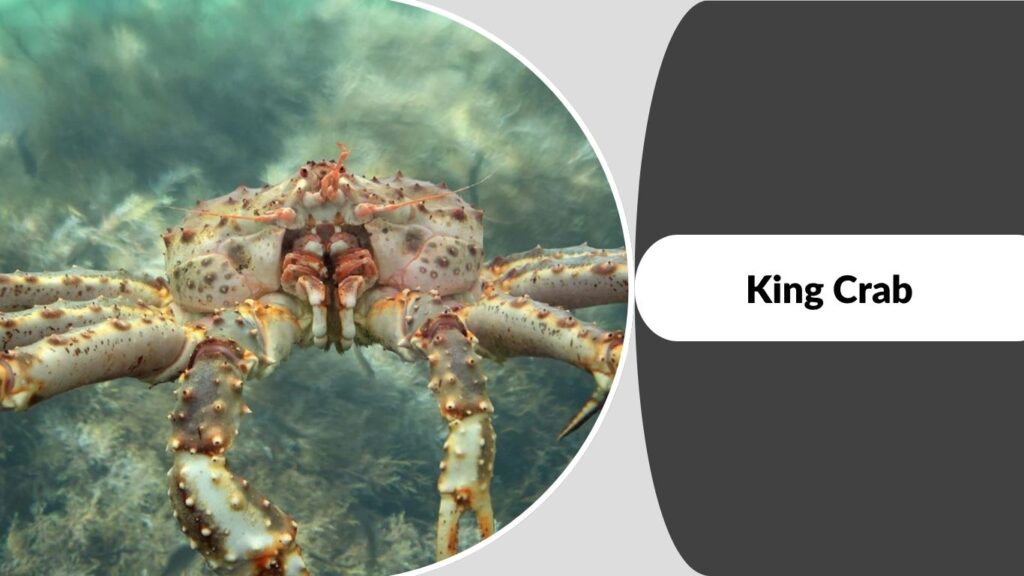
King crabs are among the largest and most impressive crabs in the world. The red king crab, scientifically known as Paralithodes camtschaticus, is the best-known species. It lives mainly in cold northern waters and is prized for its large, meaty legs.
Identification
- Large, heavy body
- Long, thick walking legs
- Spiny reddish-brown shell
- One claw usually larger than the other
- Can reach a leg span of nearly 6 feet
- Adults may weigh more than 20 pounds
Habitat and Distribution
King crabs live in cold waters of the North Pacific and Arctic regions. They are commonly found near Alaska, Russia, and the Bering Sea. Adults usually inhabit deep rocky or muddy seabeds.
Diet and Feeding Habits
King crabs eat clams, mussels, worms, sea stars, small fish, algae, and other bottom-dwelling animals. They use their strong claws to crush shells and tear food into manageable pieces.
Behavior and Interesting Facts
Young king crabs often gather in large groups for protection. Adults may migrate between deep and shallow waters during different seasons. Despite their name, king crabs are more closely related to hermit crabs than to true crabs.
4. Snow Crab
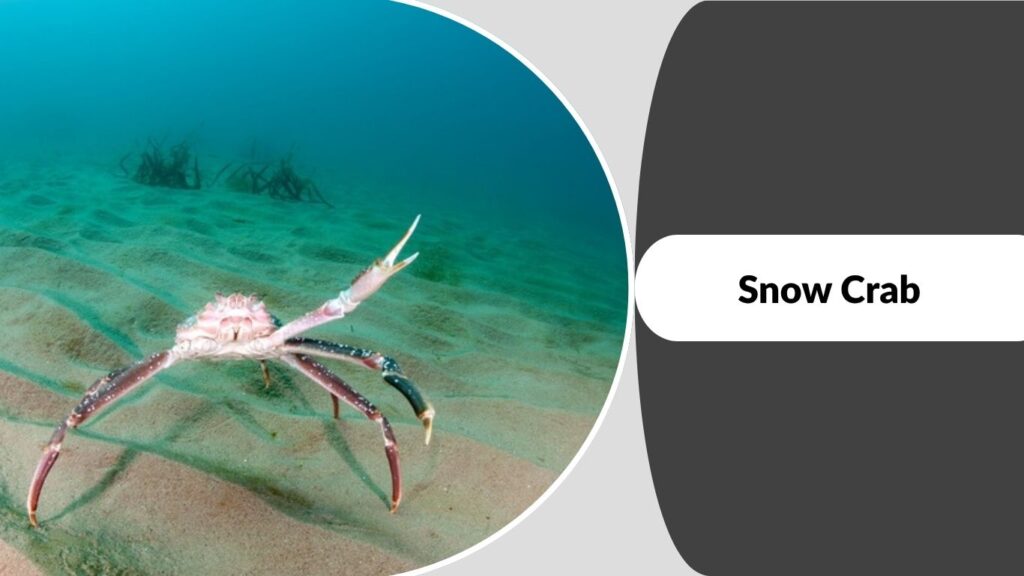
The snow crab is a cold-water crab known for its long, slender legs and delicate meat. Its scientific name is Chionoecetes opilio. It is widely harvested in northern oceans and is commonly sold as clusters of cooked legs.
Identification
- Round, flattened body
- Long, thin walking legs
- Reddish-brown upper shell
- Pale or white underside
- Small claws compared with king crabs
- Shell may reach about 6 inches wide
Habitat and Distribution
Snow crabs live in the cold waters of the North Atlantic and North Pacific oceans. They are found near Alaska, Canada, Greenland, Russia, and northern Japan. They prefer soft muddy bottoms in deep water.
Diet and Feeding Habits
Snow crabs feed on clams, worms, shrimp, small fish, brittle stars, and other crustaceans. They may also scavenge dead animals. Larger snow crabs sometimes eat smaller members of their own species.
Behavior and Interesting Facts
Snow crabs move slowly across the ocean floor using their long legs. Males grow much larger than females. During mating season, they may gather in large groups. Their name comes from their preference for cold, snowy northern regions.
5. Stone Crab
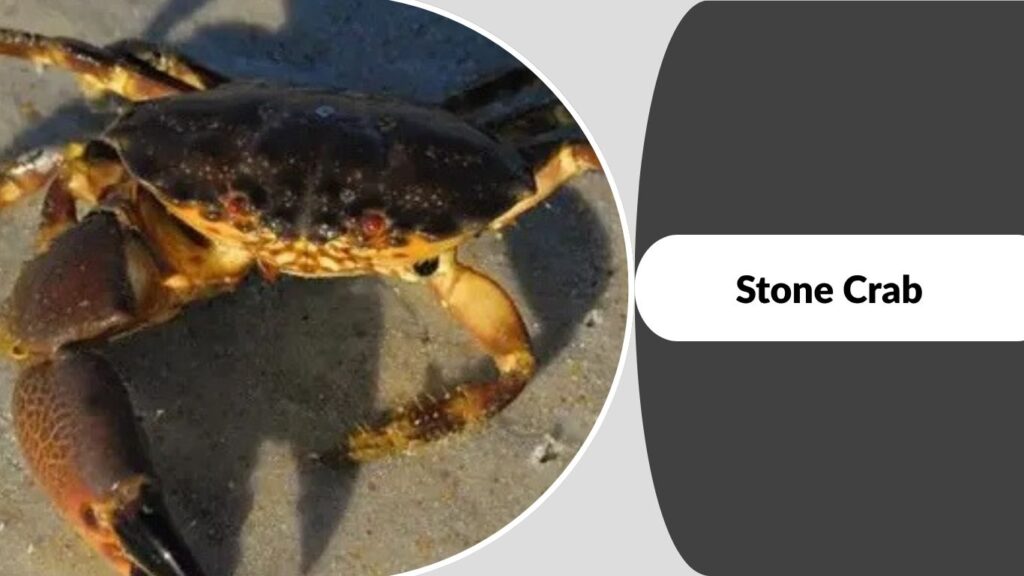
The stone crab is famous for its large, powerful claws, which are harvested as seafood. Its scientific name is Menippe mercenaria. This crab is commonly found in warm coastal waters, especially around Florida and the Gulf of Mexico.
Identification
- Dark reddish-brown or mottled shell
- Large black-tipped claws
- Thick, rounded body
- Short, sturdy walking legs
- One claw often larger than the other
- Shell usually grows 5 to 6 inches wide
Habitat and Distribution
Stone crabs live in shallow coastal waters, bays, seagrass beds, oyster reefs, and rocky areas. They often hide inside burrows or beneath rocks. Their range extends along the southeastern United States, Gulf of Mexico, and Caribbean.
Diet and Feeding Habits
Stone crabs eat oysters, clams, snails, worms, small fish, and other crustaceans. Their powerful claws can crush hard shells easily. They may also scavenge dead marine animals.
Behavior and Interesting Facts
Stone crabs can regenerate lost claws after molting. In many fisheries, one claw is removed and the live crab is returned to the water. A new claw may grow back over several molts. Their crushing claws provide strong protection against predators.
6. Green Crab
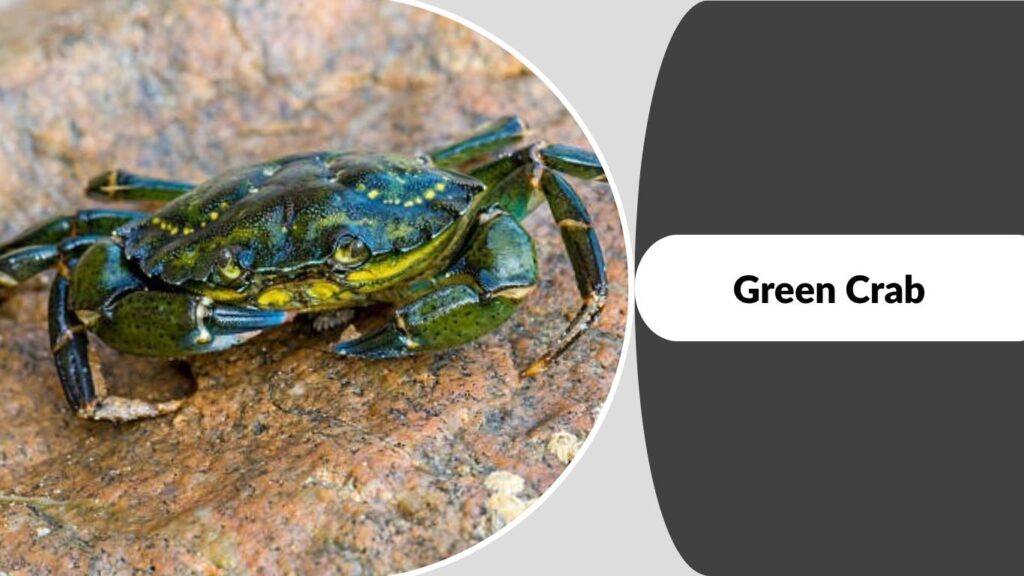
The green crab is a small but highly adaptable coastal crab. Its scientific name is Carcinus maenas. Although native to Europe and North Africa, it has spread to many other regions and is considered invasive in parts of North America, Australia, and South Africa.
Identification
- Shell color varies from green to brown or reddish
- Five sharp teeth on each side of the eyes
- Broad, slightly rounded shell
- Short walking legs
- Two medium-sized claws
- Usually measures 2 to 4 inches across
Habitat and Distribution
Green crabs live in estuaries, tidal pools, salt marshes, rocky shores, and shallow coastal waters. They tolerate wide changes in water temperature and salinity, which helps them survive in many environments.
Diet and Feeding Habits
These crabs eat clams, mussels, oysters, worms, snails, small fish, and other crustaceans. They are aggressive feeders and can damage shellfish populations by consuming large numbers of young mollusks.
Behavior and Interesting Facts
Green crabs are fast, active, and highly competitive. They often hide beneath rocks, seaweed, or mud during low tide. Their ability to survive in disturbed habitats has helped them spread rapidly. In some coastal areas, removal programs are used to reduce their environmental impact.
7. Fiddler Crab
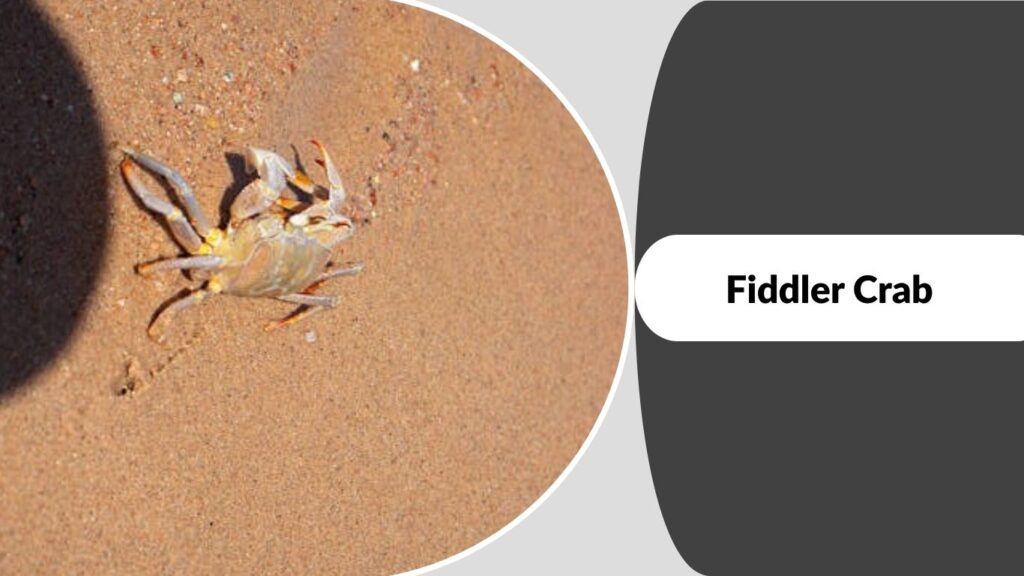
Fiddler crabs are small shore crabs best known for the oversized claw carried by adult males. They belong to several genera within the family Ocypodidae. These crabs are common in mudflats, mangroves, and salt marshes in tropical and temperate coastal regions.
Identification
- Males have one extremely large claw
- Females have two small claws
- Small, square-shaped body
- Long eyestalks
- Colors range from brown to red, blue, or yellow
- Usually measures less than 2 inches wide
Habitat and Distribution
Fiddler crabs live in burrows along muddy or sandy shorelines. They are commonly found in mangrove forests, tidal flats, estuaries, and salt marshes. Their burrows protect them from heat, predators, and high tides.
Diet and Feeding Habits
They feed by scooping sediment into their mouths and filtering out algae, bacteria, and decaying organic matter. The cleaned sand or mud is then placed outside the burrow in small pellets.
Behavior and Interesting Facts
Male fiddler crabs wave their large claw to attract females and warn rival males. The oversized claw is mainly used for communication and fighting rather than feeding. These crabs play an important role in coastal ecosystems by mixing and aerating the soil.
8. Hermit Crab
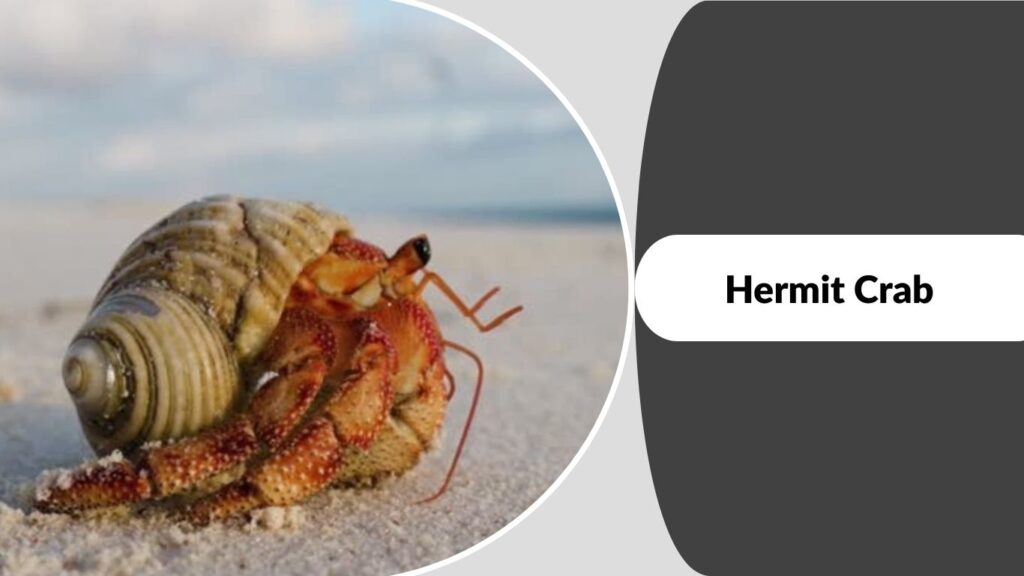
Hermit crabs are unusual crustaceans that protect their soft abdomens by living inside empty snail shells. More than 800 species exist, including both marine and land-dwelling varieties. They must find larger shells as they grow.
Identification
- Soft, curled abdomen
- Body partly hidden inside a shell
- Two visible claws
- One claw often larger than the other
- Long antennae and stalked eyes
- Size varies greatly between species
Habitat and Distribution
Marine hermit crabs live in coral reefs, tide pools, rocky shores, and deep-sea habitats. Land hermit crabs occur in warm tropical regions but still need access to moisture and salt water to survive.
Diet and Feeding Habits
Hermit crabs are omnivorous scavengers. They eat algae, dead animals, plankton, fruit, leaves, and organic debris. Captive land hermit crabs require a varied diet with calcium, protein, fruits, and vegetables.
Behavior and Interesting Facts
Hermit crabs frequently inspect and exchange shells. Several individuals may form a line according to size and trade shells when a larger one becomes available. Despite their name, many are social and live in groups. They also use their claws to block the shell opening when threatened.
9. Horseshoe Crab
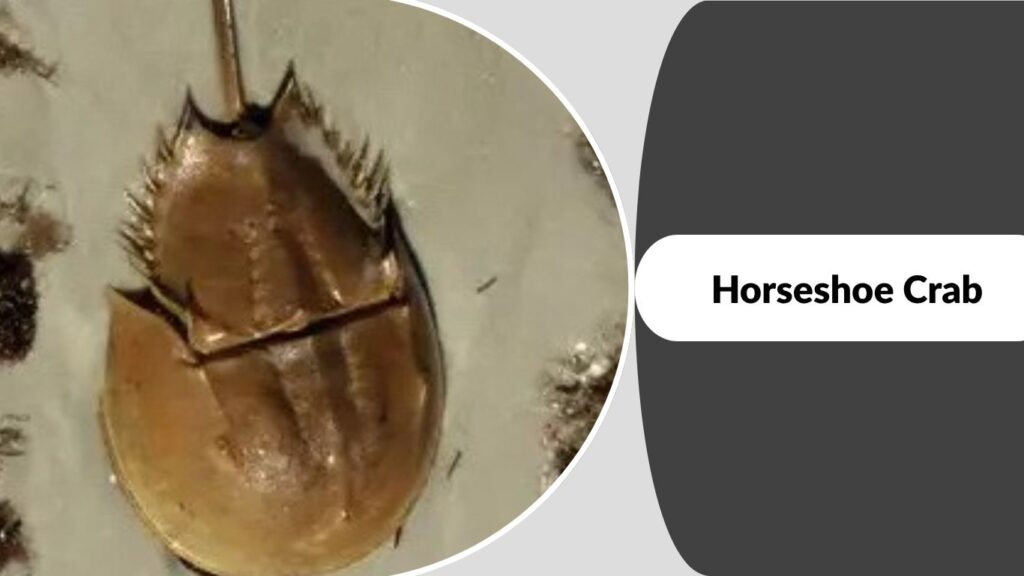
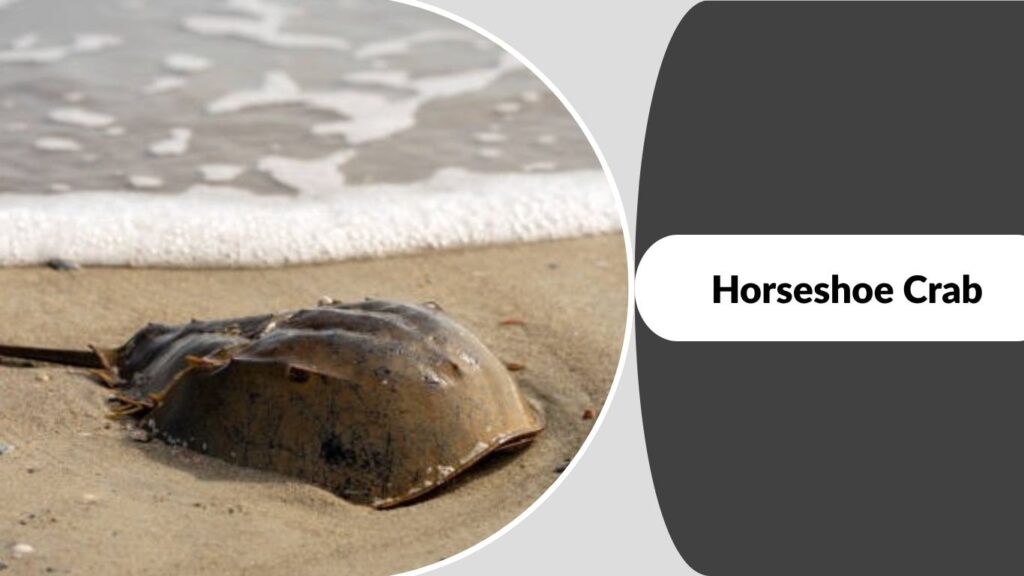
The horseshoe crab is an ancient marine arthropod that is more closely related to spiders and scorpions than to true crabs. Four living species remain today. The Atlantic horseshoe crab, Limulus polyphemus, is the best-known species.
Identification
- Large, horseshoe-shaped shell
- Brown or olive-colored body
- Long, pointed tail spine
- Multiple pairs of legs underneath
- Hard, rounded front shell
- Can grow more than 20 inches long
Habitat and Distribution
Horseshoe crabs live in shallow coastal waters with sandy or muddy bottoms. The Atlantic species occurs along the eastern coast of North America and in the Gulf of Mexico. Other species live around Southeast Asia.
Diet and Feeding Habits
They feed on worms, small clams, crustaceans, and other animals buried in the sediment. Horseshoe crabs use their legs to crush food before moving it toward the mouth.
Behavior and Interesting Facts
Horseshoe crabs often gather on sandy beaches during spring tides to lay eggs. Their blue blood contains a substance used to test medical equipment and medicines for bacterial contamination. The long tail is not a weapon; it helps the animal turn upright if overturned.
10. Coconut Crab
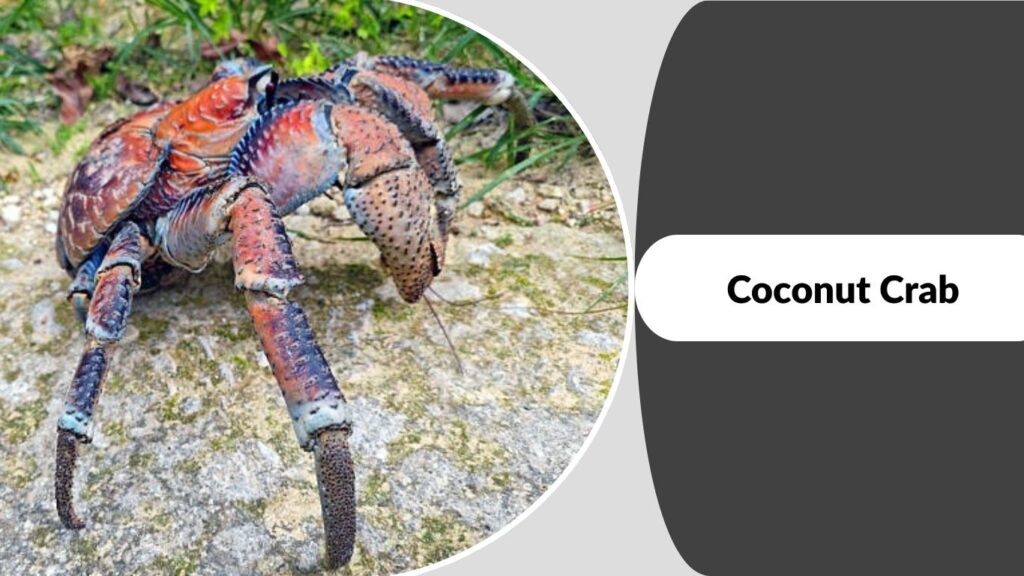
The coconut crab is the largest land-dwelling arthropod in the world. Its scientific name is Birgus latro. It is a close relative of hermit crabs and lives on tropical islands across the Indian and Pacific oceans.
Identification
- Large, heavily armored body
- Powerful front claws
- Thick walking legs
- Colors range from blue to purple, red, or brown
- Adults do not carry shells
- Leg span may exceed 3 feet
Habitat and Distribution
Coconut crabs live in coastal forests, rocky areas, and underground burrows on tropical islands. They need humid conditions and usually hide during the hottest part of the day.
Diet and Feeding Habits
They eat fallen fruit, coconuts, nuts, seeds, dead animals, and smaller creatures. Their strong claws can crack hard shells and carry heavy objects. They may climb trees to search for food.
Behavior and Interesting Facts
Coconut crabs are mainly active at night. Young individuals use empty shells for protection, but adults develop a hardened abdomen and no longer need one. They have an excellent sense of smell and can detect food from a considerable distance. Their claws are powerful enough to deliver a painful pinch.
11. Spider Crab
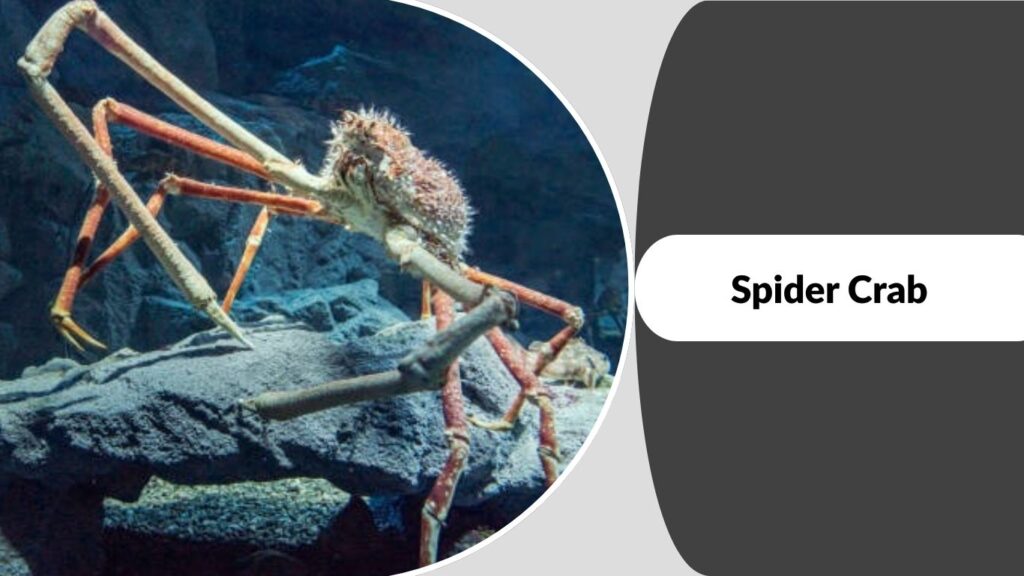
Spider crabs are named for their small bodies and long, thin legs, which give them a spider-like appearance. They belong to the family Majoidea and include many species, from small decorator crabs to the enormous Japanese spider crab. Most live on rocky or muddy ocean floors.
Identification
- Small, triangular or rounded body
- Very long, slender walking legs
- Rough or spiny shell
- Brown, orange, red, or yellow coloring
- Narrow claws at the end of the front legs
- Body often covered with algae or marine growth
Habitat and Distribution
Spider crabs live in oceans around the world. They are found on rocky reefs, sandy bottoms, muddy seabeds, kelp forests, and deep offshore waters. Many species remain hidden among rocks, plants, and seaweed.
Diet and Feeding Habits
They are mostly scavengers and omnivores. Spider crabs eat algae, worms, mollusks, dead fish, small crustaceans, and decaying organic material. Their long legs help them move carefully across uneven surfaces.
Behavior and Interesting Facts
Many spider crabs attach algae, sponges, and other materials to their shells for camouflage. Some species gather in large groups before molting. Their long legs look delicate, but they help the crab move across rocky habitats and avoid predators.
12. Ghost Crab
Ghost crabs are fast-moving shore crabs commonly seen on sandy beaches. They belong to the genus Ocypode. Their pale coloring allows them to blend into the sand, and their quick movements often make them seem to disappear.
Identification
- Pale tan, gray, or yellowish body
- Square-shaped shell
- Tall eyestalks
- Long, thin walking legs
- One claw may be larger than the other
- Usually grows 2 to 3 inches wide
Habitat and Distribution
Ghost crabs live on tropical and subtropical beaches around the world. They dig deep burrows above the high-tide line. These burrows provide protection from heat, predators, and dry conditions.
Diet and Feeding Habits
They eat insects, small clams, turtle eggs, dead fish, algae, and organic debris. Ghost crabs are opportunistic feeders and often search the shoreline for food at night.
Behavior and Interesting Facts
Ghost crabs are among the fastest-running crabs. They are mainly nocturnal and quickly retreat into their burrows when disturbed. Their eyes can rotate in different directions, helping them watch for predators while searching for food.
13. Rock Crab
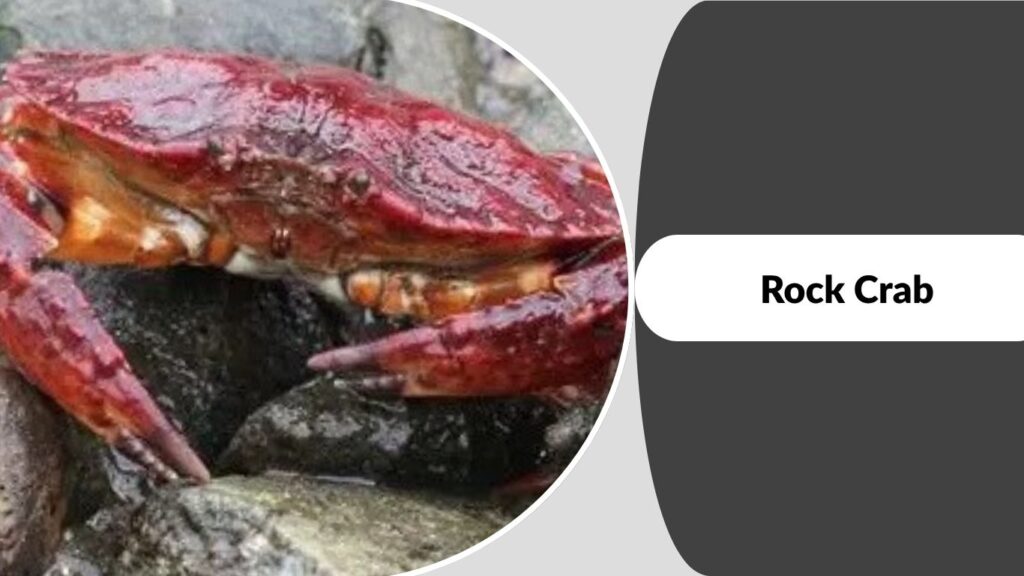
Rock crabs are sturdy coastal crabs commonly found among rocks and hard seafloor habitats. Several species are known as rock crabs, including the Atlantic rock crab, Cancer irroratus. They are important predators and scavengers in coastal ecosystems.
Identification
- Broad, oval shell
- Reddish-brown or yellow-brown color
- Dark spots or mottled markings
- Strong claws with dark tips
- Short, thick walking legs
- Shell usually grows 4 to 6 inches wide
Habitat and Distribution
Rock crabs live along rocky shorelines, reefs, tide pools, and shallow offshore waters. Atlantic rock crabs occur along the eastern coast of North America, while other species live in different coastal regions.
Diet and Feeding Habits
They eat mussels, clams, snails, worms, small fish, and other crustaceans. Their heavy claws are well suited for crushing shells. They also scavenge dead animals from the ocean floor.
Behavior and Interesting Facts
Rock crabs often hide beneath stones or inside rocky crevices. They are active at night and may defend their shelter aggressively. When threatened, they raise their claws and pinch. Some species are harvested commercially for their sweet meat.
14. Jonah Crab
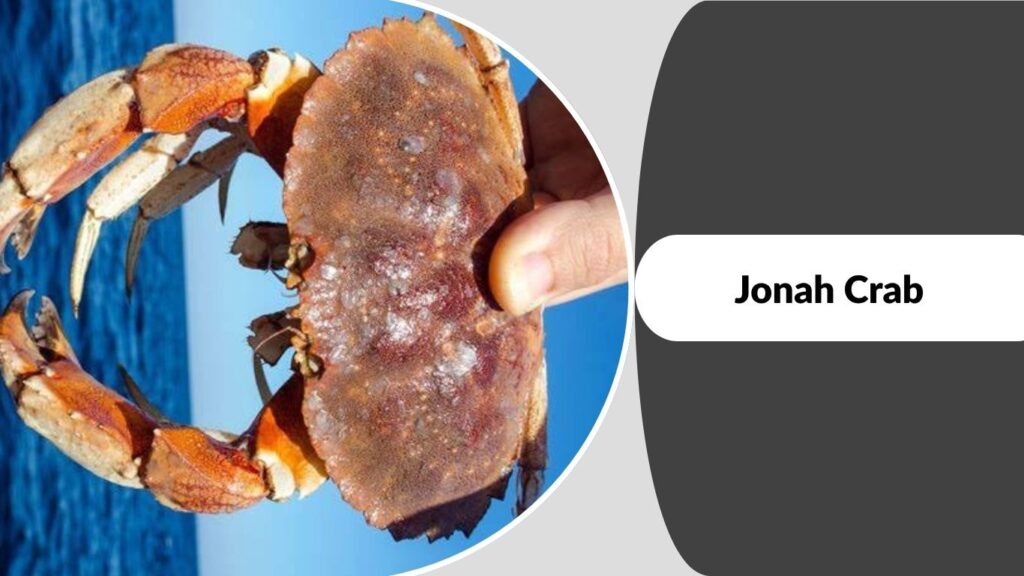
The Jonah crab is a large, heavy-bodied crab found in the western North Atlantic Ocean. Its scientific name is Cancer borealis. It resembles the Dungeness crab but has a rougher shell and lives along the eastern coast of North America.
Identification
- Broad, oval-shaped shell
- Red or yellowish-brown coloring
- Rough shell surface
- Thick, powerful claws
- Dark or black claw tips
- Shell may grow about 7 inches wide
Habitat and Distribution
Jonah crabs live from Newfoundland to the southeastern United States. They are found on rocky, sandy, and muddy seabeds, often from shallow coastal waters to depths of several hundred feet.
Diet and Feeding Habits
These crabs eat clams, mussels, snails, worms, small fish, and other crustaceans. Their crushing claws help them open hard-shelled prey. They also feed on dead marine animals.
Behavior and Interesting Facts
Jonah crabs are generally bottom dwellers and often hide among rocks. They may become defensive when handled and can produce a strong pinch. Their meat is commonly sold from the claws and legs and is valued for its mild, sweet flavor.
15. Mud Crab
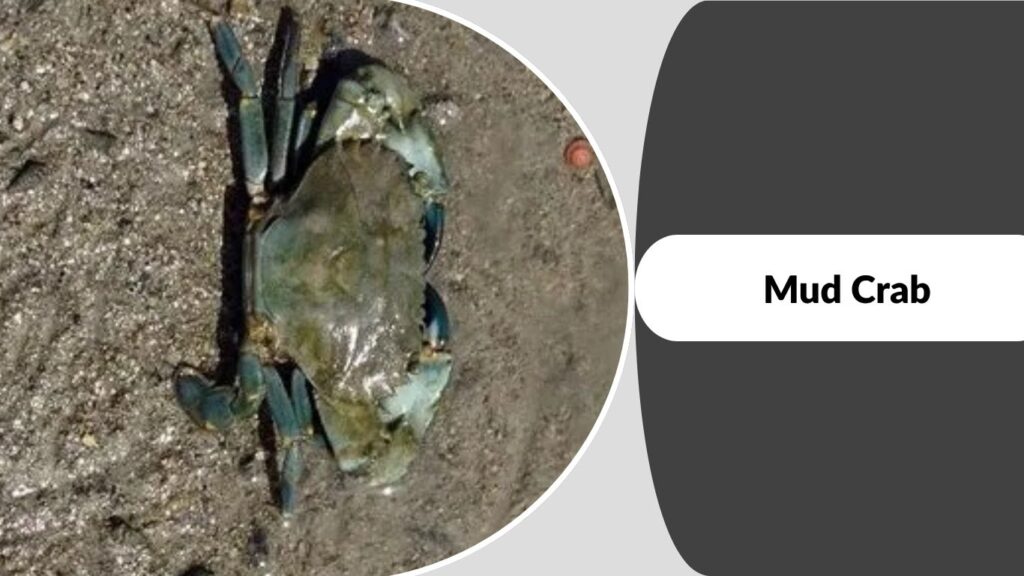
Mud crabs are large swimming crabs commonly found in tropical coastal waters. Several species belong to the genus Scylla, including the giant mud crab, Scylla serrata. They are commercially important throughout Asia, Africa, and Australia.
Identification
- Broad, smooth shell
- Dark green, brown, or olive coloring
- Large, powerful claws
- Sharp teeth along the shell edges
- Flattened rear legs shaped like paddles
- Shell may grow more than 9 inches wide
Habitat and Distribution
Mud crabs live in mangrove forests, estuaries, tidal rivers, mudflats, and sheltered bays. They prefer muddy bottoms and brackish water. During the day, they may remain hidden inside burrows or beneath roots.
Diet and Feeding Habits
They eat clams, snails, fish, shrimp, worms, and smaller crabs. Their strong claws allow them to crush hard shells. Mud crabs may also scavenge dead animals and consume plant material.
Behavior and Interesting Facts
Mud crabs are aggressive and territorial. They can swim using their paddle-shaped rear legs and move quickly when threatened. They are widely farmed and harvested for food. Large individuals can deliver a powerful and painful pinch.
16. Pea Crab
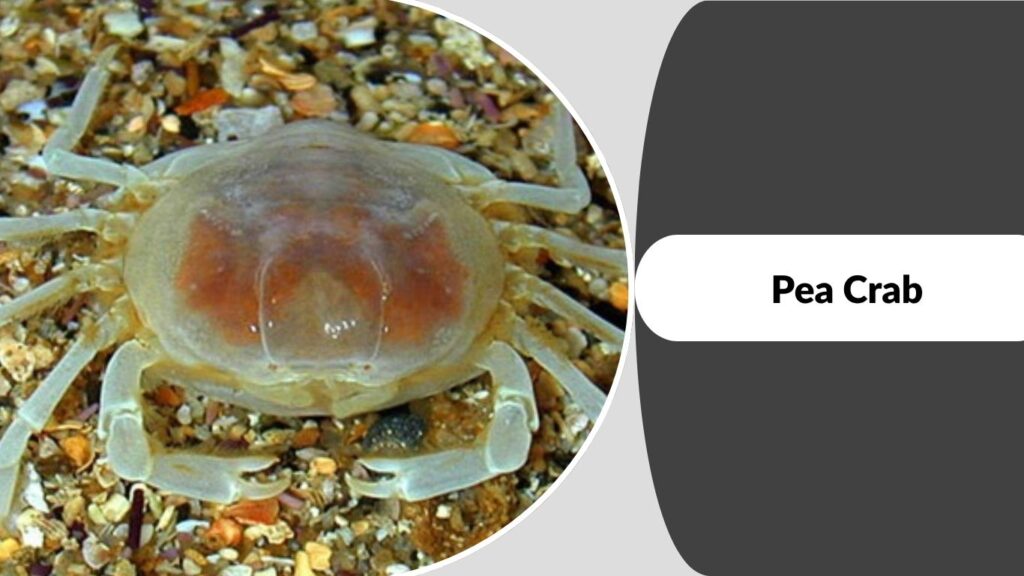
Pea crabs are tiny crabs that often live inside oysters, mussels, clams, and other marine animals. They belong to the family Pinnotheridae. Their small, rounded bodies allow them to remain hidden inside the shells of their hosts, where they gain food and protection.
Identification
- Very small, rounded body
- Soft or lightly hardened shell
- Pale white, yellow, or pink color
- Short legs and small claws
- Usually less than 1 inch wide
- Females are often larger than males
Habitat and Distribution
Pea crabs live in oceans around the world. They are commonly found inside oysters, mussels, sea cucumbers, tunicates, and other marine invertebrates. Some species live freely, but many depend on a host for shelter.
Diet and Feeding Habits
Pea crabs feed on tiny food particles collected by their hosts. They may eat plankton, mucus, and suspended organic material. In some cases, they take enough food to reduce the host’s growth or health.
Behavior and Interesting Facts
Female pea crabs often remain inside one host for long periods. Males are usually smaller and may move between hosts to find females. Their relationship with the host may be harmless, mildly harmful, or parasitic, depending on the species.
17. Decorator Crab
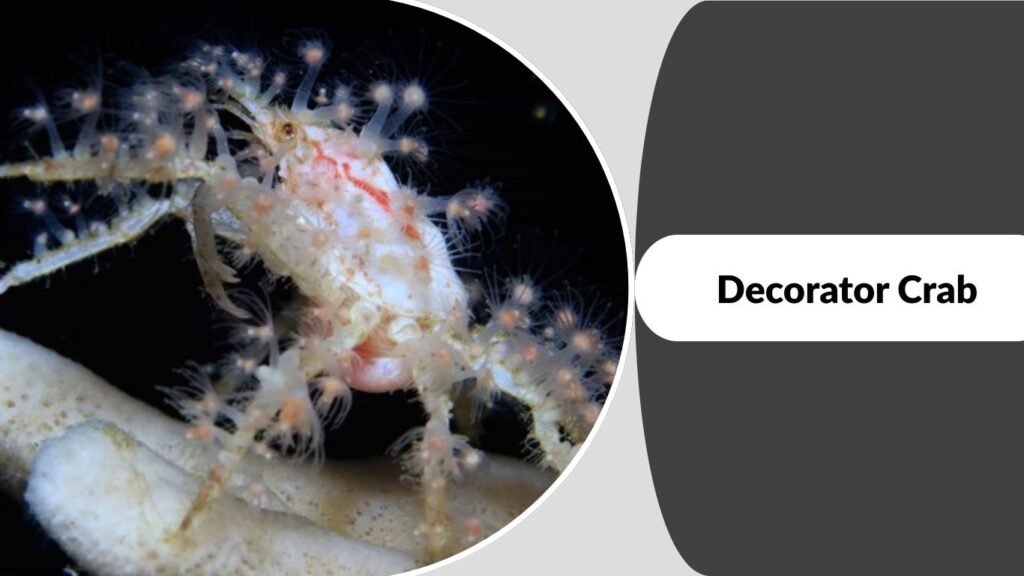
Decorator crabs are famous for attaching living and nonliving materials to their shells. Most belong to the spider crab group. Their unusual camouflage helps them blend into reefs, rocky bottoms, and seaweed-covered habitats.
Identification
- Rough, uneven shell
- Long, slender walking legs
- Shell covered with algae, sponges, or debris
- Brown, gray, orange, or reddish body
- Small hooks or hairs on the shell
- Often difficult to notice in natural surroundings
Habitat and Distribution
Decorator crabs live in tropical and temperate oceans around the world. They are commonly found on coral reefs, rocky shores, kelp forests, and sandy seabeds with plant growth.
Diet and Feeding Habits
They eat algae, small marine animals, worms, mollusks, and dead organic material. Some decorator crabs may also eat parts of the organisms attached to their shells.
Behavior and Interesting Facts
These crabs carefully select materials and attach them to hooked hairs on their bodies. Some use toxic or stinging organisms, such as sponges and anemones, for added protection. After molting, they may remove decorations from the old shell and place them on the new one.
18. Sally Lightfoot Crab
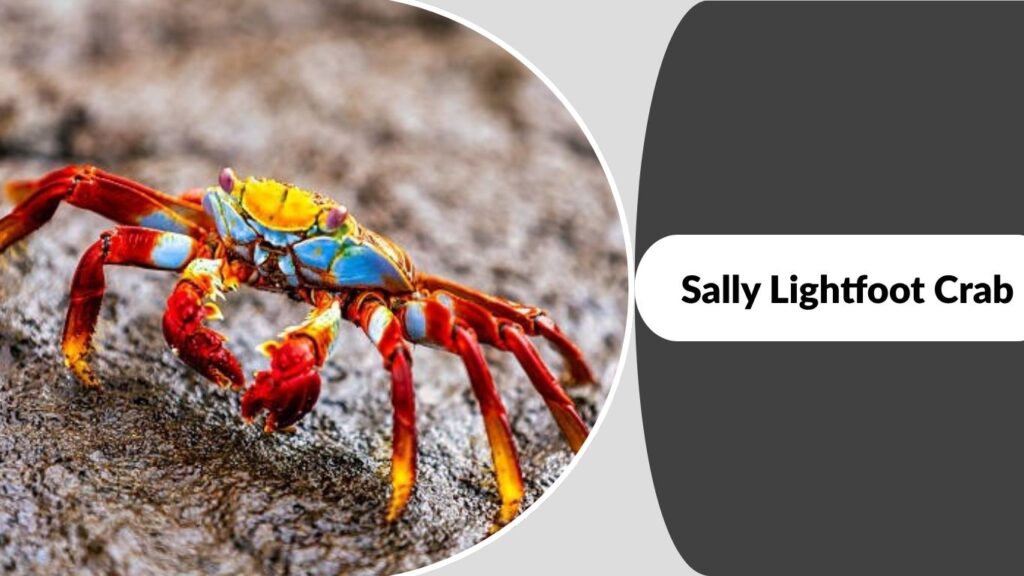
The Sally Lightfoot crab is a brightly colored shore crab known for its speed and agility. The name commonly refers to Grapsus grapsus, a species found along the Pacific coast of the Americas and around the Galápagos Islands.
Identification
- Flat, rounded shell
- Bright red, orange, yellow, or blue coloring
- Long, flattened walking legs
- Darker colors in younger crabs
- Small, pointed claws
- Shell usually grows about 3 to 4 inches wide
Habitat and Distribution
Sally Lightfoot crabs live on rocky shores, volcanic coastlines, and wave-washed areas. They are found from western Mexico to South America, including the Galápagos Islands.
Diet and Feeding Habits
They mainly eat algae growing on rocks. They also consume dead fish, animal remains, bird droppings, and other organic material. Their feeding helps clean rocky shorelines.
Behavior and Interesting Facts
Sally Lightfoot crabs can run quickly in several directions and leap between wet rocks. Their flattened bodies help them resist strong waves. Young crabs are dark and well camouflaged, while adults develop much brighter colors.
19. Red Rock Crab
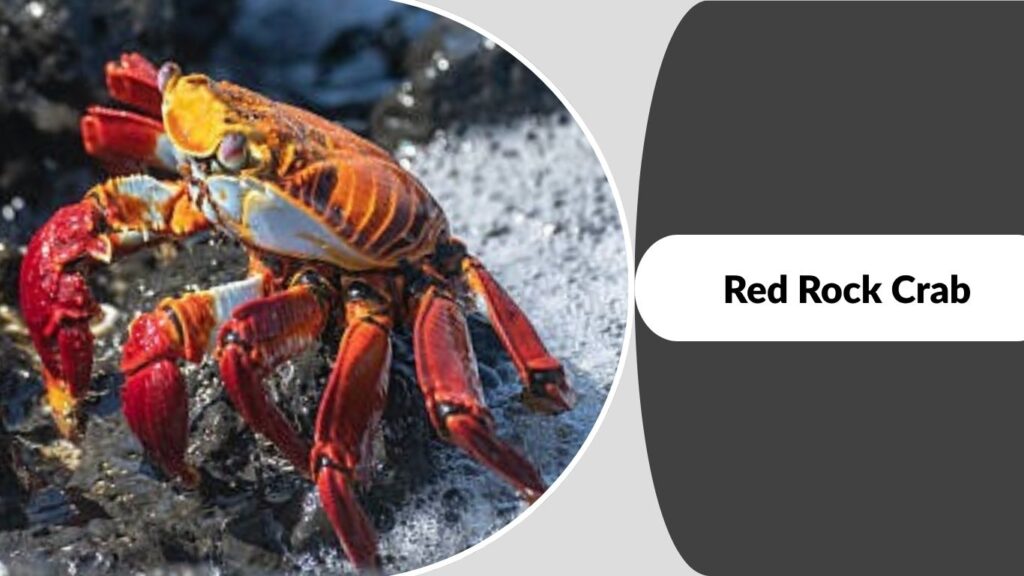
The red rock crab is a large, strongly built crab found along the Pacific coast of North America. Its scientific name is Cancer productus. It is recognized by its reddish shell and powerful black-tipped claws.
Identification
- Dark red or reddish-brown shell
- Broad, oval body
- Large claws with black tips
- Yellowish underside
- Thick walking legs
- Shell can grow about 8 inches wide
Habitat and Distribution
Red rock crabs live from Alaska to Baja California. They are found in rocky tide pools, reefs, bays, docks, and shallow coastal waters. Adults often remain near hard surfaces where they can hide.
Diet and Feeding Habits
They eat clams, mussels, snails, barnacles, small fish, and other crabs. Their heavy claws can break open hard shells. They also feed on dead marine animals.
Behavior and Interesting Facts
Red rock crabs are strong and defensive. They often remain hidden under rocks during low tide and become more active when covered by water. Their meat is edible, but they are less widely harvested than Dungeness crabs.
20. Japanese Spider Crab
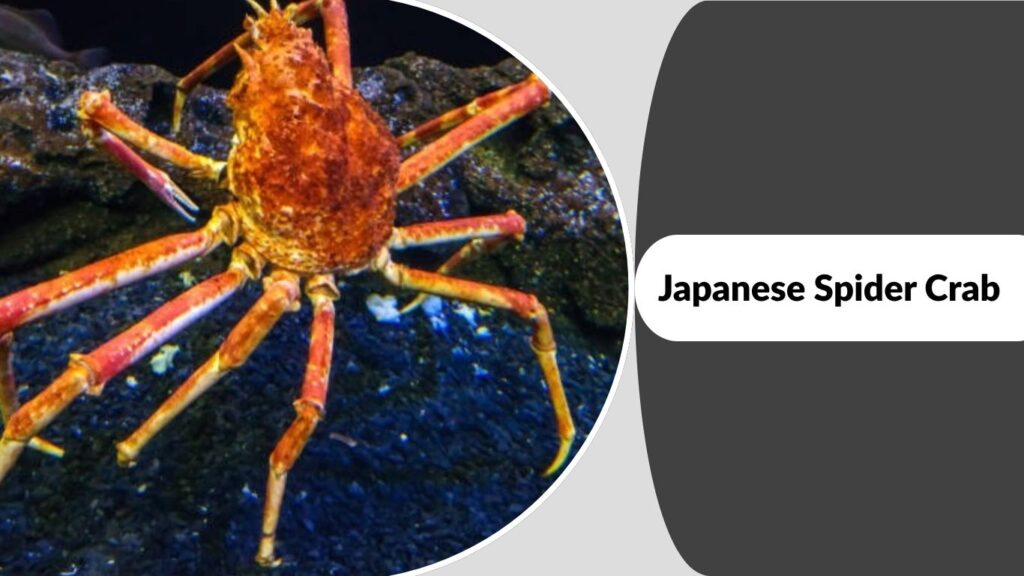
The Japanese spider crab is the largest living crab by leg span. Its scientific name is Macrocheira kaempferi. It lives in deep waters around Japan and is famous for its extremely long legs and armored body.
Identification
- Small, triangular central body
- Extremely long, thin legs
- Orange body with white spots
- Rough, spiny shell
- Leg span can reach around 12 feet
- Males have longer claws than females
Habitat and Distribution
Japanese spider crabs live in the Pacific Ocean around Japan. They are usually found on rocky or sandy seabeds at depths of about 160 to 2,000 feet. They may move into shallower water during the breeding season.
Diet and Feeding Habits
They eat mollusks, algae, worms, dead fish, and other organic material. Japanese spider crabs are slow-moving scavengers that search the seafloor for food.
Behavior and Interesting Facts
Despite their intimidating appearance, Japanese spider crabs are generally calm and slow. They may decorate their shells with sponges and other materials for camouflage. They can live for several decades and are protected in some areas during breeding season.
21. Atlantic Marsh Fiddler Crab
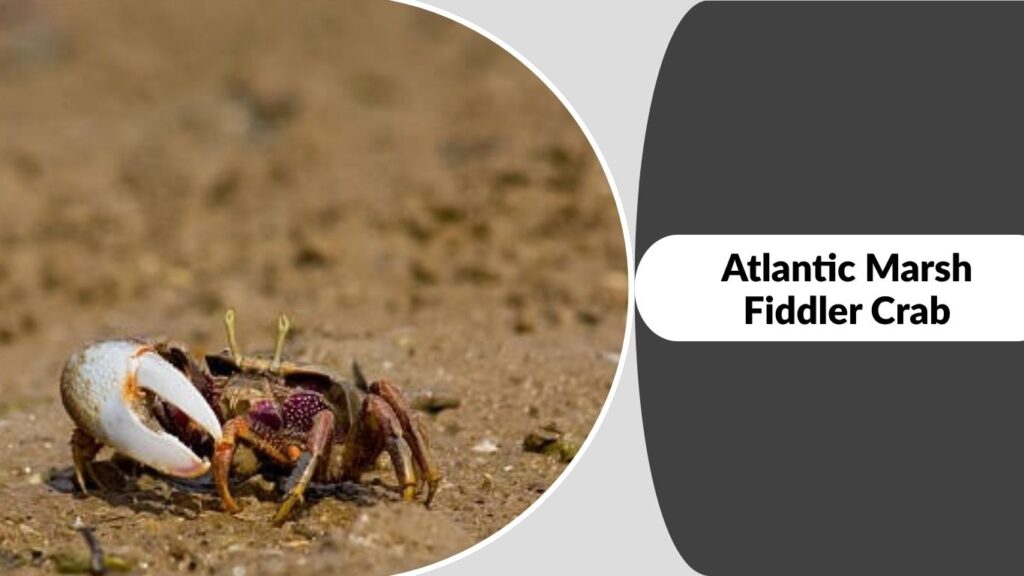
The Atlantic marsh fiddler crab is a small coastal crab commonly found in salt marshes and muddy tidal areas. Its scientific name is Minuca pugnax. Like other fiddler crabs, adult males have one greatly enlarged claw used for attracting females and competing with rivals.
Identification
- Small, square-shaped body
- One oversized claw in adult males
- Two small claws in females
- Brown, gray, or olive coloring
- Long eyestalks
- Usually less than 1.5 inches wide
Habitat and Distribution
This crab lives along the Atlantic coast of North America. It prefers muddy salt marshes, estuaries, tidal creeks, and sheltered shorelines. It digs burrows that provide protection from predators, heat, and changing tides.
Diet and Feeding Habits
Atlantic marsh fiddler crabs feed on algae, bacteria, and decaying organic matter found in mud. They scoop sediment into their mouths, remove edible particles, and leave behind small mud pellets.
Behavior and Interesting Facts
Males wave their large claws to attract females and warn competitors. These crabs are often active during low tide. Their burrowing helps aerate marsh soil and recycle nutrients throughout the habitat.
22. Christmas Island Red Crab
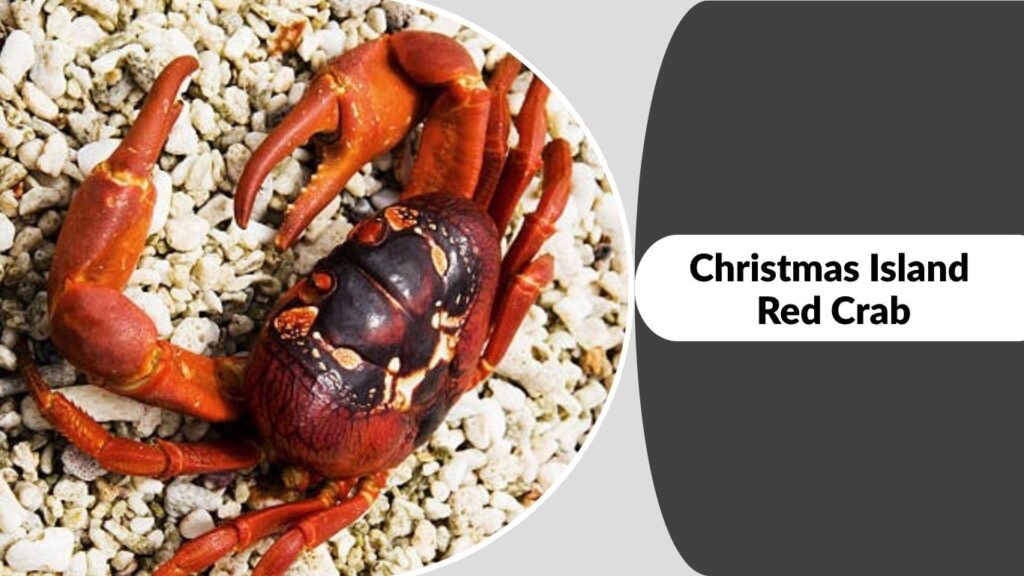
The Christmas Island red crab is a brightly colored land crab found naturally only on Christmas Island in the Indian Ocean. Its scientific name is Gecarcoidea natalis. It is famous for its massive annual migration from the forest to the coast.
Identification
- Bright red or orange body
- Rounded, heavily built shell
- Strong legs of similar size
- Two medium-sized claws
- Dark eyes on short stalks
- Shell grows about 4 to 5 inches wide
Habitat and Distribution
These crabs live in moist rainforests, rocky areas, gardens, and shaded inland habitats across Christmas Island. They shelter inside burrows, beneath roots, or under fallen leaves to avoid drying out.
Diet and Feeding Habits
Christmas Island red crabs mainly eat fallen leaves, fruits, flowers, seedlings, and decaying plant material. They may also consume dead animals, snails, and other crabs.
Behavior and Interesting Facts
At the beginning of the rainy season, millions of adults migrate toward the ocean to breed. Roads are sometimes closed to protect them. After hatching in the sea, young crabs return inland and begin life in the forest.
23. Porcelain Crab
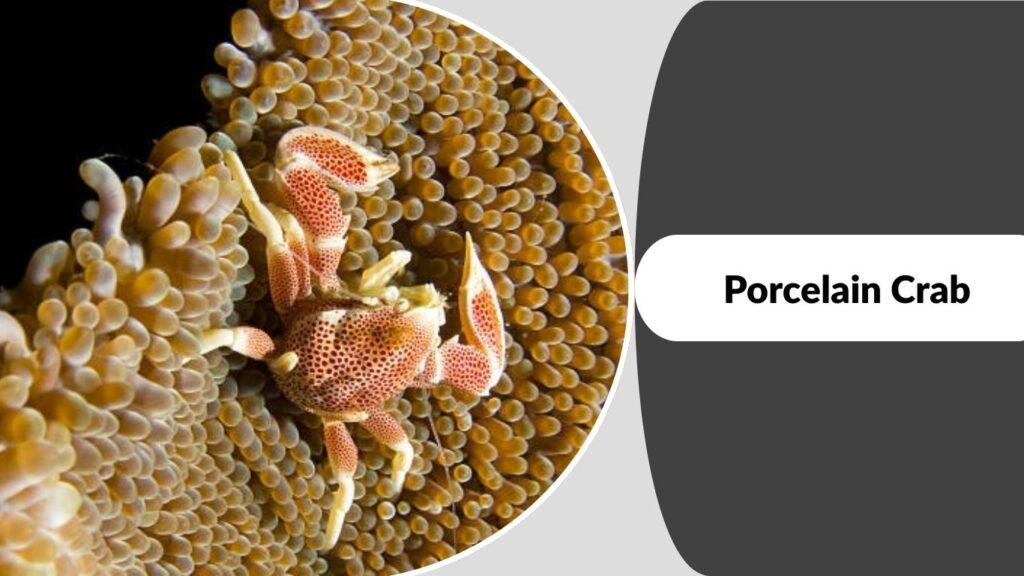
Porcelain crabs are small, delicate crustaceans that resemble true crabs but are more closely related to squat lobsters. They belong to the family Porcellanidae. Their smooth, flattened bodies help them hide under rocks, coral, and shells.
Identification
- Flat, rounded body
- Broad front claws
- Long antennae
- Only three visible pairs of walking legs
- White, cream, red, blue, or spotted coloring
- Usually less than 1 inch wide
Habitat and Distribution
Porcelain crabs live in tropical and temperate oceans worldwide. They are commonly found beneath rocks, inside coral reefs, near sea anemones, and among oyster beds.
Diet and Feeding Habits
Most porcelain crabs are filter feeders. They use feathery mouthparts to collect plankton and tiny food particles from the water. Some also eat algae, mucus, and organic debris.
Behavior and Interesting Facts
Porcelain crabs can quickly drop a claw or leg when attacked. The lost limb may grow back after several molts. Despite having large claws, many species use them mainly for defense and territorial displays.
24. Box Crab
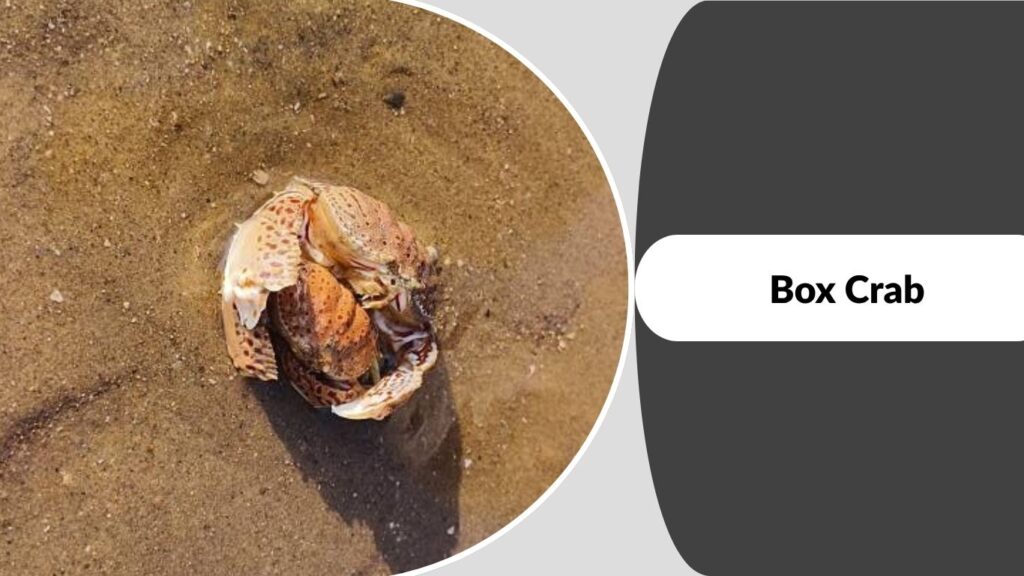
Box crabs are strongly armored crabs known for folding their claws tightly against the front of their bodies. They belong mainly to the family Calappidae. This position creates a box-like shape and protects the crab’s face and softer underside.
Identification
- Rounded or dome-shaped shell
- Large, flattened front claws
- Claws fold closely against the body
- Cream, yellow, brown, or spotted shell
- Short walking legs
- Broad teeth along the shell edges
Habitat and Distribution
Box crabs live in warm and temperate oceans around the world. They are commonly found on sandy or muddy seabeds, where they can bury themselves with only their eyes exposed.
Diet and Feeding Habits
They mainly eat snails, clams, and other mollusks. One claw may have a specialized tooth used to break open snail shells. They may also feed on worms, small crustaceans, and carrion.
Behavior and Interesting Facts
Box crabs spend much of their time buried beneath sediment. When threatened, they pull their claws tightly across the front of the body. Their powerful shell-crushing claws make them effective predators of marine snails.
25. Swimming Crab
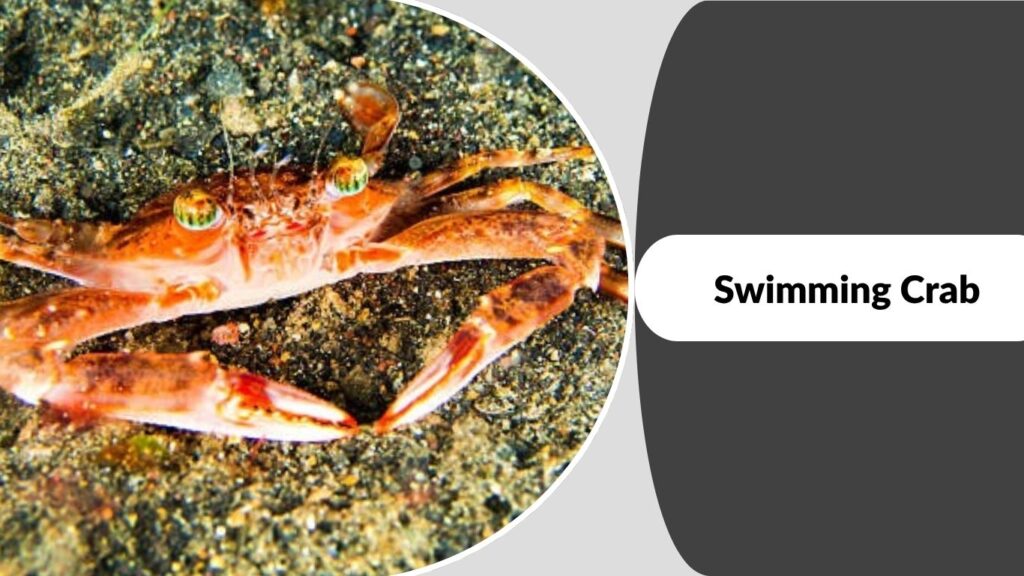
Swimming crabs are active marine crabs recognized by their paddle-shaped rear legs. They belong to the family Portunidae, which also includes blue crabs and mud crabs. These flattened legs allow them to swim quickly through open water.
Identification
- Broad, flattened body
- Rear legs shaped like paddles
- Sharp spines along the shell edges
- Long side spines on many species
- Blue, green, brown, or spotted coloring
- Strong front claws
Habitat and Distribution
Swimming crabs live in coastal waters around the world. They are found in estuaries, seagrass beds, sandy bays, coral reefs, and shallow offshore areas. Some species can tolerate brackish water.
Diet and Feeding Habits
They eat fish, shrimp, clams, worms, snails, smaller crabs, and dead marine animals. Their strong claws help capture prey and crush shells.
Behavior and Interesting Facts
Unlike many bottom-walking crabs, swimming crabs can move rapidly through the water. They may bury themselves in sand when resting or hiding. Several species are commercially important and harvested for their meat.