
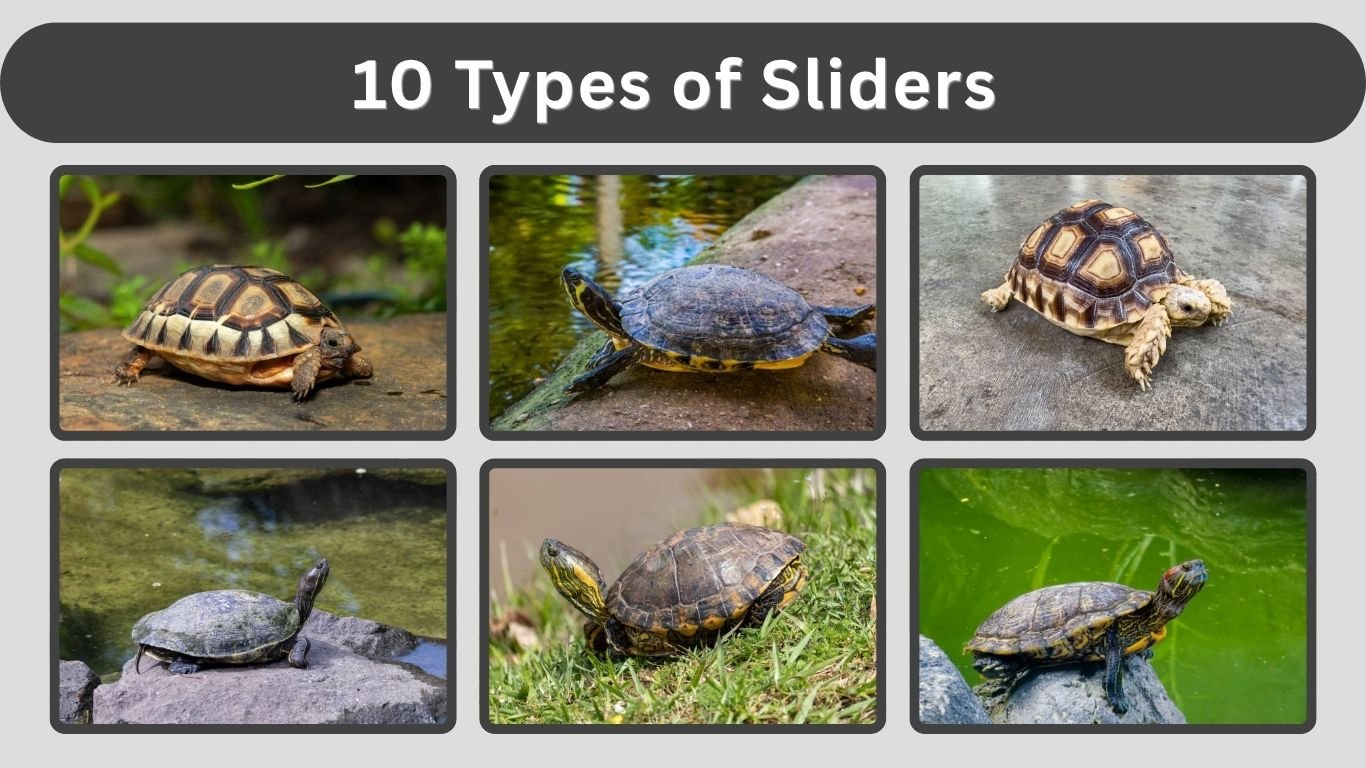
Slider turtles are among the most popular freshwater turtles found in ponds, lakes, rivers, and wetlands around the world. They are known for their colorful shell patterns, active swimming behavior, and habit of basking under the sun. Different slider turtle species vary in appearance, habitat, and geographic distribution, but all are highly adapted to aquatic environments. Some species are commonly kept as pets, while others thrive in the wild across North America, Central America, and the Caribbean. In this guide, you will discover 10 fascinating types of slider turtles and learn about their identification, habitat, behavior, diet, and lifespan.
1. Red-Eared Slider
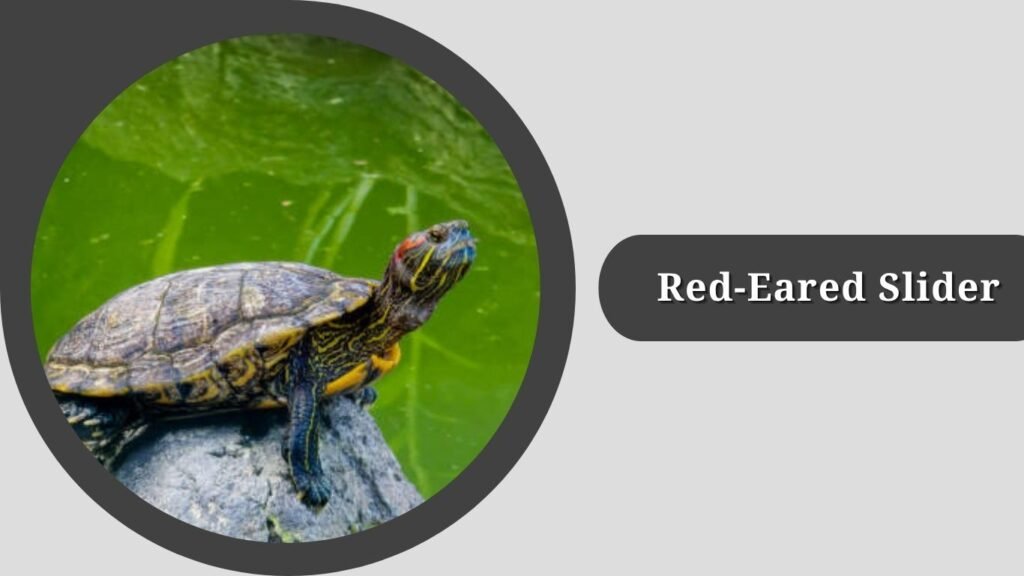
Red-Eared Slider (Trachemys scripta elegans) is one of the most popular and widely recognized freshwater turtles in the world. This species is famous for the bright red markings near its ears, active swimming behavior, and adaptability to different aquatic environments. It is commonly kept as a pet and naturally occurs in freshwater habitats across the United States.
Identification
- Distinct red patches located behind each eye
- Olive to dark green shell with yellow patterns
- Smooth and slightly domed carapace
- Yellow stripes across the neck, head, and limbs
- Strong webbed feet for swimming
- Adult size usually ranges from 8 to 12 inches
- Females are generally larger than males
Habitat and Distribution
Red-Eared Sliders inhabit ponds, lakes, marshes, rivers, canals, and slow-moving freshwater streams. They prefer warm aquatic environments with soft bottoms, aquatic vegetation, and plenty of basking spots such as logs and rocks. Originally native to the southern United States, this species has spread worldwide due to the pet trade. Red-Eared Sliders are highly adaptable and can survive in many freshwater ecosystems, including urban waterways and artificial ponds.
Behavior and Diet
Red-Eared Sliders are active during the daytime and spend many hours basking under sunlight to regulate body temperature. They are strong swimmers and quickly dive into the water when disturbed. Their diet is omnivorous and changes with age. Young turtles consume insects, fish, snails, and aquatic animals, while adults eat more aquatic plants, algae, and vegetation. These turtles are social baskers and are often seen resting together on logs or rocks.
Lifespan
Red-Eared Sliders are long-lived turtles that can survive for several decades. In the wild, they commonly live between 20 and 30 years, although some may live longer in ideal conditions. Captive turtles often reach 40 years or more when provided with proper nutrition, clean water, and suitable basking areas.
2. Yellow-Bellied Slider
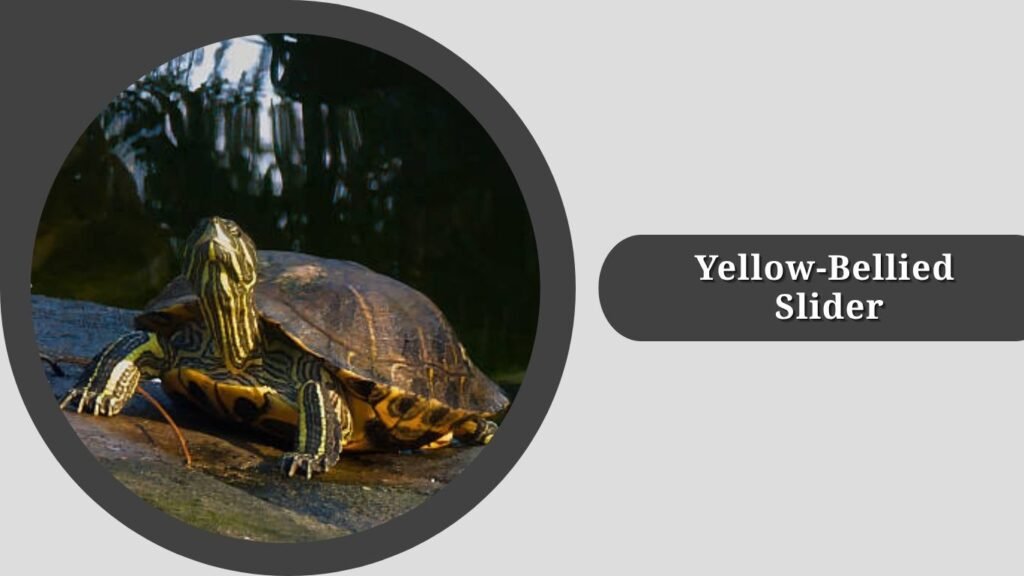
Yellow-Bellied Slider (Trachemys scripta scripta) is a common freshwater turtle native to the southeastern United States. This species is known for its bright yellow markings, smooth shell, and active basking behavior. It is frequently found in calm freshwater habitats with abundant vegetation and sunny basking areas.
Identification
- Dark olive or black shell with yellow streaks
- Bright yellow underside or plastron
- Yellow vertical patch behind each eye
- Smooth and slightly oval-shaped carapace
- Yellow stripes on the neck, head, and legs
- Strongly webbed feet for swimming
- Adults usually grow between 8 and 13 inches long
Habitat and Distribution
Yellow-Bellied Sliders inhabit freshwater ponds, lakes, marshes, swamps, rivers, and slow-moving streams. They prefer warm aquatic environments with dense vegetation and plenty of basking spots such as rocks, logs, and floating debris. This species is commonly found throughout the southeastern United States and has also been introduced to other regions through the pet trade. Yellow-Bellied Sliders are highly adaptable and can survive in both natural and man-made freshwater habitats.
Behavior and Diet
Yellow-Bellied Sliders are active during the daytime and spend much of their time basking in the sun. They are excellent swimmers and quickly escape into the water when threatened. Their diet is omnivorous, consisting of aquatic plants, algae, insects, snails, tadpoles, and small fish. Juveniles eat more animal-based foods, while adults consume more vegetation. These turtles are often seen basking in groups near the water’s edge.
Lifespan
Yellow-Bellied Sliders are long-lived reptiles capable of surviving for many decades. In the wild, they commonly live between 20 and 30 years depending on habitat quality and environmental conditions. In captivity, with proper care, clean water, balanced nutrition, and suitable basking areas, they may live for 40 years or longer.
3. Cumberland Slider
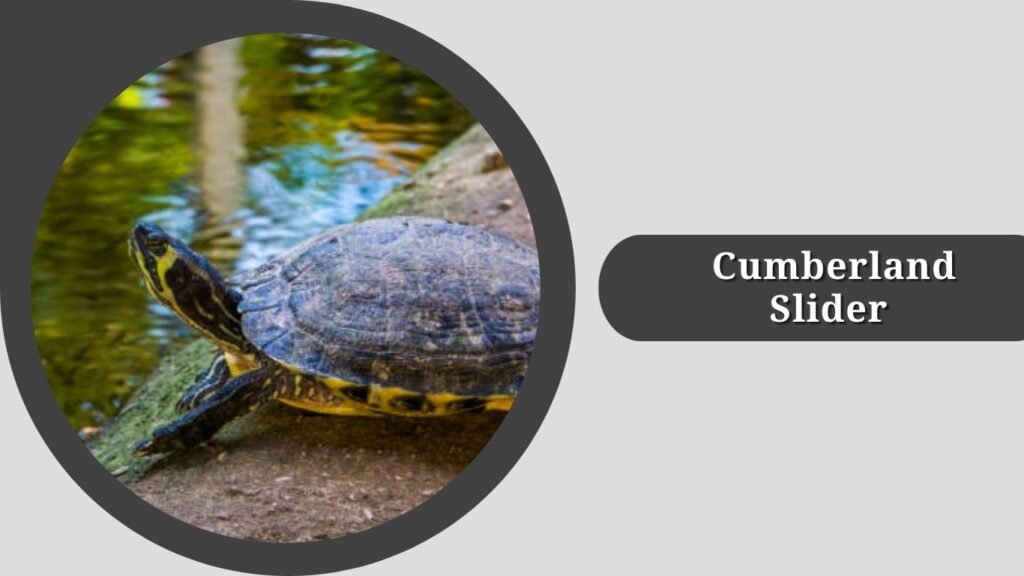
Cumberland Slider (Trachemys scripta troostii) is a freshwater turtle native to the Cumberland River region of the United States. This species is admired for its attractive shell patterns, yellow facial markings, and active aquatic lifestyle. It is closely related to other pond sliders but has unique color and stripe patterns.
Identification
- Olive or brown shell with yellow circular markings
- Narrow yellow stripes on the head and neck
- No large red patch behind the eyes
- Smooth and slightly domed carapace
- Yellow underside with dark blotches
- Strong webbed feet for swimming
- Adults usually grow between 7 and 11 inches long
Habitat and Distribution
Cumberland Sliders are mainly found in rivers, ponds, lakes, reservoirs, and slow-moving streams within the Cumberland and Tennessee River systems. They prefer freshwater habitats with warm water, aquatic vegetation, and abundant basking locations such as logs and rocks. This species thrives in calm aquatic environments with soft muddy bottoms and healthy plant growth. Although native to the southeastern United States, Cumberland Sliders are also found in some non-native areas due to the pet trade.
Behavior and Diet
Cumberland Sliders are active during daylight hours and spend significant time basking under the sun. They are strong swimmers and quickly hide underwater when threatened. Their diet is omnivorous and includes aquatic plants, algae, insects, snails, small fish, and tadpoles. Younger turtles consume more protein-rich foods, while adults prefer vegetation. These turtles are social baskers and are often observed sharing basking spots with other freshwater turtles.
Lifespan
Cumberland Sliders are long-lived turtles capable of surviving for several decades. In the wild, they commonly live between 20 and 30 years depending on habitat conditions and predator threats. Captive turtles may live 40 years or longer when provided with proper care, clean water, balanced nutrition, and suitable basking areas.
4. Big Bend Slider
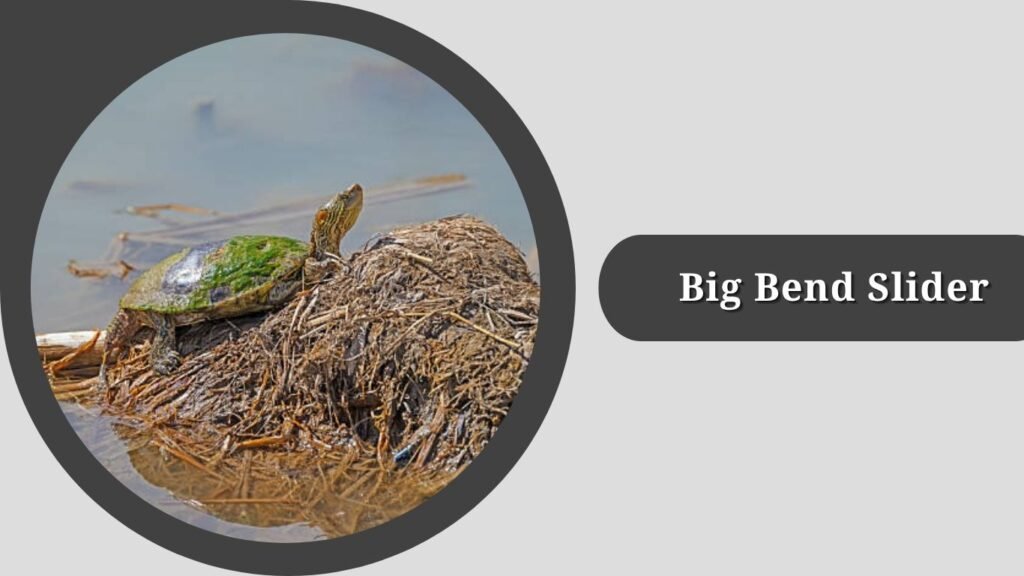
Big Bend Slider (Trachemys gaigeae) is a freshwater turtle native to the Rio Grande drainage system in Texas and northern Mexico. This species is known for its colorful shell patterns, active swimming behavior, and preference for warm freshwater habitats. It is commonly found in rivers and pools with rocky surroundings.
Identification
- Olive or brown shell with yellow and orange markings
- Smooth and slightly flattened carapace
- Bright yellow stripes on the head and neck
- Light-colored plastron with dark symmetrical patterns
- Strongly webbed feet for swimming
- Adults usually grow between 8 and 11 inches long
- Females are larger than males
Habitat and Distribution
Big Bend Sliders inhabit freshwater rivers, pools, ponds, and slow-moving streams within the Rio Grande basin of Texas and Mexico. They prefer warm aquatic habitats with rocky bottoms, aquatic vegetation, and sunny basking areas. This species is especially associated with the Big Bend region, where it thrives in calm waters surrounded by desert landscapes. Big Bend Sliders spend most of their lives in water and rely on stable freshwater ecosystems for food, shelter, and reproduction.
Behavior and Diet
Big Bend Sliders are active during the daytime and regularly bask in sunlight to regulate body temperature. They are cautious turtles and quickly retreat into the water when disturbed. Their diet is omnivorous and includes aquatic plants, algae, insects, snails, crustaceans, and small fish. Younger turtles consume more animal matter, while adults prefer more vegetation. These turtles contribute to aquatic ecosystem balance by feeding on both plant and animal material.
Lifespan
Big Bend Sliders are long-lived reptiles capable of surviving for many years in healthy habitats. In the wild, they commonly live between 20 and 30 years depending on environmental conditions and food availability. In captivity, with proper care, clean water, and balanced nutrition, they may live even longer and maintain good health for decades.
5. Rio Grande Slider
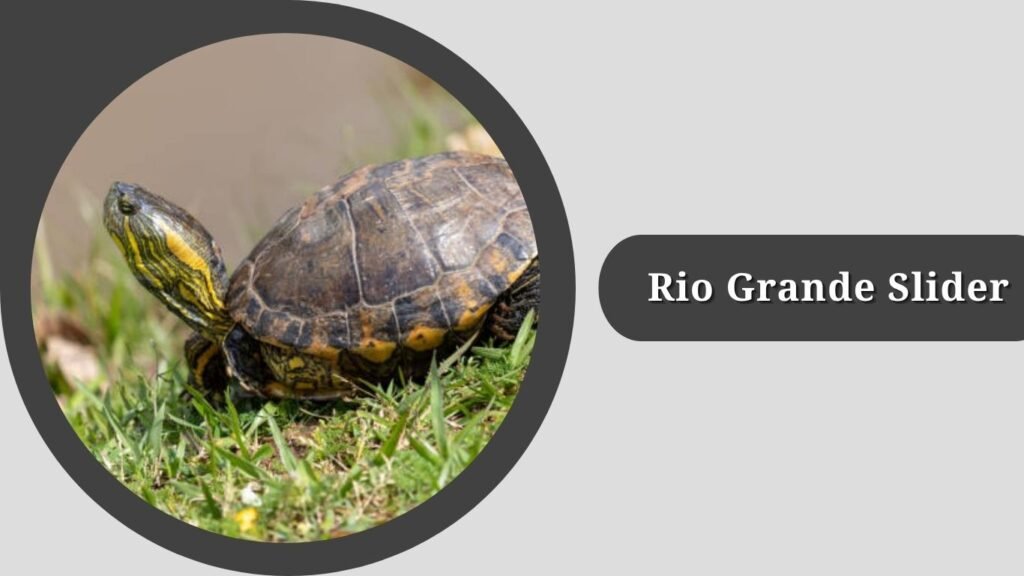
Rio Grande Slider (Trachemys gaigeae) is a freshwater turtle native to the Rio Grande river system in the United States and Mexico. This species is recognized for its colorful shell markings, active swimming behavior, and strong adaptation to warm aquatic habitats. It is commonly found basking near riverbanks and rocky freshwater pools.
Identification
- Olive or dark brown shell with yellow and orange patterns
- Smooth and slightly oval-shaped carapace
- Bright yellow stripes on the face and neck
- Light-colored plastron with dark symmetrical markings
- Strong webbed feet designed for swimming
- Adults generally grow between 8 and 12 inches long
- Females are usually larger than males
Habitat and Distribution
Rio Grande Sliders inhabit rivers, ponds, reservoirs, and slow-moving freshwater streams along the Rio Grande basin in Texas and northern Mexico. They prefer warm waters with aquatic vegetation, rocky bottoms, and sunny basking locations. This species thrives in freshwater habitats with stable water conditions and abundant food sources. Rio Grande Sliders spend most of their lives in water and only leave aquatic environments for basking or nesting activities.
Behavior and Diet
Rio Grande Sliders are active during the daytime and frequently bask in groups under direct sunlight. They are cautious turtles that quickly dive into the water when threatened. Their diet is omnivorous and includes aquatic plants, algae, insects, snails, crustaceans, and small fish. Juveniles consume more protein-rich foods, while adults rely more heavily on vegetation. These turtles help maintain ecological balance by feeding on both plant and animal matter within freshwater ecosystems.
Lifespan
Rio Grande Sliders are long-lived turtles capable of surviving for several decades. In natural habitats, they commonly live between 20 and 30 years depending on environmental conditions and predator threats. Captive individuals may live even longer when provided with proper care, clean water, balanced nutrition, and suitable basking areas.
6. Nicaraguan Slider
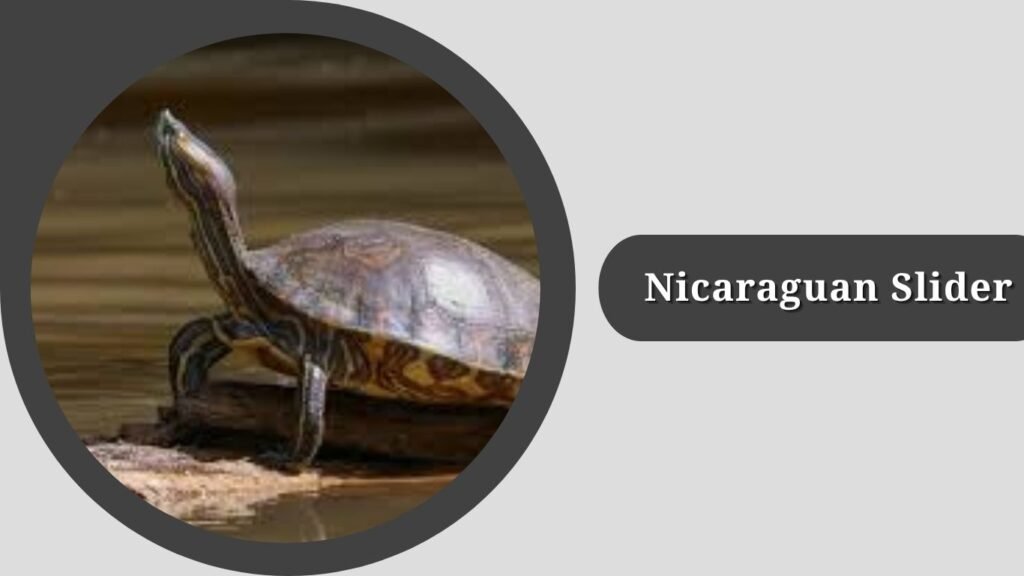
Nicaraguan Slider (Trachemys emolli) is a freshwater turtle native to Central America, especially Nicaragua and nearby regions. This species is known for its colorful shell patterns, active aquatic lifestyle, and adaptability to tropical freshwater habitats. It is commonly found in lakes, ponds, and slow-moving waterways.
Identification
- Olive or brown shell with yellow circular markings
- Smooth and slightly domed carapace
- Yellow stripes on the head, neck, and limbs
- Light-colored plastron with dark blotches
- Strongly webbed feet for swimming
- Adults usually grow between 8 and 12 inches long
- Females are generally larger than males
Habitat and Distribution
Nicaraguan Sliders inhabit freshwater lakes, ponds, marshes, canals, and slow-moving rivers throughout Nicaragua and surrounding parts of Central America. They prefer warm tropical waters with dense aquatic vegetation and suitable basking areas such as logs and rocks. This species thrives in calm aquatic environments where food and shelter are abundant. Nicaraguan Sliders spend most of their lives in water and only leave aquatic habitats for basking or nesting activities.
Behavior and Diet
Nicaraguan Sliders are active during daylight hours and spend long periods basking in the sun to regulate body temperature. They are excellent swimmers and quickly escape into the water when disturbed. Their diet is omnivorous and includes aquatic plants, algae, insects, snails, crustaceans, and small fish. Younger turtles consume more animal-based foods, while adults eat more vegetation. These turtles help support freshwater ecosystem balance through their feeding habits.
Lifespan
Nicaraguan Sliders are long-lived turtles capable of surviving for several decades. In natural habitats, they commonly live between 20 and 30 years depending on environmental conditions and food availability. Captive individuals may live even longer with proper care, clean water, balanced nutrition, and appropriate basking areas.
7. Meso-American Slider
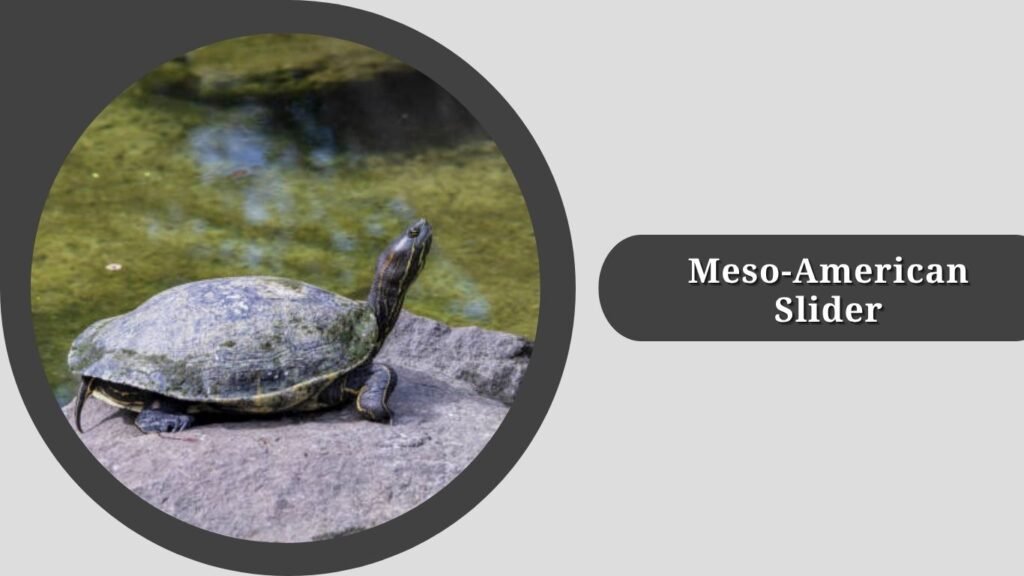
Meso-American Slider (Trachemys venusta) is a colorful freshwater turtle native to Central America and parts of Mexico. This species is known for its vibrant shell markings, active swimming behavior, and adaptability to tropical freshwater habitats. It is one of the most visually striking slider turtles found in the region.
Identification
- Olive or dark brown shell with yellow and orange patterns
- Smooth and oval-shaped carapace
- Bright yellow stripes on the head and neck
- Light-colored plastron with dark markings
- Strong webbed feet for swimming
- Adults usually grow between 10 and 14 inches long
- Females are larger and heavier than males
Habitat and Distribution
Meso-American Sliders inhabit freshwater lakes, ponds, marshes, canals, rivers, and wetlands across Central America and southern Mexico. They prefer warm tropical environments with abundant aquatic vegetation and calm water conditions. This species thrives in habitats with soft muddy bottoms and plenty of basking areas such as logs and floating debris. Meso-American Sliders spend most of their lives in water and are highly dependent on healthy freshwater ecosystems for survival and reproduction.
Behavior and Diet
Meso-American Sliders are active during the daytime and frequently bask in the sun to maintain body temperature. They are strong swimmers and quickly retreat into the water when threatened. Their diet is omnivorous and includes aquatic plants, algae, insects, snails, worms, crustaceans, and small fish. Younger turtles consume more protein-rich foods, while adults rely more heavily on vegetation. These turtles contribute to freshwater ecosystem health by helping regulate plant and small animal populations.
Lifespan
Meso-American Sliders are long-lived turtles that can survive for several decades. In the wild, they commonly live between 20 and 30 years depending on environmental conditions and food availability. In captivity, with proper care, balanced nutrition, clean water, and suitable basking areas, they may live even longer and remain healthy for many years.
8. Colombian Slider
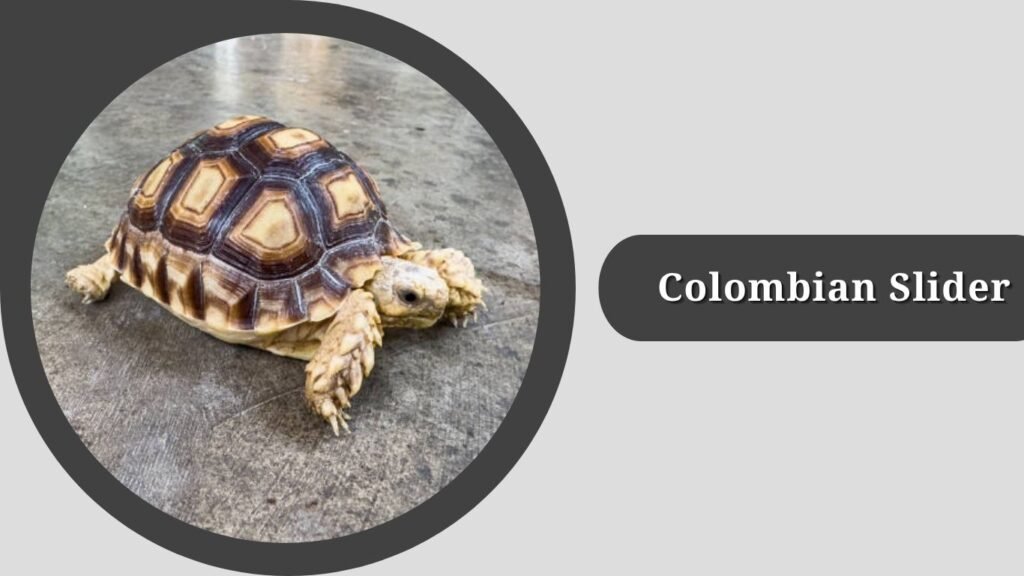
Colombian Slider (Trachemys callirostris) is a freshwater turtle native to northern South America, especially Colombia and Venezuela. This species is recognized for its colorful markings, strong swimming abilities, and adaptability to tropical freshwater environments. It is commonly found in ponds, rivers, marshes, and slow-moving waterways.
Identification
- Olive or dark brown shell with yellow patterns
- Smooth and slightly oval-shaped carapace
- Yellow stripes on the face, neck, and limbs
- Light-colored plastron with dark blotches
- Strongly webbed feet designed for swimming
- Adults usually grow between 8 and 13 inches long
- Females are generally larger than males
Habitat and Distribution
Colombian Sliders inhabit freshwater rivers, lakes, ponds, marshes, wetlands, and canals throughout Colombia, Venezuela, and nearby regions of South America. They prefer warm tropical habitats with abundant aquatic vegetation and calm water conditions. This species thrives in environments with soft muddy bottoms and plenty of basking sites such as logs and rocks. Colombian Sliders spend most of their lives in water and depend on healthy freshwater ecosystems for feeding, nesting, and shelter.
Behavior and Diet
Colombian Sliders are active during daylight hours and spend significant time basking in the sun. They are excellent swimmers and quickly escape into the water when threatened. Their diet is omnivorous and includes aquatic plants, algae, insects, worms, snails, crustaceans, and small fish. Juveniles eat more animal matter, while adults consume larger amounts of vegetation. These turtles help maintain ecological balance in freshwater habitats through their feeding behavior.
Lifespan
Colombian Sliders are long-lived turtles capable of surviving for several decades. In the wild, they commonly live between 20 and 30 years depending on habitat quality and environmental conditions. Captive turtles may live even longer with proper nutrition, clean water, suitable basking areas, and regular care.
9. Venezuelan Slider

Venezuelan Slider (Trachemys dorbigni commonly associated in regional classifications) is a freshwater turtle native to northern South America, especially Venezuela and nearby tropical regions. This species is admired for its colorful shell markings, active swimming behavior, and strong adaptation to warm freshwater habitats.
Identification
- Olive or dark brown shell with yellow markings
- Smooth and slightly domed carapace
- Yellow stripes on the head, neck, and legs
- Light-colored plastron with dark blotches
- Strongly webbed feet for swimming
- Adults usually grow between 8 and 12 inches long
- Females are generally larger than males
Habitat and Distribution
Venezuelan Sliders inhabit freshwater lakes, rivers, ponds, marshes, and slow-moving streams throughout Venezuela and nearby tropical areas. They prefer warm aquatic habitats with abundant vegetation and calm water conditions. This species thrives in wetlands and shallow freshwater environments where basking spots such as logs and rocks are available. Venezuelan Sliders spend most of their lives in water and rely heavily on stable aquatic ecosystems for food, shelter, and nesting opportunities.
Behavior and Diet
Venezuelan Sliders are active during the daytime and often bask under direct sunlight to regulate body temperature. They are cautious turtles that quickly retreat into the water when disturbed. Their diet is omnivorous and includes aquatic plants, algae, insects, worms, snails, crustaceans, and small fish. Juveniles consume more protein-rich foods, while adults feed more heavily on vegetation. These turtles help maintain balance in freshwater ecosystems by feeding on both plant and animal matter.
Lifespan
Venezuelan Sliders are long-lived reptiles capable of surviving for several decades. In natural habitats, they commonly live between 20 and 30 years depending on environmental conditions and food availability. In captivity, with proper care, clean water, balanced nutrition, and suitable basking areas, they may live even longer and remain healthy for many years.
10. Antillean Slider
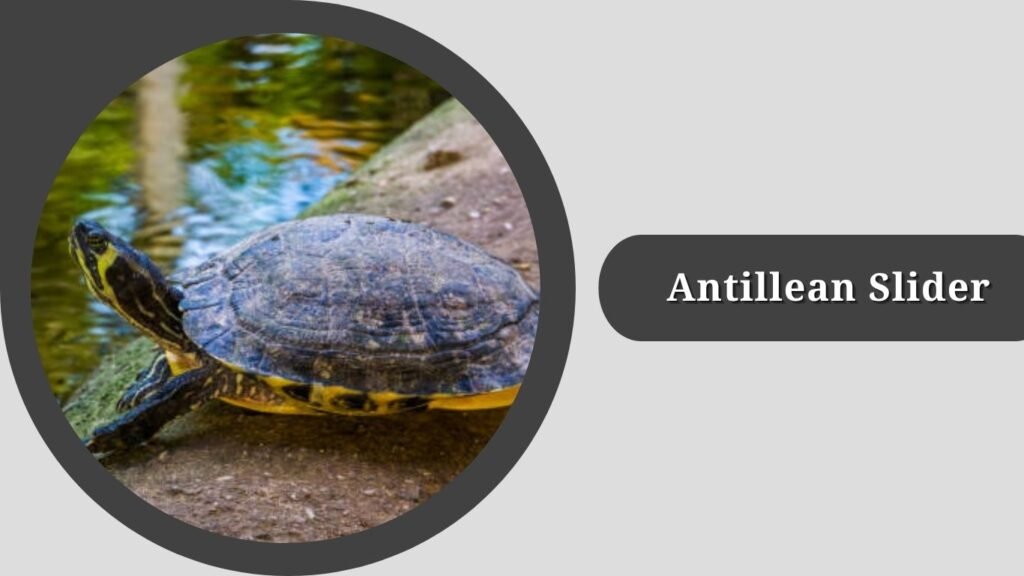
Antillean Slider (Trachemys stejnegeri) is a freshwater turtle native to the Caribbean islands, including Puerto Rico and nearby regions. This species is known for its colorful shell markings, aquatic lifestyle, and ability to thrive in tropical freshwater habitats. It is commonly found in ponds, wetlands, and slow-moving waterways.
Identification
- Olive or dark brown shell with yellow patterns
- Smooth and slightly oval-shaped carapace
- Yellow stripes on the head, neck, and limbs
- Light-colored plastron with dark markings
- Strong webbed feet designed for swimming
- Adults usually grow between 8 and 12 inches long
- Females are generally larger than males
Habitat and Distribution
Antillean Sliders inhabit freshwater ponds, lakes, marshes, wetlands, rivers, and canals throughout the Caribbean islands. They prefer warm tropical environments with calm water, abundant aquatic vegetation, and suitable basking areas such as logs and rocks. This species spends most of its life in water and thrives in habitats with soft muddy bottoms and stable freshwater conditions. Antillean Sliders are highly adapted to tropical climates and rely on healthy wetlands for feeding and reproduction.
Behavior and Diet
Antillean Sliders are active during daylight hours and spend long periods basking under sunlight. They are excellent swimmers and quickly retreat into the water when threatened. Their diet is omnivorous and includes aquatic plants, algae, insects, worms, snails, crustaceans, and small fish. Younger turtles consume more animal-based foods, while adults rely more heavily on vegetation. These turtles contribute to freshwater ecosystem health by helping regulate aquatic plant and small animal populations.
Lifespan
Antillean Sliders are long-lived turtles capable of surviving for several decades. In the wild, they commonly live between 20 and 30 years depending on habitat quality and environmental conditions. Captive individuals may live even longer with proper care, balanced nutrition, clean water, and suitable basking conditions.
FAQs
What is a slider turtle?
A slider turtle is a type of freshwater turtle belonging to the genus Trachemys. These turtles are known for their strong swimming abilities, colorful markings, and habit of sliding off logs or rocks into the water when disturbed.
What do slider turtles eat?
Slider turtles are omnivores that eat both plant and animal matter. Their diet commonly includes aquatic plants, algae, insects, worms, snails, crustaceans, and small fish. Adult sliders usually consume more vegetation than juveniles.
How long do slider turtles live?
Most slider turtles can live between 20 and 30 years in the wild. In captivity, with proper care, balanced nutrition, clean water, and suitable basking areas, some individuals may survive for 40 years or longer.
Where do slider turtles live?
Slider turtles inhabit freshwater environments such as ponds, lakes, rivers, marshes, wetlands, and slow-moving streams. They prefer warm waters with aquatic vegetation and plenty of basking spots like rocks and logs.
Are slider turtles good pets?
Slider turtles are popular pets because of their attractive appearance and active behavior. However, they require large aquatic tanks, clean water, UVB lighting, proper heating, and a balanced diet to remain healthy for many years.