
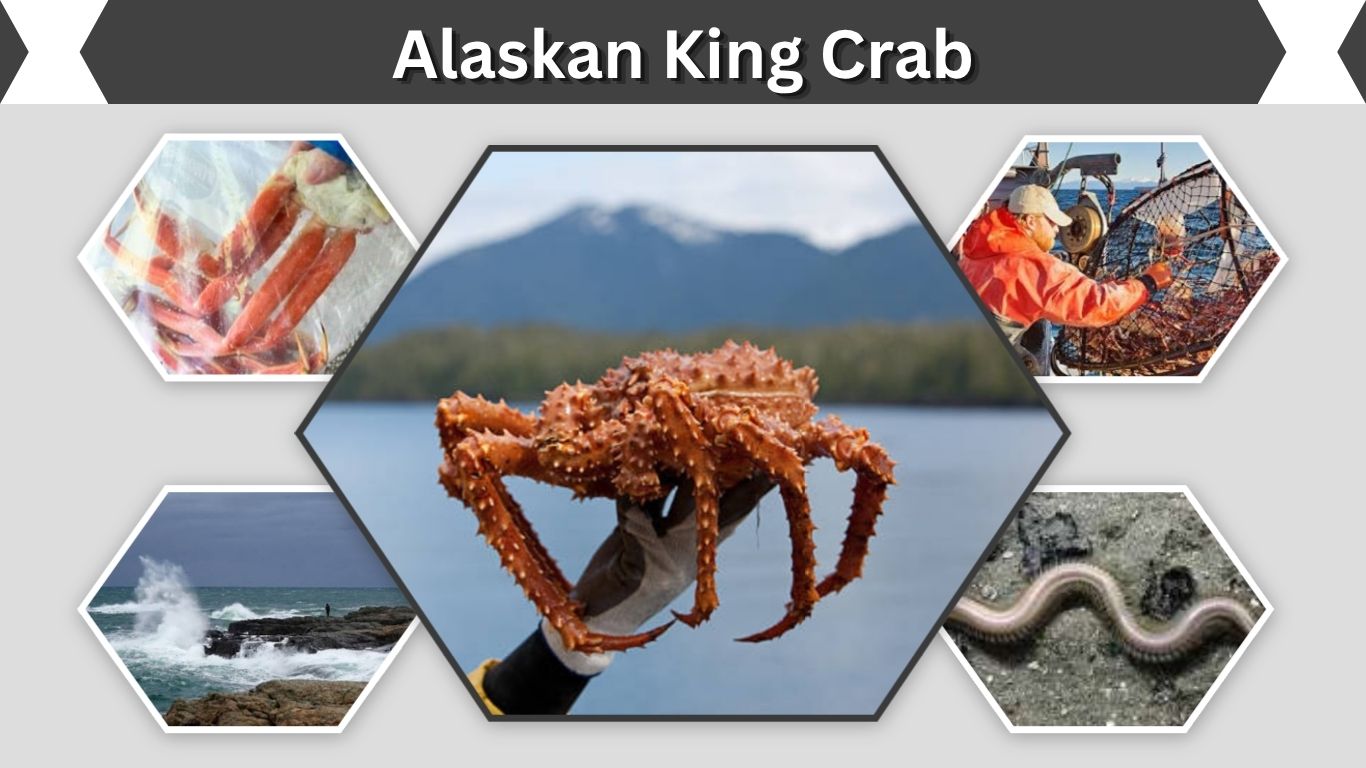
Alaskan king crab is famous for its enormous spiny legs, firm white meat, and high commercial value. The term does not identify just one animal; Alaska has red, blue, golden, and scarlet king crabs, although red king crab is the best-known and largest. These cold-water crustaceans live on the ocean floor and are harvested under tightly controlled fishing rules. This guide covers their identification, size, habitat, diet, fishing season, price, and cooking methods.
What Is an Alaskan King Crab?
Alaskan king crabs are large marine crustaceans belonging to the family Lithodidae. They are anomurans, meaning they are more closely related to hermit crabs than to true crabs such as blue crabs or Dungeness crabs. Their crab-like shape developed through an evolutionary process known as carcinization.
| Feature | Description |
| Animal group | Marine crustacean |
| Main habitat | Cold Alaskan ocean waters |
| Major types | Red, blue, golden, and scarlet |
| Largest type | Red king crab |
| Main commercial product | Cooked and frozen legs and claws |
| Diet | Bottom-dwelling animals and organic matter |
| Fishing method | Baited steel pots |
| Human risk | Not venomous, but live crabs can pinch |
Types of Alaskan King Crab
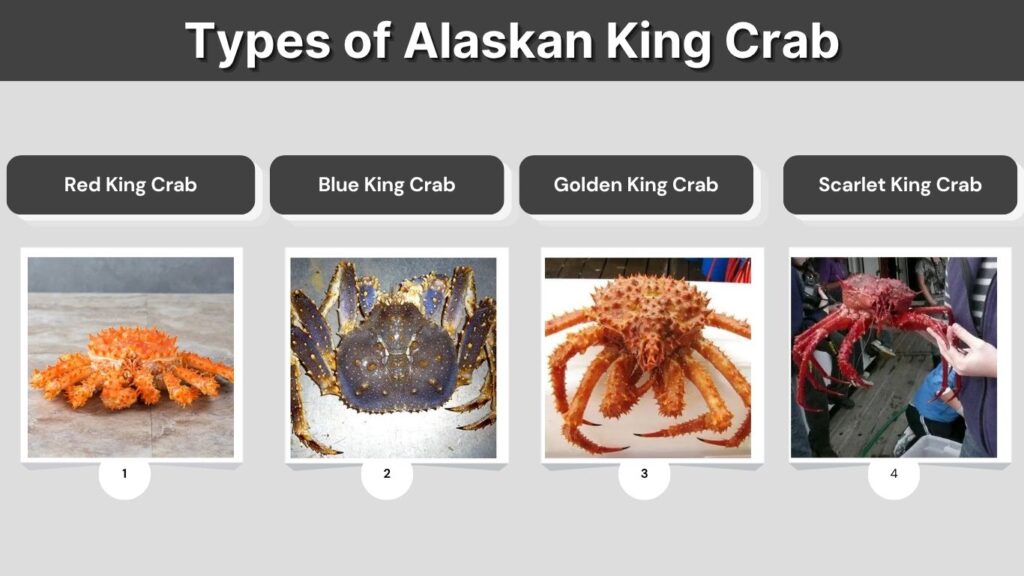
Several king crab species occur in Alaskan waters. They differ in size, depth preference, abundance, and commercial importance.
Red King Crab
The red king crab, Paralithodes camtschaticus, is the largest and historically most valuable Alaskan king crab. Living individuals are usually burgundy, reddish-brown, or dark purple rather than bright red. Heat releases the vivid red-orange shell color seen after cooking.
Blue King Crab
Blue king crab, Paralithodes platypus, has a blue-gray, purple, or brownish shell. It is the rarest of Alaska’s major king crab species. Its shell turns reddish after cooking, so cooked blue and red king crab legs may look similar.
Golden King Crab
Golden king crab, Lithodes aequispinus, usually lives in deeper water than red king crab. It has a golden-orange or brown shell, longer and more slender legs, and smaller meat sections. Golden king crab is among the most abundant king crabs across its Alaskan range.
Scarlet King Crab
Scarlet king crab is another species recorded in Alaska, but it is less familiar to seafood consumers and has much less commercial importance than red, blue, or golden king crab.
Alaskan King Crab Identification
King crabs have broad armored bodies, long walking legs, and shells covered with sharp bumps or spines. Although they possess five pairs of legs, their final pair is small and normally concealed beneath the shell, making them appear to have only eight visible legs.
Key Identification Features
- Broad, heavily armored body
- Long legs covered with sharp spines
- One pair of claws, often unequal in size
- Small fifth pair of legs hidden beneath the shell
- Red, blue-gray, golden, brown, or purple coloration
- Abdomen folded beneath the body
- Stalked compound eyes
The larger claw helps crush hard prey, while the smaller claw handles and tears softer food.
How Big Do Alaskan King Crabs Get?
Red king crab is the largest Alaskan king crab species. Exceptional individuals can weigh up to about 24 pounds and develop a leg span approaching five feet. Most crabs encountered in commercial harvests are smaller than these maximum measurements.
Males grow considerably larger than females and are the primary target of commercial fisheries. Females have a broader abdominal flap for holding eggs, while mature males typically have longer legs and larger claws.
Where Do Alaskan King Crabs Live?
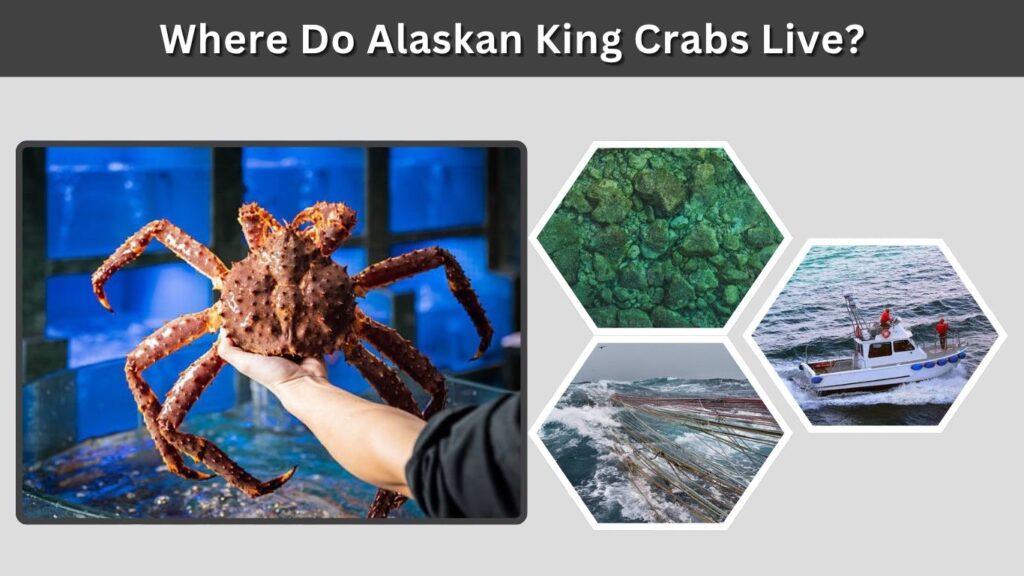
Alaskan king crabs occupy the Bering Sea, Aleutian Islands, Gulf of Alaska, and parts of Southeast Alaska. Red king crab has historically supported fisheries around Bristol Bay, Norton Sound, Kodiak Island, the Pribilof Islands, and other areas, although abundance and fishery status differ by location.
Preferred Habitat
King crabs may live on:
- Rocky ocean floors
- Gravel and broken-shell beds
- Sandy or muddy bottoms
- Shallow coastal nursery grounds
- Continental shelves
- Deep underwater slopes
Young crabs benefit from complex habitats containing rocks, shells, and other structures that provide shelter. Larger adults may migrate between deeper feeding grounds and shallower reproductive areas. NOAA conducts habitat and population research to understand how environmental conditions affect Alaskan crab stocks.
What Do Alaskan King Crabs Eat?
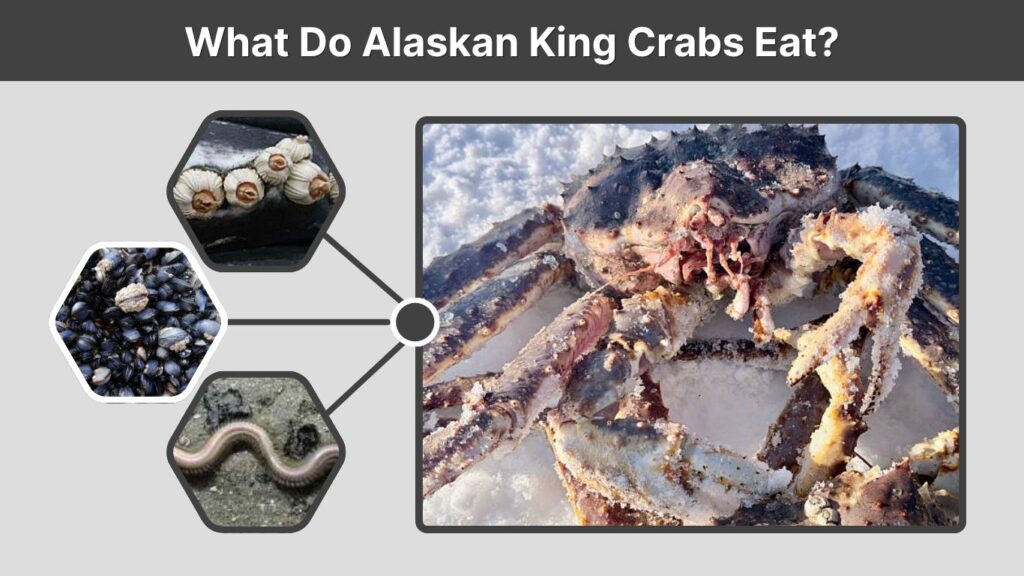
King crabs are opportunistic bottom feeders. Their diet can include clams, mussels, marine worms, snails, barnacles, brittle stars, sea urchins, small crustaceans, fish remains, and organic debris.
Young crabs consume smaller organisms, while large adults can use their powerful claws to break hard shells. King crabs can also be cannibalistic, particularly when larger individuals encounter young or recently molted crabs.
Alaskan King Crab Life Cycle
Female king crabs carry fertilized eggs beneath their abdominal flaps until the larvae hatch. The larvae initially drift through the water and pass through several developmental stages before settling on the seafloor.
Juveniles molt repeatedly as they grow. During each molt, the crab leaves its old exoskeleton and remains soft and vulnerable until the new shell hardens. Growth slows as the crab ages, which means rebuilding depleted populations can take considerable time.
When Is Alaskan King Crab Season?
There is no single permanent season covering every Alaskan king crab fishery. Opening dates, harvest limits, and closures vary by species, management area, stock condition, and year.
Alaskan crab fisheries follow size, sex, and season management. This generally means only males above a specified minimum size may be commercially harvested during an authorized period. Some stocks or areas may remain closed when abundance is too low. Always check the latest Alaska Department of Fish and Game announcements instead of relying on dates from a previous year.
How Are Alaskan King Crabs Caught?
Commercial fishers use large baited steel pots placed on the ocean floor. Chopped fish such as herring may be used as bait. The pots remain underwater for a set period before crews retrieve them and sort the catch onboard.
Legal males are retained, while undersized crabs and females are returned to the water. Fishing is managed jointly by agencies that conduct stock assessments, establish harvest strategies, and monitor fishing activity.
Why Are Alaskan King Crab Legs Expensive?
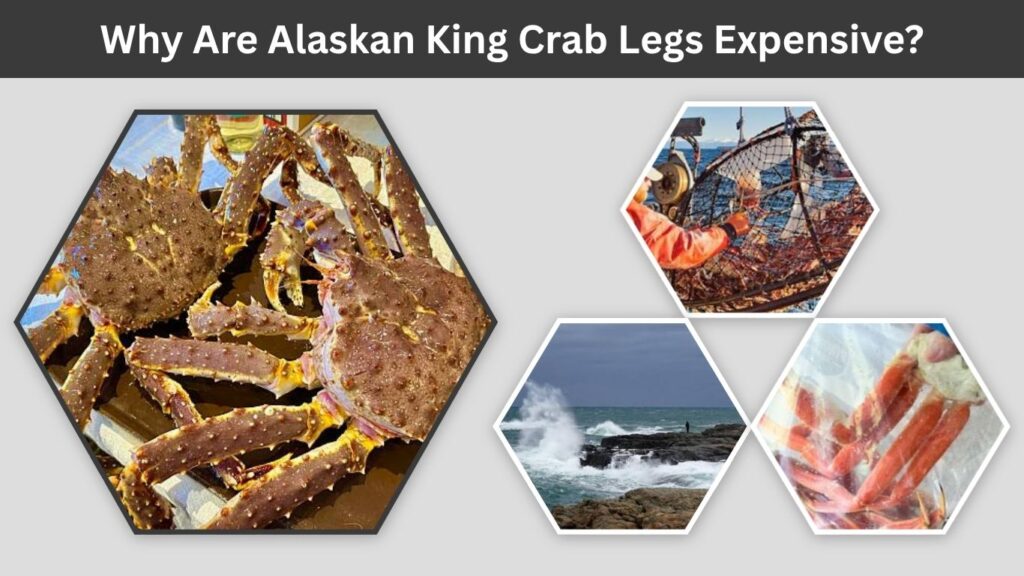
King crab prices change with species, leg size, stock availability, fishing quotas, retailer, and product form. Large red king crab legs generally cost more than smaller golden king crab portions.
Several factors contribute to the cost:
- Remote and dangerous fishing grounds
- Heavy equipment and specialized vessels
- Limited fishing seasons and quotas
- Processing and freezing expenses
- Transportation from Alaska
- Large restaurant and retail demand
- Reduced availability from some crab stocks
Current market prices can change substantially, so a fixed price per pound may quickly become outdated.
How to Cook Alaskan King Crab Legs
Most frozen Alaskan king crab legs sold to consumers are already cooked. They normally require gentle reheating rather than prolonged cooking. Alaska Seafood lists steaming, boiling, baking, and grilling among suitable preparation methods.
Simple Reheating Methods
Steaming: Place the legs over simmering water, cover the pot, and heat until the meat is hot.
Boiling: Briefly place the legs in gently boiling water. Avoid leaving them too long because the meat may become dry.
Baking: Wrap the legs with a small amount of water or butter and warm them in a covered baking dish or foil packet.
Grilling: Heat the legs in foil or directly over moderate heat. One Alaska Seafood recipe recommends approximately 4 minutes for thawed legs or 8–10 minutes for frozen legs in a foil packet.
Use kitchen shears to cut along the shell, making it easier to remove the meat without crushing it.
Alaskan King Crab vs. Snow Crab
| Feature | Alaskan King Crab | Snow Crab |
| Overall size | Larger and heavier | Smaller |
| Legs | Thick, spiny, and meaty | Long and relatively thin |
| Shell | Hard and heavily armored | Easier to crack |
| Meat | Large, firm portions | Delicate, string-like portions |
| Flavor | Rich and sweet | Mild and slightly sweet |
| Price | Usually higher | Generally more affordable |
Both are cold-water crustaceans, but they belong to different biological groups and are managed as separate fisheries. NOAA’s Alaska crab management framework covers red, blue, and golden king crabs as well as snow crab and Tanner crab.
FAQs
Is Alaskan king crab a single species?
No. The name may refer broadly to king crabs harvested in Alaska. Alaska has red, blue, golden, and scarlet king crab species, although red king crab is the type most consumers recognize.
What is the biggest Alaskan king crab?
Red king crab is the largest. Exceptional individuals may reach approximately 24 pounds and span close to five feet across their extended legs.
Are Alaskan king crab legs sold raw?
Most frozen legs are cooked before freezing and only need reheating. Check the package because live, raw, fresh-cooked, and previously frozen products require different preparation.
Can Alaskan king crabs regrow their legs?
A king crab may gradually regenerate a lost limb through later molts. The replacement begins small and becomes larger as the crab continues molting.
Is Alaskan king crab available throughout the year?
Frozen king crab products may be sold year-round even when fishing is not occurring. Live or fresh products are more dependent on active seasons, local supply, and fishery openings.