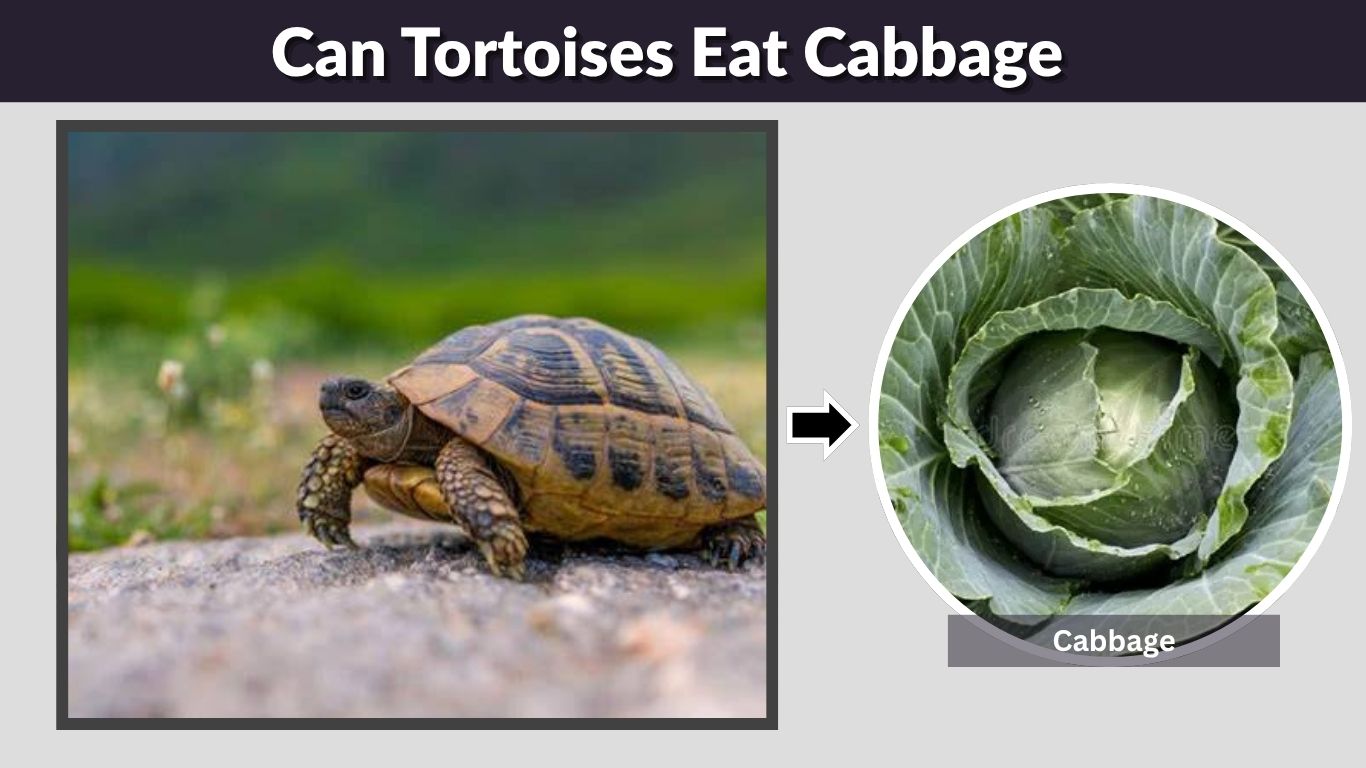
Tortoises can eat cabbage, but it should only be offered occasionally and in small amounts. While cabbage is not usually toxic, it is not the best everyday food for most tortoises. A healthy tortoise diet should focus on high-fiber weeds, grasses, flowers, and leafy greens that match the species’ natural feeding habits.
Is Cabbage Safe for Tortoises?
Yes, tortoises can eat cabbage, including cabbage leaves, but it should not become a regular part of their diet. Cabbage belongs to the brassica family, along with broccoli, cauliflower, kale, and Brussels sprouts. These vegetables can contain compounds called goitrogens, which may interfere with thyroid function if fed too often.
This does not mean one small serving of cabbage will harm a healthy tortoise. The concern is repeated feeding, large portions, or using cabbage as a main green. Many owners offer cabbage because it is cheap, easy to find, and lasts well in the fridge. However, convenience does not always make it the best choice.
For most tortoises, cabbage is better treated as a rare extra rather than a staple food. A varied diet built around safe weeds and leafy plants is much more suitable.
Can Tortoises Eat Cabbage Leaves?
Tortoises can eat cabbage leaves, but the same rule applies: only small amounts and not every day. The outer leaves may be tougher and more fibrous, while the inner leaves are softer and more watery. Wash the leaves carefully before feeding to remove dirt, pesticide residue, or handling contamination.
If you offer cabbage leaves, chop or tear them into manageable pieces. This is especially important for smaller tortoises and young tortoises that may struggle with large, stiff leaves.
Can Tortoises Eat Red Cabbage?
Tortoises can eat red cabbage occasionally. Red cabbage is similar to green cabbage in that it should not be a daily food. It may add variety to a mixed feeding plate, but it should still be used sparingly.
Do not feed large piles of red cabbage just because your tortoise likes it. Tortoises can develop preferences for certain foods, but owners still need to balance the diet carefully.
Why Cabbage Should Not Be a Staple Food
Cabbage is not the worst vegetable for tortoises, but it has limitations. The biggest issue is that cabbage does not match the natural diet of many grazing tortoise species. Wild tortoises often browse on weeds, grasses, flowers, fibrous leaves, and seasonal plants rather than supermarket vegetables.
| Food | Can Tortoises Eat It? | Best Feeding Approach |
|---|---|---|
| Green cabbage | Yes | Rarely, in small amounts |
| Red cabbage | Yes | Occasionally, mixed with better greens |
| Cabbage leaves | Yes | Washed and chopped, not daily |
| Lettuce | Sometimes | Avoid iceberg; use nutritious leaves sparingly |
| Carrots | Yes | Small amounts as an occasional extra |
| Cucumber | Yes | Mostly water, useful only as a treat |
| Spinach | Limited | Feed rarely because of oxalates |
| Cauliflower | Limited | Occasional only, not a staple |
The Goitrogen Concern
Cabbage contains goitrogenic compounds. These compounds are not automatically dangerous in tiny amounts, but frequent feeding may become a problem over time. The thyroid helps regulate important body functions, and diet imbalance can affect long-term health.
This is why many experienced keepers avoid feeding cabbage often. Instead of asking whether cabbage is “safe” in a simple yes-or-no way, it is better to ask whether it is useful enough to feed regularly. For most tortoises, the answer is no.
Water Content and Nutrition
Cabbage contains moisture, but it is not a complete food. Tortoises need fiber, calcium, and a balanced mineral intake. Feeding too many watery supermarket vegetables may fill the tortoise up without giving the right nutrition.
A diet that relies heavily on cabbage, lettuce, cucumber, or soft vegetables can be too low in fiber. Over time, this may contribute to digestive problems, poor growth, or shell issues.
How Much Cabbage Can a Tortoise Eat?
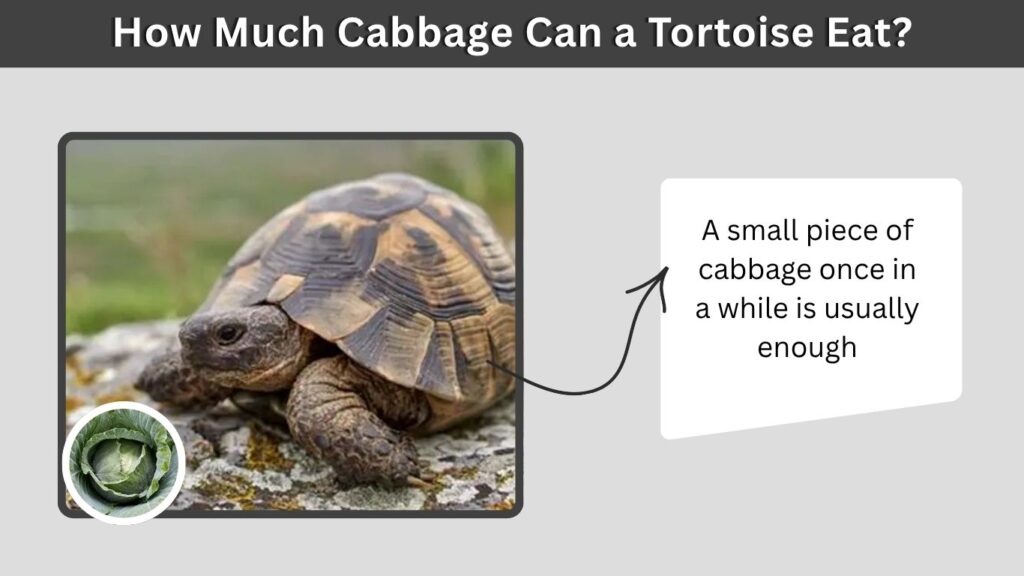
A small piece of cabbage once in a while is usually enough. The exact amount depends on your tortoise’s species, size, age, health, and normal diet. For a small tortoise, a few shredded pieces mixed with other greens may be plenty. For a large tortoise, a slightly bigger portion may be acceptable, but it should still be limited.
Use cabbage as a minor part of a varied meal, not the main ingredient. If the plate is mostly cabbage, it is too much.
Simple Feeding Rules
Use these practical rules when offering cabbage:
- Feed cabbage only occasionally, not daily.
- Mix it with safer weeds and leafy greens.
- Wash it well before serving.
- Chop it into suitable pieces.
- Remove uneaten cabbage before it spoils.
- Avoid feeding cabbage to replace proper grazing foods.
If your tortoise refuses cabbage, that is not a problem. There are many better foods you can offer instead.
Can Baby Tortoises Eat Cabbage?
Baby tortoises can eat tiny amounts of cabbage, but it is better to be more cautious with young tortoises. Babies need excellent nutrition for healthy growth and shell development. Their diet should focus on species-appropriate, calcium-rich, high-fiber foods.
Cabbage should not be used as a main green for baby tortoises. If offered at all, it should be finely chopped and mixed into a broader diet. Owners should pay special attention to hydration, UVB lighting, calcium, and safe feeding variety.
For baby tortoises, better options often include pesticide-free weeds, tender edible flowers, and suitable leafy greens recommended for the species.
Can Sulcata Tortoises Eat Cabbage?
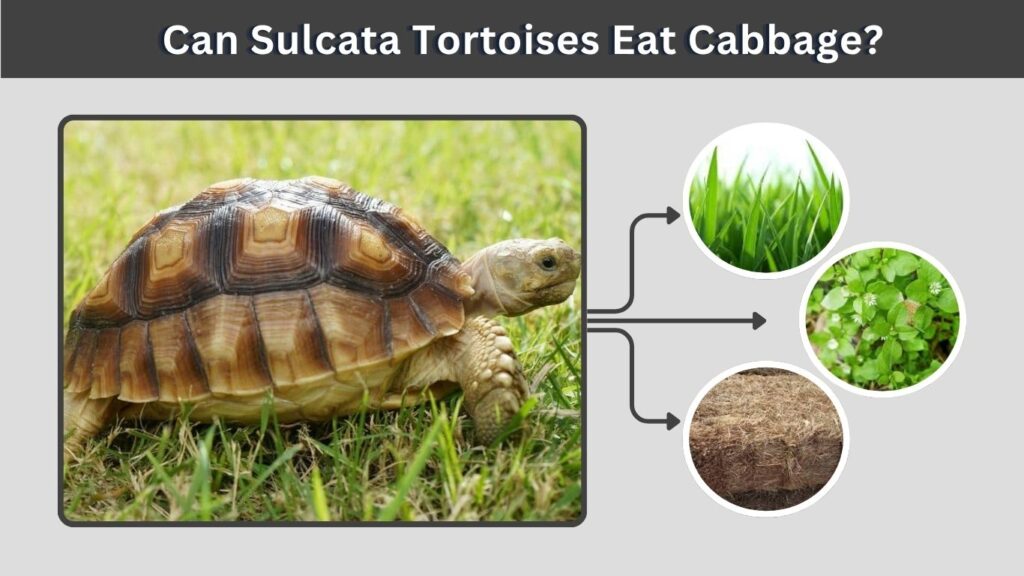
Sulcata tortoises can eat cabbage occasionally, but it is not ideal for them. Sulcatas are grazing tortoises that need a high-fiber diet based mainly on grasses and hay. Their digestive system is designed for rough, fibrous plant material rather than frequent soft vegetables.
Cabbage can be offered as a rare extra, but it should never replace grass, hay, weeds, or safe leaves. Too many soft vegetables may upset the balance of a sulcata’s diet.
Can Sulcata Tortoises Eat Cabbage Leaves?
Sulcata tortoises can eat cabbage leaves in small amounts. However, grass and hay should remain the foundation of their feeding routine. For African sulcata tortoises, cabbage is best viewed as a small occasional variety food, not a core diet item.
Good sulcata foods usually include:
- Fresh grass
- Grass hay
- Safe weeds
- Mulberry leaves
- Hibiscus leaves and flowers
- Prickly pear cactus pads
- Dandelion greens
A sulcata that fills up on cabbage may eat less of the fibrous foods it actually needs.
Can Russian, Hermann, and Horsefield Tortoises Eat Cabbage?
Russian tortoises, Hermann tortoises, and Horsefield tortoises can eat cabbage occasionally. These species usually do best on a varied diet of weeds, flowers, and leafy plants. Cabbage should be limited because it is not as useful as many natural grazing foods.
Russian and Horsefield tortoises are often eager eaters and may accept many vegetables. That does not mean every accepted food is suitable as a staple. Owners should avoid building the diet around cabbage, lettuce, cucumber, or fruit.
For Mediterranean and steppe species, focus on broadleaf weeds, edible flowers, and high-fiber greens.
Can Desert, Leopard, and Red-Footed Tortoises Eat Cabbage?
Desert tortoises and leopard tortoises can eat small amounts of cabbage, but both need diets that reflect their natural feeding styles. Desert tortoises often eat native plants, grasses, flowers, and seasonal vegetation. Leopard tortoises are also grazers and need plenty of fiber.
Red-footed tortoises are slightly different because they naturally eat a wider range of foods than many grazing species. They may tolerate more variety, including some fruit and occasional protein depending on care guidance. Even so, cabbage should still be limited and should not become a major food.
Species matters. A food that is acceptable as a treat for one tortoise may be less suitable for another if it disrupts the normal diet balance.
Can Tortoises Eat Cabbage With Other Foods?
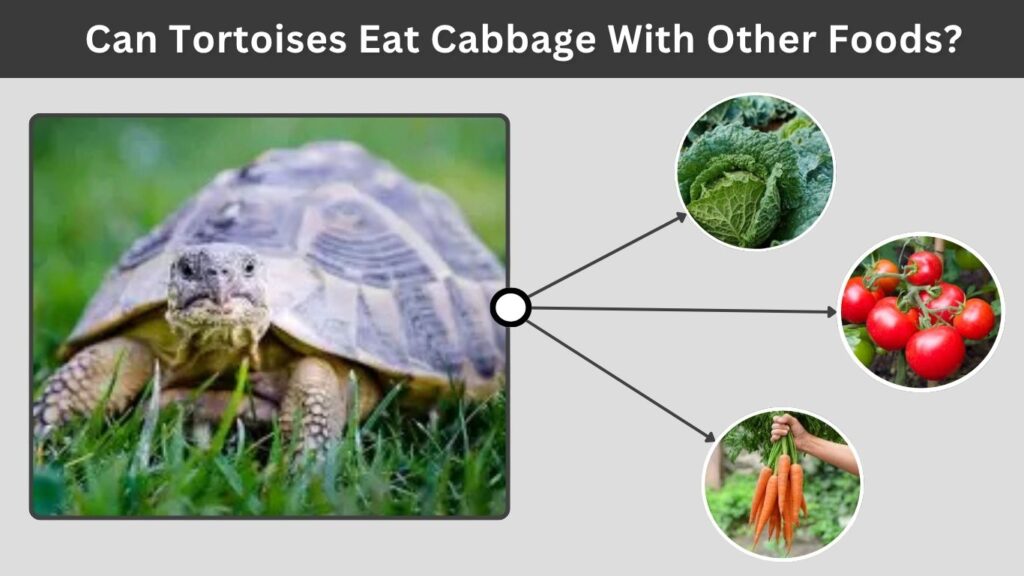
Many owners search for combinations such as cabbage and carrots, cabbage and tomatoes, or cabbage greens. Mixing foods can be useful, but the overall balance matters more than the combination itself.
Cabbage and Carrots
Tortoises can eat cabbage and carrots occasionally. Carrots are higher in sugar than many leafy foods, so they should be offered in small amounts. Grated carrot can be used as a rare topping, but it should not be a daily vegetable.
Cabbage and Tomatoes
Some tortoises can eat small amounts of ripe tomato, but tomatoes are not ideal for many species. They are soft, watery, and acidic. Fruit-eating species may tolerate them better than strict grazing species. For many common pet tortoises, tomatoes should be rare or avoided unless recommended for that species.
Cabbage Greens and Savoy Cabbage
Cabbage greens and savoy cabbage can be treated like regular cabbage. They are not usually poisonous in small amounts, but they are still brassicas and should be limited. Savoy cabbage may be softer and easier to tear, but it should not become a staple.
What Should Tortoises Eat Instead of Cabbage?
Better daily foods depend on the species, but many tortoises benefit from a varied, fibrous, plant-based diet. Safe weeds and natural forage are often better than supermarket vegetables.
Healthier options may include:
- Dandelion leaves and flowers
- Plantain weed
- Clover in moderation
- Hibiscus leaves and flowers
- Mulberry leaves
- Grape leaves
- Grass and hay for grazing species
- Prickly pear cactus pads
- Mallow leaves
- Safe edible flowers
Always make sure outdoor plants are free from pesticides, herbicides, road pollution, and toxic plant contamination.
What About Lettuce, Cucumber, Spinach, and Cauliflower?
Many cabbage-related searches also ask about lettuce, cucumber, spinach, carrots, and cauliflower. These foods are common, but they should be handled carefully.
Can Tortoises Eat Lettuce?
Tortoises can eat some lettuce, but iceberg lettuce is poor in nutrition and mostly water. Romaine and darker leafy lettuces are better than iceberg, but lettuce still should not be the foundation of the diet.
Can Tortoises Eat Cucumber?
Tortoises can eat cucumber, but it is mostly water. It may help with hydration in small amounts, but it does not provide enough nutrition for regular feeding. Use cucumber as an occasional treat, not a staple.
Can Tortoises Eat Spinach?
Spinach should be limited. It contains oxalates, which can bind calcium and may affect mineral balance if fed too often. A tiny amount once in a while is different from using spinach as a main green.
Can Tortoises Eat Cauliflower?
Tortoises can eat cauliflower occasionally, but it is another brassica. Like cabbage, it should not be fed regularly. The leaves may be accepted, but they should still be part of a varied diet rather than a main food.
How to Feed Cabbage Safely
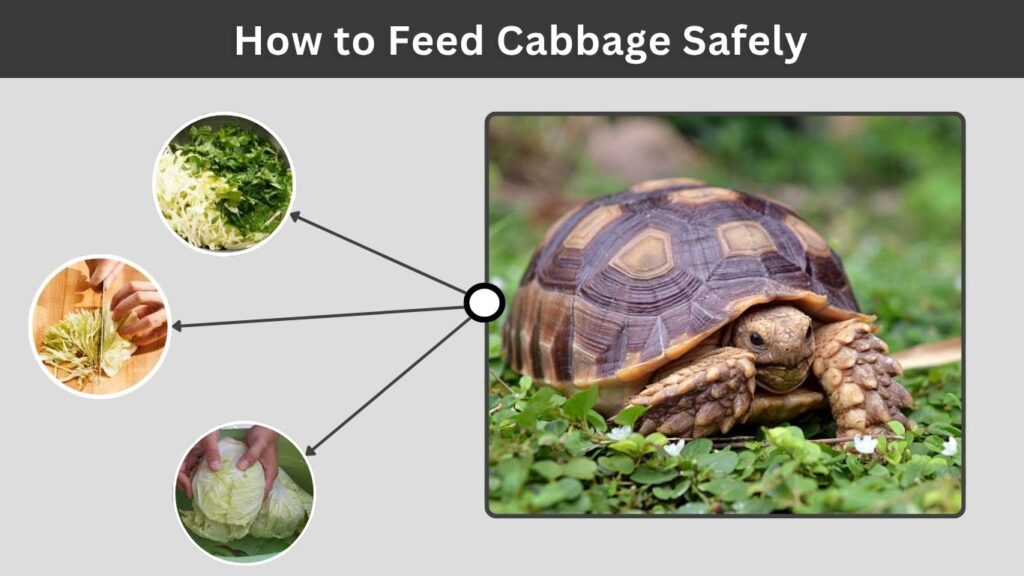
If you decide to offer cabbage, keep the portion small and prepare it properly.
Follow these steps:
- Choose fresh cabbage without mold or slimy areas.
- Wash it thoroughly under clean water.
- Remove tough or dirty outer parts.
- Chop or shred it into small pieces.
- Mix it with better leafy foods.
- Offer only a small amount.
- Remove leftovers after feeding.
Do not season cabbage. Never feed cabbage cooked with salt, oil, butter, garlic, onion, spices, or sauces. Tortoises should only eat plain plant foods that are safe for their species.
When Should You Avoid Cabbage?
Avoid cabbage if your tortoise has a known thyroid issue, poor appetite, digestive upset, or a history of diet-related health problems. You should also avoid it if your tortoise is already eating too many brassicas, such as kale, broccoli, cauliflower, or Brussels sprouts.
Do not use cabbage to tempt a sick tortoise without asking a reptile veterinarian. Loss of appetite, soft shell, swollen eyes, runny stool, weight loss, or unusual behavior can indicate a health problem that needs proper care.
FAQs
Can tortoises eat cabbage every day?
No, tortoises should not eat cabbage every day. Cabbage contains goitrogenic compounds that may cause problems if fed too often. It is better to offer cabbage rarely and in small amounts. Daily meals should focus on safe weeds, grasses, flowers, and leafy plants suited to your tortoise’s species.
Can tortoises eat cabbage leaves safely?
Yes, tortoises can eat cabbage leaves safely in small amounts. Wash the leaves well, chop them into manageable pieces, and mix them with better greens. Cabbage leaves should not replace high-fiber foods. If your tortoise ignores cabbage, there is no need to force it.
Can sulcata tortoises eat cabbage?
Sulcata tortoises can eat cabbage occasionally, but it is not a good staple. Sulcatas need a high-fiber diet based mainly on grass, hay, weeds, and suitable leaves. Cabbage should only be a small extra because too many soft vegetables can weaken the quality of their diet.
Can Russian tortoises eat cabbage?
Russian tortoises can eat small amounts of cabbage, but better foods are available. Their diet should focus on safe weeds, flowers, and leafy plants. Since cabbage is a brassica, it should be limited. Feeding it too often may crowd out healthier, more natural foods.
What vegetables can tortoises eat instead of cabbage?
Better choices include dandelion greens, plantain weed, hibiscus leaves, mulberry leaves, grape leaves, mallow, safe flowers, grasses, and hay for grazing species. Some supermarket greens can be used for variety, but natural, pesticide-free forage is often healthier than relying on cabbage, lettuce, or cucumber.