
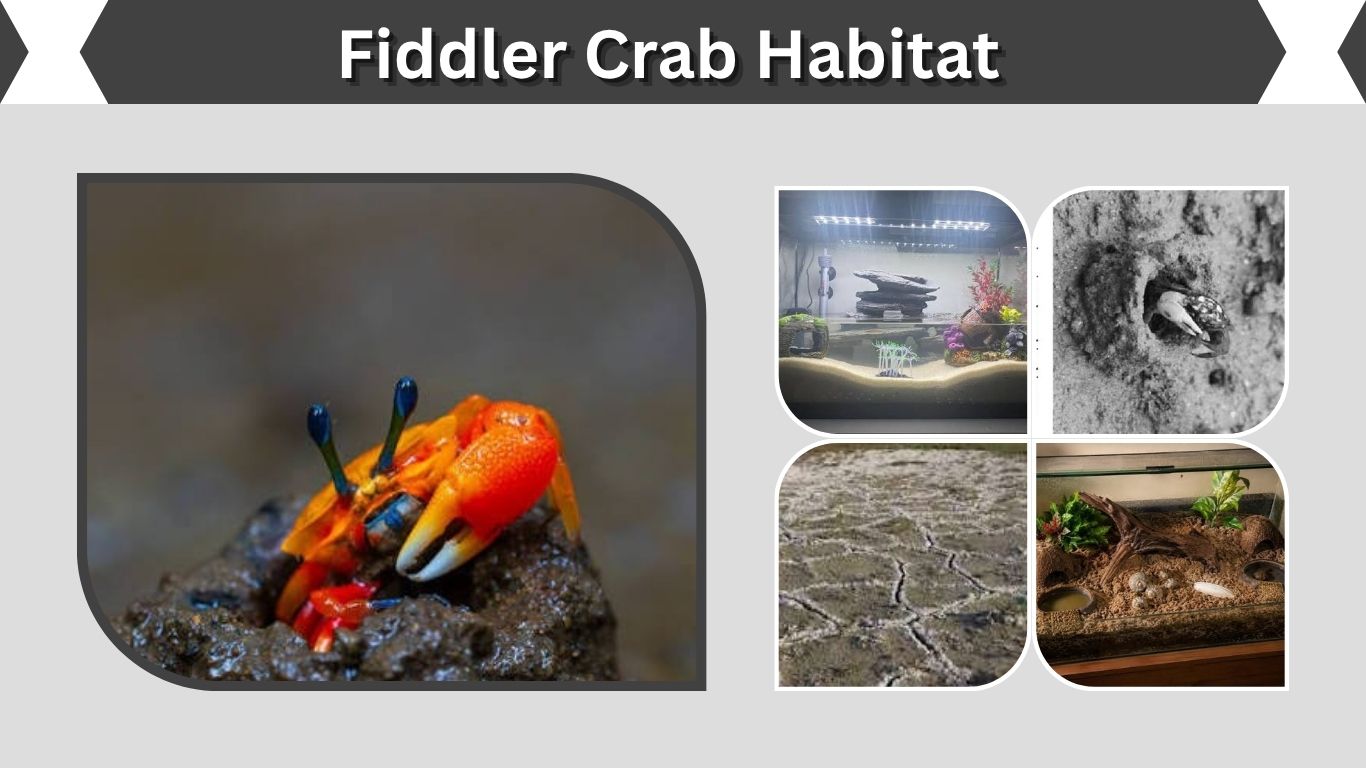
Fiddler crabs live where land and coastal water meet. Their natural homes include salt marshes, mangrove forests, estuaries, and tidal mudflats. Although they spend time in water, these semi-terrestrial crabs also require exposed land where they can feed, communicate, and dig burrows. A suitable pet habitat must therefore provide warm brackish water, soft sand, dry land, hiding places, and enough room for territorial behavior.
What Is the Natural Habitat of a Fiddler Crab?
“Fiddler crab” describes numerous related species distributed across tropical, subtropical, and warm-temperate coastlines. Habitat preferences vary by species, but most occupy sheltered intertidal environments with soft sediment.
NOAA identifies mudflats as low-lying areas composed of fine silt and clay, where burrowing animals such as fiddler crabs live. These habitats are regularly covered and exposed by changing tides.
Common Wild Habitats
Fiddler crabs may be found in:
- Salt marshes
- Mangrove forests
- Estuaries
- Tidal creeks
- Mudflats
- Sandy tidal flats
- Brackish wetlands
- Sheltered coastal lagoons
- River mouths near the ocean
They usually avoid exposed beaches with heavy waves. Quiet shorelines provide softer sediment for burrowing and more organic material for feeding.
Life in the Intertidal Zone
The intertidal zone is covered during high tide and exposed during low tide. Fiddler crabs adjust their activity to this repeating cycle.
When the tide retreats, they emerge to search for food, wave their claws, defend territories, and interact with other crabs. Smithsonian observations describe fiddler crabs emerging across exposed tidal flats at low tide. When the water rises, many return to their burrows and seal or shelter inside them.
Why Do Fiddler Crabs Dig Burrows?
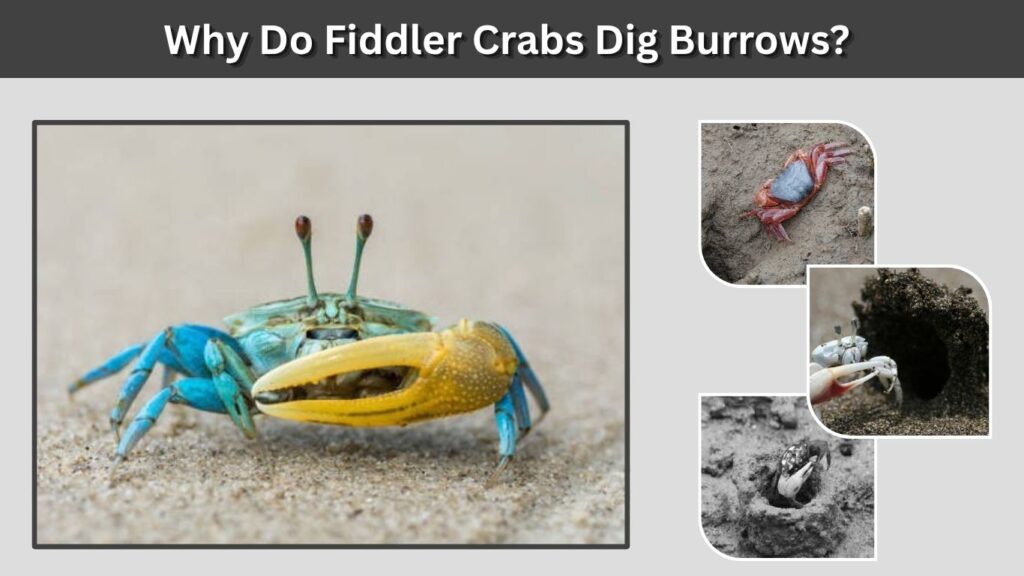
Burrows are one of the most important parts of a fiddler crab’s habitat. Each burrow may extend downward through wet mud or sand, creating a humid and protected chamber.
Functions of a Burrow
A fiddler crab uses its burrow for:
- Protection from birds, fish, and other predators
- Shelter during high tide
- Protection from excessive heat
- Preventing dehydration
- Resting during inactive periods
- Molting safely
- Courtship and mating
- Defending a personal territory
Smithsonian describes these burrows as protection from flooding, predators, and harsh temperatures. Males also defend burrow entrances and use them during courtship.
Burrowing benefits the broader ecosystem as well. By moving and aerating sediment, fiddler crabs influence soil conditions, nutrient movement, and salt-marsh structure. NOAA research refers to them as important ecosystem engineers and prey for many marsh and estuarine predators.
Important Factors in a Wild Fiddler Crab Habitat
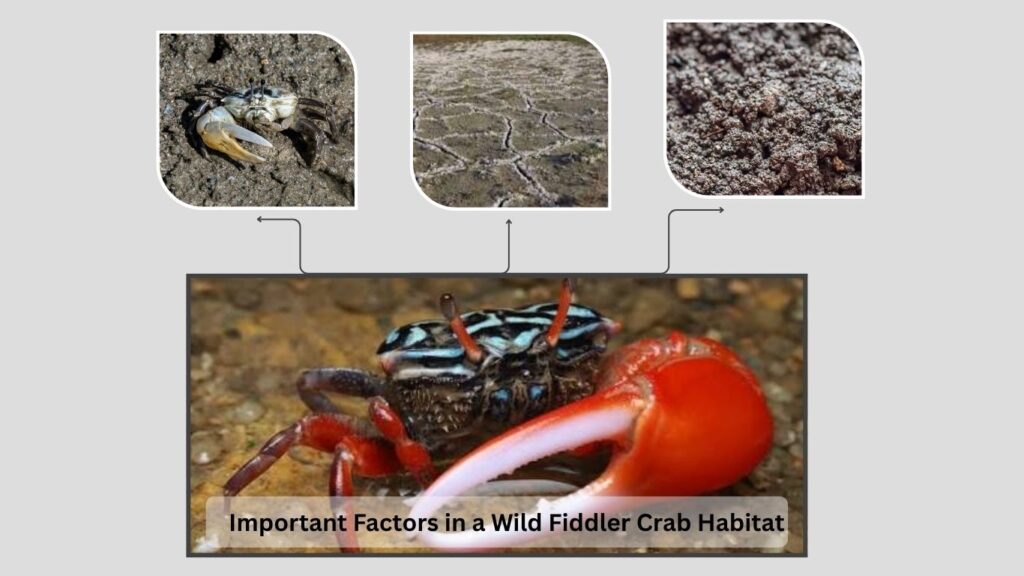
A suitable habitat depends on both nonliving conditions and surrounding organisms.
Abiotic Factors
Important nonliving factors include:
- Salinity
- Tidal flooding
- Temperature
- Soil moisture
- Sediment texture
- Elevation above the water
- Oxygen levels
- Sun exposure
Soft mud or sand must remain moist enough for burrows to retain humidity. Salinity varies with rainfall, freshwater flow, tides, and distance from the sea.
Biotic Factors
Living components include:
- Marsh grasses
- Mangrove trees
- Algae
- Bacteria and fungi
- Decaying plants
- Other fiddler crabs
- Shorebirds and fish
- Worms and small invertebrates
Marsh vegetation stabilizes sediment and creates shelter. One USGS study found red-jointed fiddler crabs associated with several marsh plants and recorded them in saltwater and brackish marshes rather than the freshwater marsh sampled.
Ideal Fiddler Crab Aquarium Habitat
A pet fiddler crab should not be housed in an ordinary fish aquarium filled completely with freshwater. It needs a paludarium-style enclosure containing both land and shallow water.
| Habitat requirement | Recommended setup |
| Tank size | At least 10 gallons for a small group |
| Water type | Low-salinity brackish water |
| Specific gravity | Approximately 1.005–1.010 |
| Temperature | 75–85°F or 24–29°C |
| pH | Approximately 7.5–8.3 |
| Substrate | Soft sand, at least 3 inches deep |
| Land area | Large sloping section above water |
| Water depth | Shallow and easy to exit |
| Cover | Secure, ventilated lid |
| Decorations | Rocks, caves, driftwood, and shelters |
These ranges are general guidelines for commonly sold pet fiddler crabs. Exact salinity can vary among species, so identifying the crab before finalizing its habitat is valuable. Typical care recommendations place the temperature around 75–85°F and the specific gravity near 1.005–1.010.
How to Make a DIY Fiddler Crab Habitat
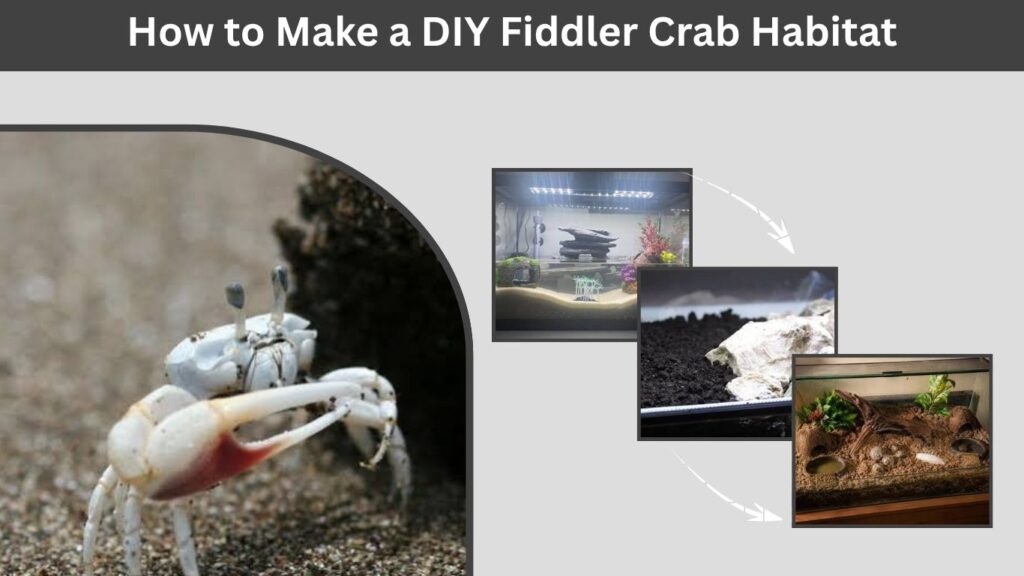
A homemade fiddler crab habitat can be created in a standard glass aquarium. The main goal is to produce a natural slope between a dry sandbank and shallow brackish water.
1. Choose an Appropriate Tank
Use at least a 10-gallon aquarium for one to four small crabs. Larger enclosures make it easier to create separate land and water areas and allow males to establish territories.
Add a tightly fitted lid with ventilation. Fiddler crabs climb rocks, decorations, heaters, and filter equipment and may escape through surprisingly small openings.
2. Add Deep Sand
Place approximately three to five inches of soft aquarium sand on one side. Gradually slope it downward toward the opposite end.
The higher side should remain above water, while the lower portion becomes submerged. Sand should be deep and moist enough for digging without collapsing immediately.
Avoid:
- Sharp gravel
- Painted decorative stones
- Calcium sand made for reptiles
- Soil containing fertilizers or pesticides
- Substrate collected from polluted shorelines
3. Create Land and Water Zones
Fill the lower section with a few inches of brackish water. The slope must allow every crab to walk easily between the water and dry land.
A suitable enclosure may contain more land than water. Fiddler crabs are not strong open-water swimmers, and deep water without a reliable exit can become dangerous. Aquarium habitat guidance commonly recommends a sloped sandy bank with clearly accessible above-water space.
4. Prepare Brackish Water
Treat tap water with an aquarium water conditioner to remove chlorine and chloramine. Add marine aquarium salt according to the manufacturer’s directions, then test the water with a hydrometer or refractometer.
Do not use ordinary table salt. It does not provide the mineral composition intended for marine or brackish aquariums.
Check salinity regularly because evaporation removes water but leaves salt behind. Replace evaporated water with dechlorinated freshwater, then adjust salinity during water changes when necessary.
5. Add Heat and Shelter
Maintain a stable temperature around 75–85°F. Depending on room temperature and water depth, this may require a small aquarium heater or carefully positioned heat source.
Provide several shelters, including:
- Smooth rocks
- Driftwood
- Coconut hides
- Ceramic caves
- Artificial mangrove roots
- Aquarium-safe plants
Place decorations securely so that digging crabs cannot cause them to collapse.
6. Install Gentle Filtration
A small internal filter can help control waste and keep the water oxygenated. Cover strong intakes with sponge and ensure that the current does not prevent the crabs from moving comfortably.
A filter does not eliminate the need for partial water changes. Regularly test ammonia and nitrite, both of which should remain at zero.
Can Fiddler Crabs Live in Freshwater?
Most fiddler crabs sold as pets should not be kept permanently in pure freshwater. They may survive there temporarily, but long-term freshwater housing can contribute to weakness, unsuccessful molts, and early death.
Their aquarium should reproduce the brackish conditions found where freshwater and seawater mix. However, salinity tolerance differs among species, and some naturally occur farther upstream than others. Species identification is therefore more reliable than assuming every fiddler crab needs exactly the same water conditions.
Common Habitat Setup Mistakes
The most frequent mistakes include keeping the tank completely underwater, using freshwater only, providing insufficient sand, and leaving the aquarium uncovered.
Other problems include:
- No dry area
- Deep water with no easy exit
- Overcrowding several males
- Using table salt
- Allowing salinity to fluctuate sharply
- Keeping the habitat too cold
- Using contaminated outdoor sand
- Placing heavy rocks on unstable substrate
- Ignoring ammonia and nitrite levels
- Removing a crab while it is molting
A crab that constantly attempts to escape may be reacting to unsuitable salinity, temperature, crowding, poor water quality, or a lack of adequate land.
FAQs
How much land does a fiddler crab need?
The enclosure should contain a substantial land area where every crab can remain completely above water. A sloping setup with roughly half land and half shallow water works well, although exact proportions can be adjusted as long as dry space is always available.
What sand is best for a fiddler crab habitat?
Fine, soft aquarium sand is the safest choice. It should hold moisture and allow burrowing without sharp edges. A depth of at least three inches is recommended, with additional depth on the raised land side.
Do fiddler crabs need to be underwater?
They require access to water to keep their gills moist, but they should not remain underwater continuously. A proper habitat lets them choose between shallow brackish water, damp sand, and a dry surface.
Do fiddler crabs need a heat lamp?
A heat lamp is not always necessary. It depends on the temperature of the room and enclosure. Use safe heating equipment when needed to maintain approximately 75–85°F, while avoiding overheating or drying the substrate.
Can I make a floating land area for a fiddler crab?
A stable floating platform can provide temporary access to air, but it is not a complete habitat. Fiddler crabs also need deep, moist substrate for digging and normal territorial behavior. A permanent sloping sandbank is generally more suitable.