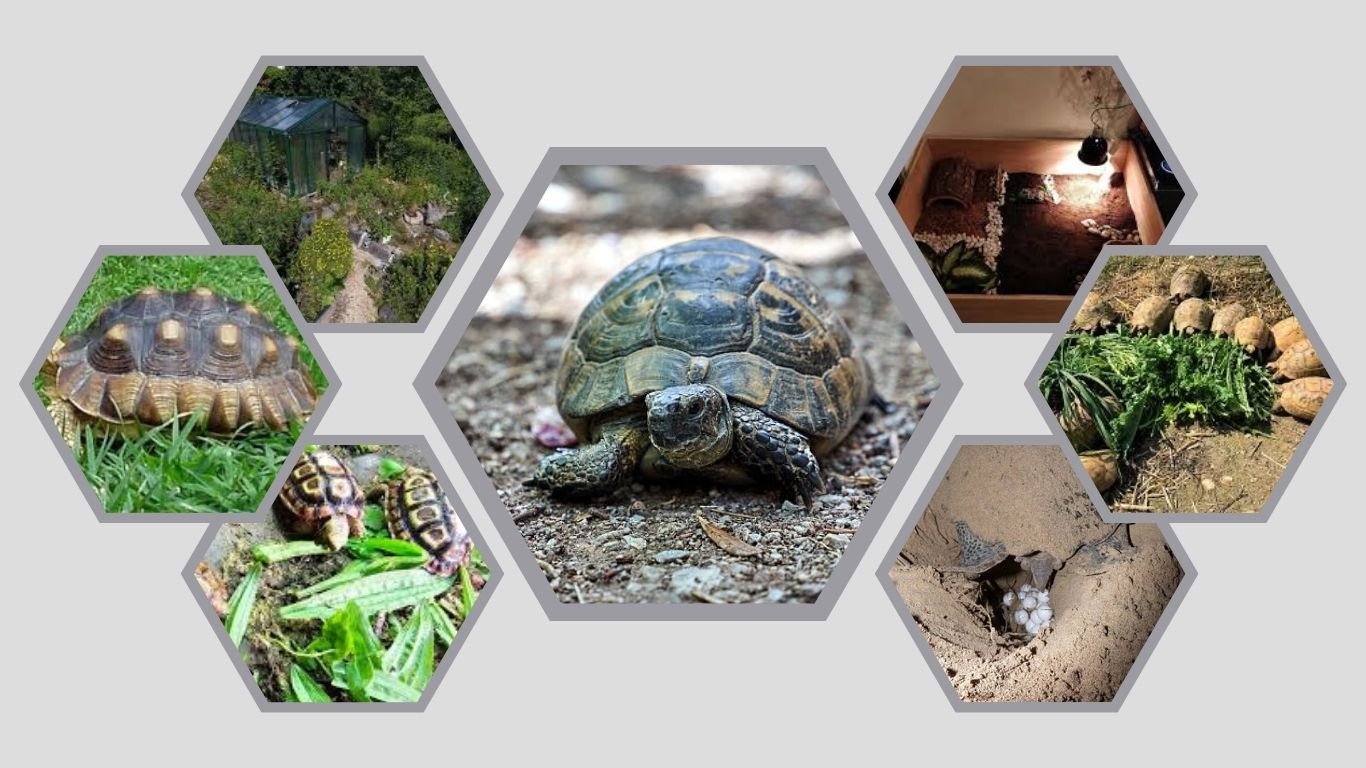
The Greek tortoise (Testudo graeca) is a popular pet reptile known for its manageable size and long lifespan. For many potential owners, one of the first questions is how big this tortoise actually gets. Understanding its size is important because it directly affects enclosure setup, diet, and long-term care. While Greek tortoises are considered small to medium compared to other tortoise species, they still require adequate space and proper conditions to grow and thrive.
Average Size of a Greek Tortoise
Greek tortoises are relatively small when compared to larger species like Sulcata tortoises, but their size can still vary depending on subspecies and care.
Most adult Greek tortoises grow between 5 and 10 inches in shell length. Some smaller subspecies may stay closer to the lower end of this range, while others can reach the upper limit. In terms of weight, adults typically range from around 1 to 5 pounds.
Their compact size makes them easier to house than larger tortoises, but they still need enough space to move freely. Despite being small, they are active animals that enjoy exploring their environment.
Male vs Female Size Differences
Like many reptiles, Greek tortoises show differences in size between males and females. This is known as sexual dimorphism and is quite noticeable once they reach adulthood.
- Females are generally larger and heavier than males
- Males tend to have a slightly smaller and more curved shell
- Females often grow longer to support egg-laying
These differences are not always obvious in young tortoises, but they become clearer as the tortoise matures. The larger size of females is especially important for breeding purposes, but it also means they may require slightly more space in captivity.
Growth Stages of a Greek Tortoise
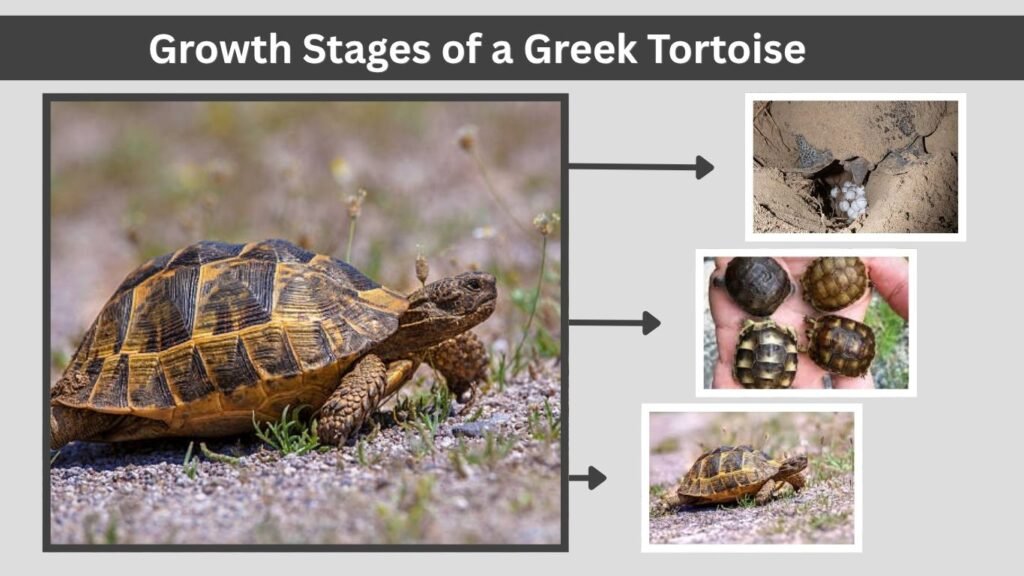
Greek tortoises go through several growth stages before reaching their full size. Each stage has its own characteristics and care needs.
Hatchling Stage
Greek tortoises start very small, usually measuring just 1.5 to 2 inches in length when they hatch. At this stage, they are delicate and require careful attention to temperature, humidity, and diet.
Growth is relatively faster during this early period, as the tortoise adapts to its environment and begins feeding regularly.
Juvenile Stage
As the tortoise enters the juvenile stage, growth becomes steady but slower than during the hatchling phase. This stage can last several years.
During this time, the tortoise gradually increases in size and strength. Proper nutrition and lighting are especially important, as this is when most of the shell and bone development occurs.
Juveniles are usually more active and curious, often exploring their surroundings and developing natural behaviors.
Adult Stage
Greek tortoises typically reach adulthood between 5 and 10 years of age, depending on their care and environment. At this stage, growth slows down significantly and eventually stops.
Adult size is influenced by several factors, including diet, genetics, and habitat conditions. A well-cared-for tortoise will reach its full potential size and maintain a healthy weight.
How Fast Do Greek Tortoises Grow?
Greek tortoises are slow-growing animals, which is typical for most tortoise species. Unlike many pets that reach full size quickly, these tortoises take several years to mature.
On average, it can take anywhere from 5 to 10 years for a Greek tortoise to reach its full adult size. Growth is not constant and may vary depending on seasonal changes, diet quality, and environmental conditions.
A healthy growth rate is steady and gradual. Rapid growth is not always a good sign and can sometimes indicate improper diet or overfeeding, which may lead to shell problems. On the other hand, very slow growth can be a sign of poor nutrition or inadequate care.
Providing the right balance of food, lighting, and space ensures that the tortoise grows at a natural and healthy pace.
Factors That Affect Greek Tortoise Size
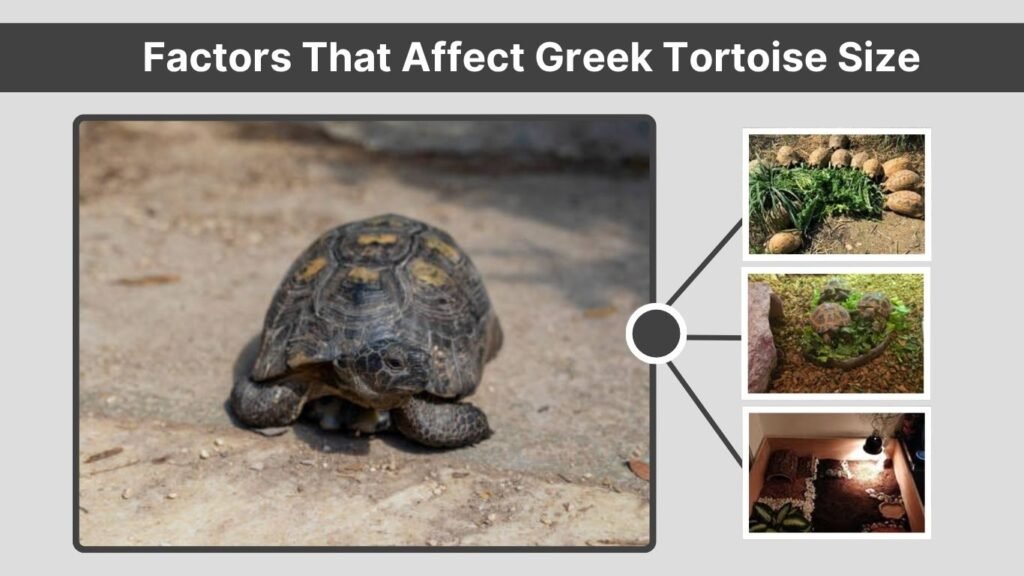
- Diet plays a major role, especially the intake of calcium and fiber
- UVB lighting is essential for proper bone and shell development
- Enclosure size influences activity and overall growth
- Genetics and subspecies naturally determine size potential
Each of these factors works together to influence how large a Greek tortoise will ultimately become. Poor care can lead to stunted growth or deformities, while proper conditions help the tortoise reach its full natural size.
Greek Tortoise Subspecies Size Differences
Greek tortoises are not a single uniform species—there are several subspecies, and their size can vary depending on their geographic origin. Some remain relatively small throughout their lives, while others grow noticeably larger.
Smaller subspecies may reach only around 5 to 6 inches as adults, making them more compact and easier to house. Larger varieties, especially those from warmer regions, can grow closer to 8 to 10 inches under proper conditions.
Because of this variation, it’s important to know which subspecies you have or plan to buy. This helps you prepare the right enclosure size and care routine from the beginning.
How Big of an Enclosure Do They Need Based on Size?

Even though Greek tortoises are not very large, they still require a spacious enclosure to stay active and healthy. Their size directly influences how much room they need to move, explore, and regulate their body temperature.
- Juveniles can start in smaller enclosures but will quickly outgrow them
- Adult tortoises typically need at least 8×4 feet of space
- Larger enclosures promote exercise and natural behavior
Providing too little space can lead to stress and inactivity. As your tortoise grows, upgrading its enclosure is essential to support its increasing size and activity level.
Weight and Shell Growth Explained
A Greek tortoise’s size is not just about length—it also includes weight and shell development. A healthy tortoise should have a firm, smooth shell and a balanced body weight.
The shell grows gradually along with the tortoise, forming visible growth rings called scutes. These rings can give a rough idea of age, although they are not always exact.
Proper nutrition and lighting are crucial for even shell growth. A well-developed shell should feel solid and show no signs of softness or irregular shaping.
Greek Tortoise Common Growth Problems
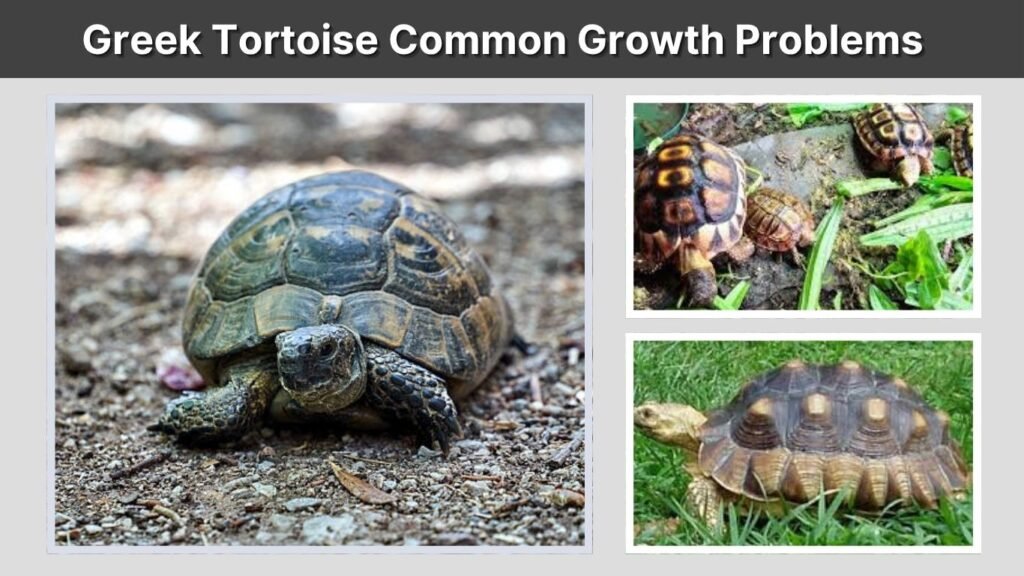
Growth issues in Greek tortoises are usually linked to improper care. These problems can affect both size and overall health.
- Stunted growth caused by poor diet or lack of nutrients
- Pyramiding, where the shell develops uneven bumps
- Soft shell resulting from calcium or UVB deficiency
These issues are often preventable with proper husbandry. Providing a balanced diet, correct lighting, and a suitable environment helps ensure normal, healthy growth.
Comparing Greek Tortoise Size to Other Tortoises
Understanding how Greek tortoises compare in size to other species can help you decide if they are the right fit for your home.
Greek tortoises are much smaller than large species like the Sulcata tortoise, which can grow over 2 feet in length. Compared to Hermann’s tortoises, they are quite similar in size and care requirements.
They are also slightly different from Russian tortoises, which tend to stay on the smaller side but share similar housing needs. Overall, Greek tortoises fall into a manageable size category that suits most households.
Is a Greek Tortoise the Right Size for You?
Greek tortoises are considered an ideal size for many pet owners. They are large enough to be interesting and active but small enough to manage in a home environment.
Their moderate size makes them easier to house than giant tortoises, but they still require a properly sized enclosure and consistent care. They are not “small pets” in the sense of needing minimal space or attention.
If you are prepared to provide the right setup and long-term care, their size makes them a practical and rewarding choice.
FAQs
How big does a Greek tortoise get in captivity?
In captivity, Greek tortoises usually grow between 5 and 10 inches in length. Their final size depends on subspecies, diet, and overall care. Proper lighting and nutrition are key to reaching their full growth potential.
How long does it take for a Greek tortoise to reach full size?
It generally takes about 5 to 10 years for a Greek tortoise to reach its full adult size. Growth is slow and influenced by environmental conditions, diet quality, and overall health.
Do male and female Greek tortoises grow the same size?
No, females are usually larger than males. They tend to have a broader and longer shell, while males are smaller and may have slightly different shell shapes.
Can a Greek tortoise outgrow its enclosure?
Yes, as the tortoise grows, it will need a larger enclosure. Juvenile setups are often temporary, and adults require significantly more space to stay active and healthy.
What happens if a Greek tortoise doesn’t grow properly?
Improper growth can lead to health problems such as shell deformities or weakness. This is usually caused by poor diet, lack of UVB lighting, or incorrect habitat conditions.