
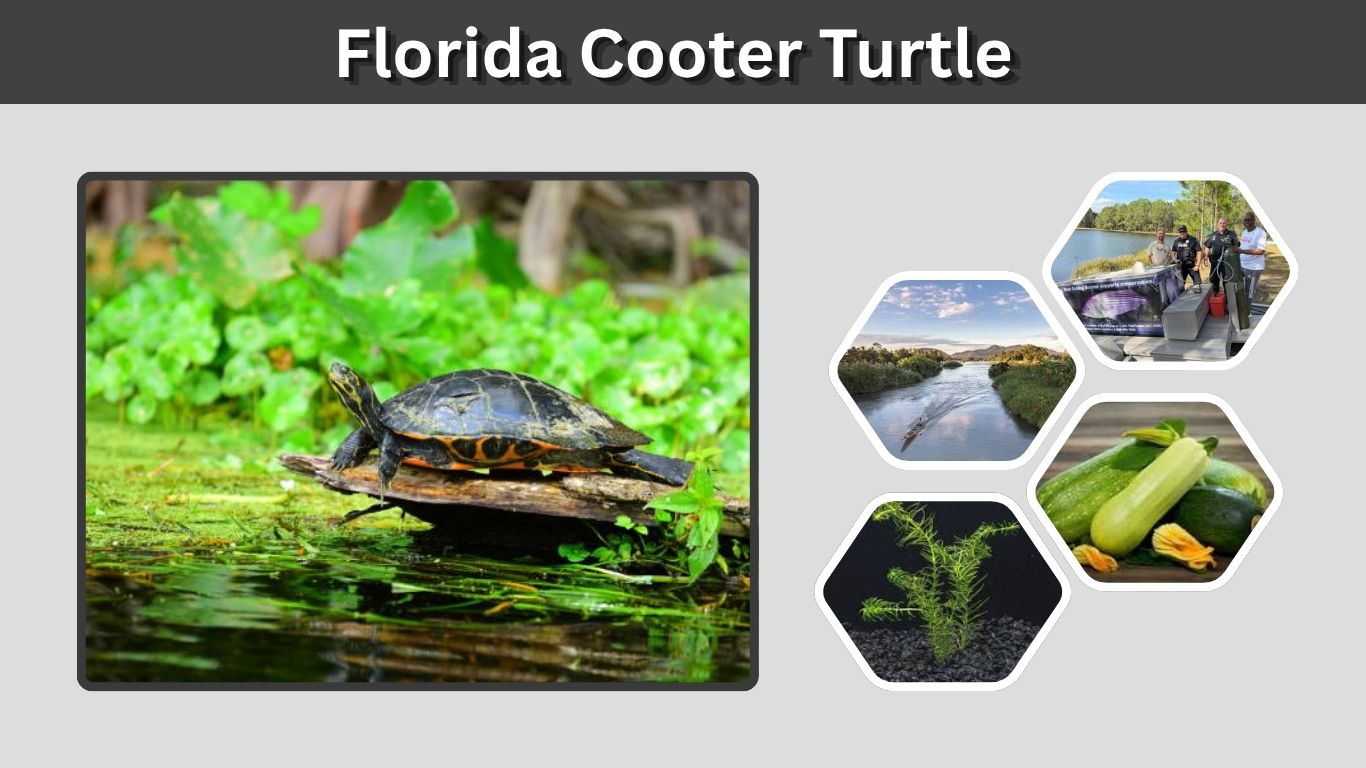
The Florida cooter turtle is a large freshwater turtle found in ponds, lakes, rivers, marshes, and slow-moving waterways across Florida and the southeastern United States. People often search for “cooter turtle Florida,” “Florida turtle cooter,” or “Florida river cooter turtle” when trying to identify one in the wild or learn whether it can be kept as a pet. This guide explains Florida cooter turtle care, baby turtle needs, diet, biting behavior, related species, and important legal concerns.
What Is a Florida Cooter Turtle?
A Florida cooter turtle is a freshwater basking turtle from the genus Pseudemys. These turtles are known for their rounded shells, yellow or cream striping on the head and legs, strong swimming ability, and habit of basking on logs or banks.
The name “Florida cooter” can sometimes be used loosely. In Florida, people may use it to describe more than one similar-looking cooter species. That is why identification matters, especially if you are comparing a Florida cooter, Florida red-bellied cooter, river cooter, or Suwannee cooter.
Florida cooters are not tiny turtles. They can become large, active, long-lived animals that need plenty of water, clean filtration, UVB light, and a proper basking area if kept in captivity.
Cooter Turtles of Florida
Florida is home to several cooter turtles. They look similar at first glance, but they can differ in size, shell markings, plastron color, and legal status.
Common cooter turtles of Florida include:
- Florida cooter
- Peninsula cooter
- Florida red-bellied cooter
- River cooter
- Suwannee cooter
The Suwannee cooter turtle in Florida is especially important because it has conservation protections. Wild turtles should not be collected or harmed, and laws can vary depending on species and location.
Florida Cooter vs Florida Red-Bellied Cooter
The Florida cooter usually has a yellowish plastron, or lower shell, while the Florida red-bellied cooter often has a reddish, orange, or salmon-colored plastron. Both are aquatic basking turtles and may be found in similar habitats.
The Florida red-bellied cooter is often discussed in pet care searches because people want to know what to feed it and what vegetables are safe. Although the two turtles are related, correct identification helps owners provide better care and avoid legal problems.
Florida River Cooter Turtle
The phrase “Florida river cooter turtle” may refer to river cooters found in Florida or to people confusing Florida cooters with river cooters. River cooters are also large freshwater turtles that live in rivers, streams, and connected wetlands.
Like Florida cooters, river cooters need clean water, basking areas, and a plant-heavy diet. In the wild, they are important parts of freshwater ecosystems.
Florida Cooter Turtle Size
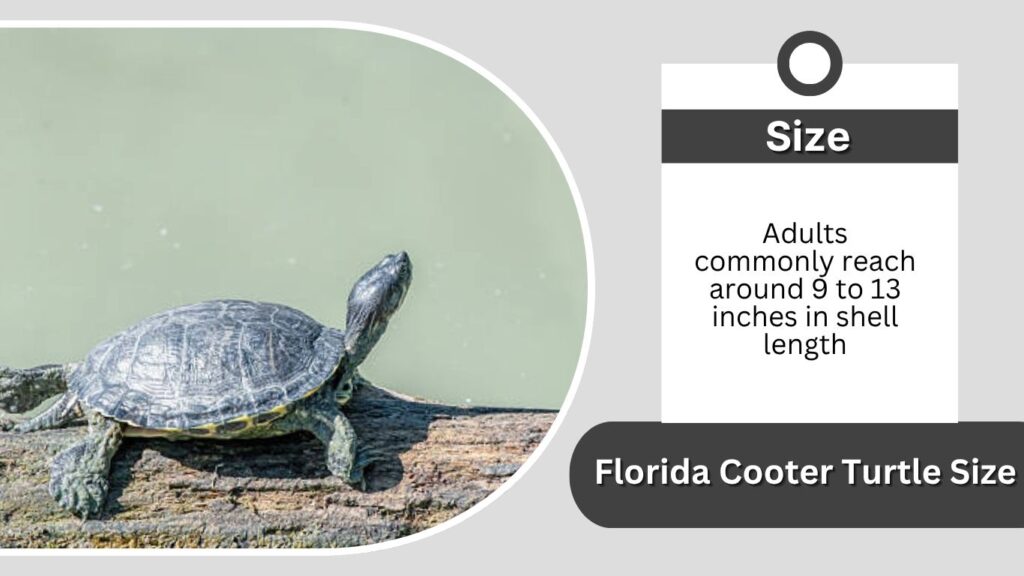
Florida cooter turtles are medium-to-large aquatic turtles. Adults commonly reach around 9 to 13 inches in shell length, and some may grow larger. Females are usually bigger and heavier than males, while males often have longer front claws and longer tails.
Baby Florida cooter turtles are small and attractive, but they grow quickly with proper care. Anyone considering one as a pet should plan for the adult size, not the hatchling size.
| Life Stage | Approximate Size | Main Care Need |
|---|---|---|
| Hatchling | 1–2 inches | Warm, clean water and safe basking access |
| Juvenile | 3–7 inches | Strong filtration and growing space |
| Adult male | Usually smaller than female | Large aquatic enclosure |
| Adult female | Often 9–13+ inches | Extra space and possible nesting area |
Florida Cooter Turtle Habitat
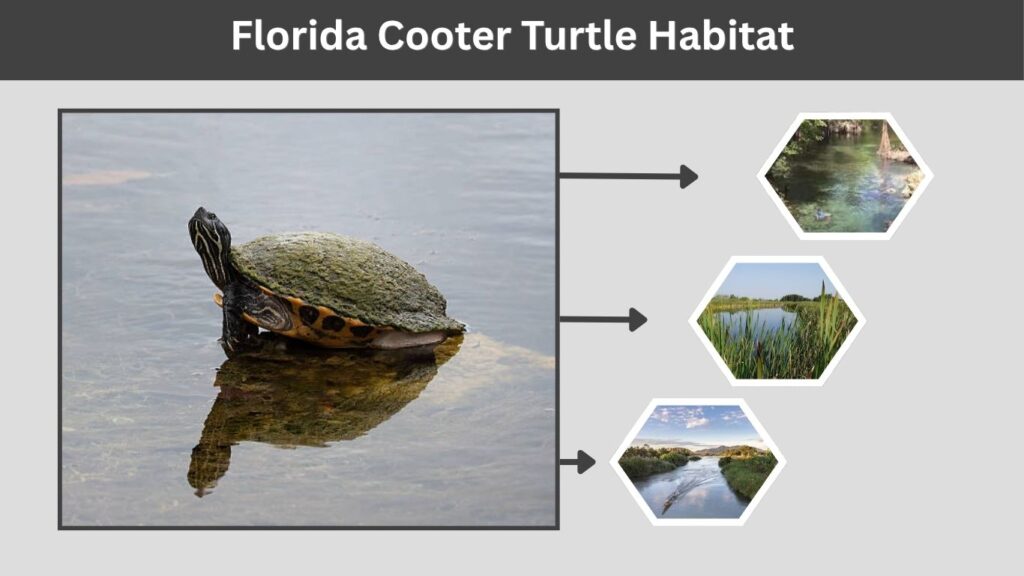
In the wild, Florida cooter turtles live in freshwater habitats with slow or moderate water movement. They prefer places with aquatic plants, basking logs, muddy or sandy bottoms, and access to sunny resting spots.
You may see them in:
- Lakes
- Ponds
- Canals
- Marshes
- Springs
- Rivers
- Wetlands
- Slow creeks
They spend much of their day swimming, feeding, and basking. Basking helps them warm up, digest food, dry the shell, and maintain overall health.
Florida Cooter Turtle Care
Florida cooter turtle care is similar to care for other large aquatic basking turtles. They need clean water, strong lighting, enough swimming space, and a dry basking area.
A small aquarium may work temporarily for a baby, but it will not be enough for an adult. Many adult Florida cooters do best in large tanks, stock tanks, custom indoor ponds, or secure outdoor ponds in suitable climates.
Basic Care Requirements
A proper setup should include:
- Large tank, stock tank, or pond
- Deep swimming water
- Strong canister filter or pond filter
- Dry basking platform
- UVB light for indoor turtles
- Heat lamp over the basking spot
- Water heater if needed
- Thermometers for water and basking area
- Dechlorinated water
- Safe ramps or resting areas
The basking platform must let the turtle climb fully out of the water. If the dock is too small, slippery, or partly submerged, the turtle may not bask enough.
Water Quality
Florida cooters produce a lot of waste. Poor water quality can lead to odor, cloudy water, shell infections, skin issues, and eye problems. A filter rated for more than the tank’s actual water volume is usually best.
Regular water changes are still needed, even with a strong filter. Remove uneaten food after feeding to reduce waste.
What Do Florida Cooter Turtles Eat?
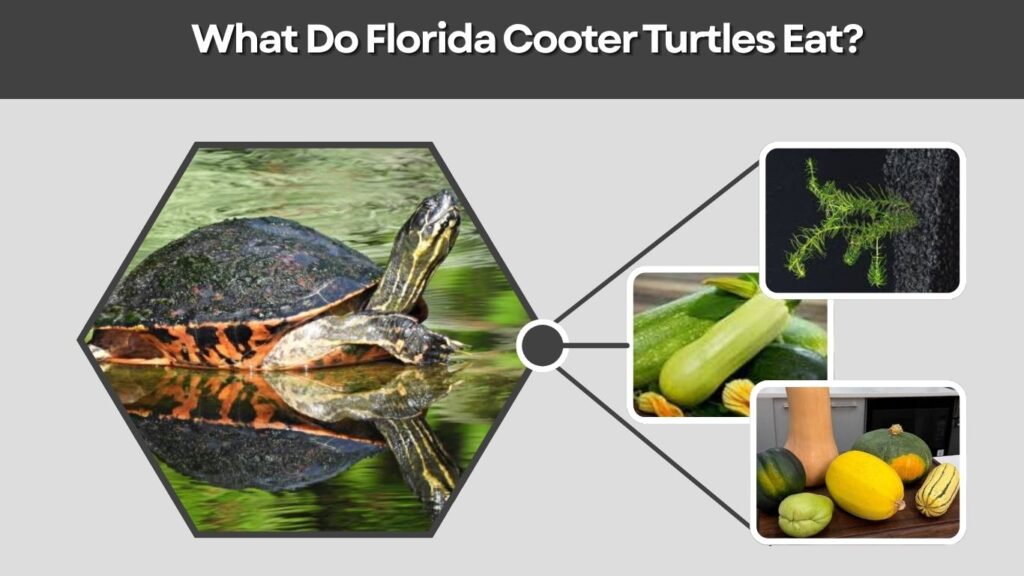
Florida cooter turtles are omnivorous when young but become more plant-focused as they mature. Babies may accept more animal protein, while adults should eat mostly greens, aquatic plants, and quality turtle pellets.
In the wild, cooters graze on aquatic vegetation. In captivity, a healthy diet should copy this as much as possible.
Good Foods for Florida Cooters
Safe food options include:
- Aquatic turtle pellets
- Romaine lettuce
- Collard greens
- Mustard greens
- Turnip greens
- Dandelion greens
- Duckweed
- Water lettuce
- Anacharis
- Zucchini
- Squash
- Small carrot pieces
- Occasional insects or worms for young turtles
Avoid feeding mostly dried shrimp, cooked meat, feeder fish, or human leftovers. These foods may be accepted, but they can create poor nutrition if used as staples.
Florida Red-Bellied Cooter Turtle: What to Feed
Many people specifically ask, “Florida red-bellied cooter turtle what to feed?” or “what vegetables to feed it?” A Florida red-bellied cooter should receive a plant-heavy diet as it grows.
Good vegetables include romaine, collard greens, mustard greens, turnip greens, dandelion greens, squash, zucchini, and small amounts of carrot. Aquatic plants are also excellent because they match the turtle’s natural feeding behavior.
Vegetables to Feed It
Good vegetable choices include:
- Romaine lettuce
- Collard greens
- Dandelion greens
- Mustard greens
- Turnip greens
- Endive
- Escarole
- Zucchini
- Squash
- Aquatic plants
Do not rely on iceberg lettuce. It contains a lot of water but very little nutrition. Spinach should also be limited because it can interfere with calcium use when fed too often.
Florida Cooter Turtle Baby Care
A Florida cooter turtle baby needs warm, clean water and easy access to a dry basking spot. Hatchlings are small, but they are still active swimmers. They should not be placed in a deep, empty tank with no resting areas.
Baby cooters need more careful feeding than adults. They may eat small pellets, finely chopped greens, and occasional protein foods. Start offering plant foods early so the turtle learns to eat greens.
Baby Care Tips
For a baby Florida cooter turtle, provide:
- Shallow access points
- Resting plants or ramps
- Gentle filter flow
- Warm, stable water
- UVB lighting
- Heat lamp for basking
- Small floating pellets
- Finely chopped greens
- Clean water at all times
A baby turtle that refuses food, floats sideways, has swollen eyes, or breathes with its mouth open may be sick and should be checked by a reptile veterinarian.
Can a Florida Cooter Turtle Bite?
Yes, a Florida cooter turtle can bite. Most cooters are not aggressive toward people, but any turtle may bite if it feels threatened, is handled roughly, or mistakes fingers for food.
A large adult cooter has a strong jaw. A bite can hurt and may break skin. Children should not handle turtles without supervision, and adults should avoid placing fingers near the turtle’s mouth.
Safe Handling Tips
To reduce bite risk:
- Handle only when necessary
- Support the shell securely
- Keep fingers away from the head
- Do not hand-feed near the mouth
- Wash hands after touching turtles or tank water
- Never pick up a wild turtle unless helping it cross a road safely
Turtles can also carry bacteria such as Salmonella, so hygiene is important after any contact.
Is It Illegal to Kill Cooter Turtles in Florida?
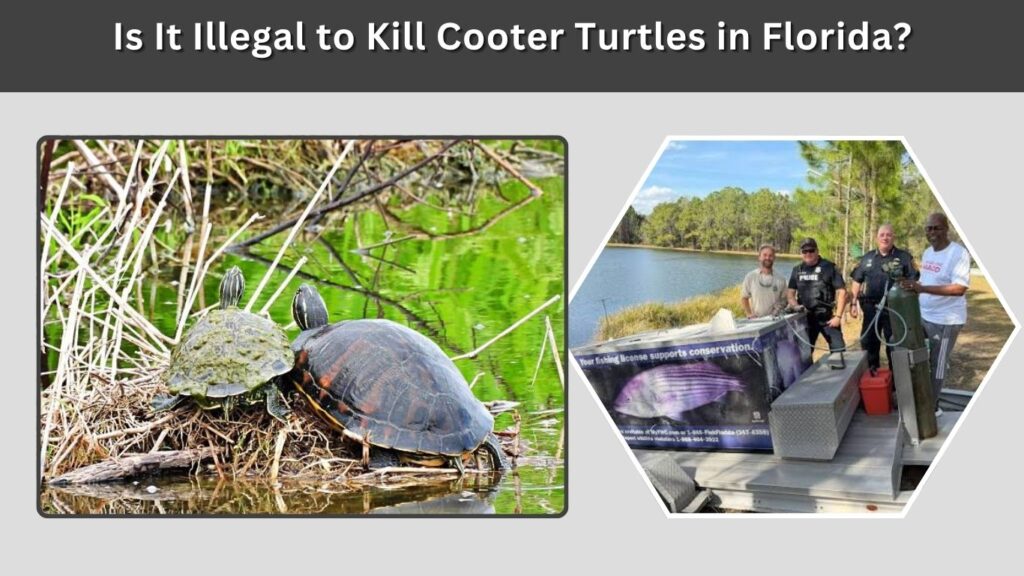
In general, you should not kill, harm, collect, or disturb cooter turtles in Florida. Florida has rules protecting freshwater turtles, and some cooters or similar-looking turtles may be protected because of conservation status.
The Suwannee cooter is one protected species in Florida. Because some cooters look similar, it is safest to leave all wild cooters alone. If you find an injured turtle, contact a licensed wildlife rehabilitator or Florida wildlife authorities instead of trying to keep or relocate it yourself.
Laws can change, so always check current Florida Fish and Wildlife Conservation Commission guidance before collecting, possessing, transporting, or interfering with wild turtles.
Should You Keep a Florida Cooter Turtle as a Pet?
A Florida cooter turtle can be a rewarding pet for experienced keepers, but it is not a simple beginner animal. Adults need large enclosures, strong filtration, proper lighting, and long-term care.
Before getting one, ask yourself whether you can provide adult housing, pay for electricity and filter maintenance, and care for the turtle for many years. These turtles can live for decades with good care.
Before Getting One
Check these points first:
- Is ownership legal in your area?
- Is the turtle captive-bred?
- Can you identify the species?
- Do you have enough space for an adult?
- Can you afford strong filtration?
- Can you provide UVB and heat lighting?
- Do you have access to a reptile vet?
Never collect a Florida cooter from the wild. Choose a responsible breeder, rescue, or legal adoption source.
Common Health Problems
Most Florida cooter turtle health issues come from poor water, weak lighting, improper diet, or lack of basking. Common problems include shell rot, swollen eyes, soft shell, respiratory infections, and poor appetite.
Warning signs include:
- Floating sideways
- Wheezing
- Mucus near the nose
- Refusing food
- Soft shell
- White or foul-smelling shell patches
- Swollen eyes
- Lethargy
If these signs appear, improve the habitat immediately and contact a reptile veterinarian.
FAQs
What is a Florida cooter turtle?
A Florida cooter turtle is a large freshwater basking turtle commonly found in Florida wetlands, rivers, ponds, lakes, and canals. It has a domed shell, yellow or cream striping, and strong swimming ability. It is often confused with river cooters, red-bellied cooters, and sliders.
What does a Florida cooter turtle eat?
A Florida cooter turtle eats aquatic plants, leafy greens, and quality turtle pellets. Young turtles may eat more protein, but adults should have a plant-heavy diet. Good foods include romaine, collard greens, dandelion greens, duckweed, anacharis, squash, and occasional insects for juveniles.
Can a Florida cooter turtle bite?
Yes, a Florida cooter turtle can bite if frightened, handled roughly, or confused during feeding. Most are not naturally aggressive, but adults have strong jaws. Avoid putting fingers near the mouth, handle only when needed, and wash hands after contact.
Is it illegal to kill cooter turtles in Florida?
It is safest to assume wild cooter turtles should not be killed, collected, or harmed in Florida. Some species, such as the Suwannee cooter, have special protections, and similar-looking cooters may also be protected under turtle management rules. Always check current FWC regulations.
How do you care for a baby Florida cooter turtle?
A baby Florida cooter turtle needs clean warm water, UVB light, a heat lamp, a dry basking platform, gentle filter flow, and small nutritious foods. Offer floating pellets, finely chopped greens, and occasional protein. Provide resting spots so the baby can easily reach the surface.