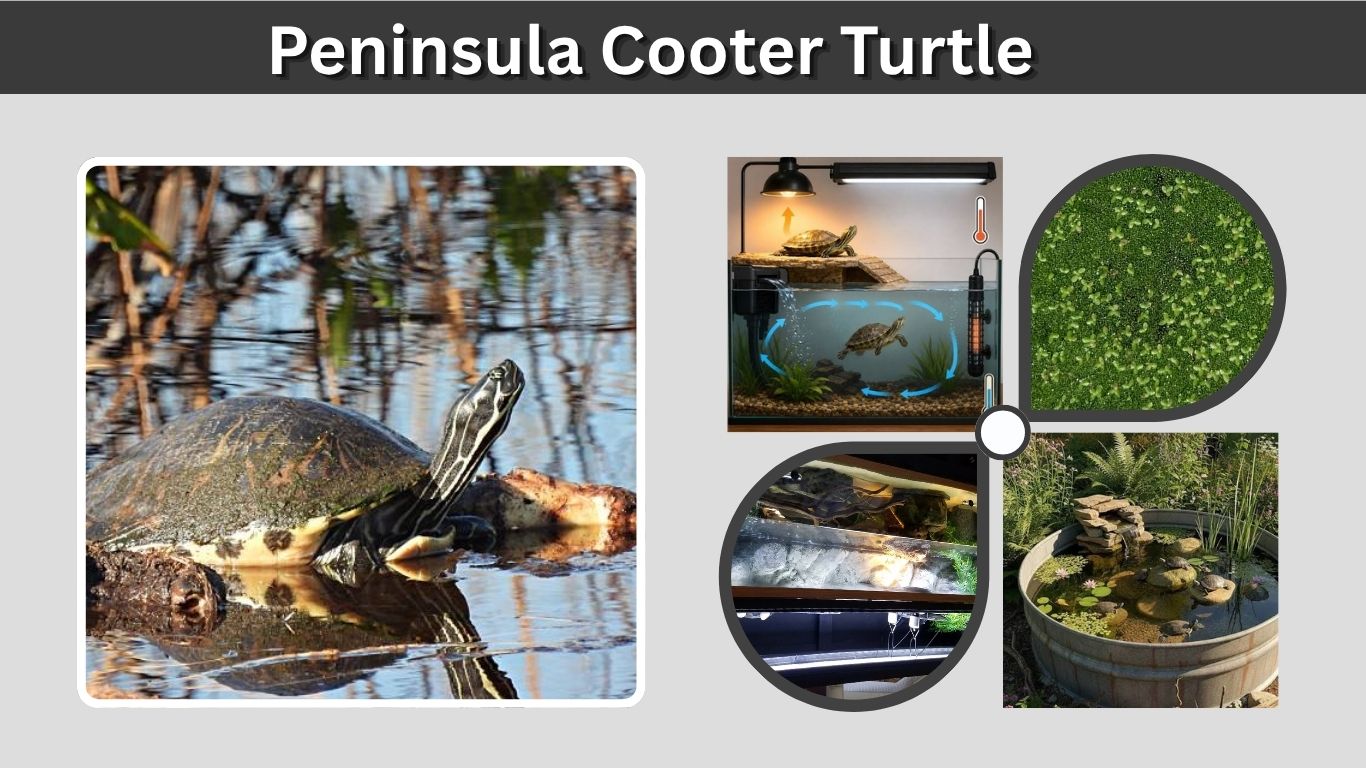
The peninsula cooter turtle is a large freshwater turtle known for its yellow-striped head, strong swimming ability, and calm basking behavior. Many people search for peninsula cooter turtle care, size, diet, baby care, and how it compares with painted turtles or yellow-bellied sliders. This guide explains how big peninsula cooters get, what they eat, how to care for them, and what to know before keeping one.
What Is a Peninsula Cooter Turtle?
The peninsula cooter turtle is a freshwater basking turtle native to Florida and nearby southeastern wetland habitats. Its scientific name is commonly listed as Pseudemys peninsularis, although older references may describe it as a subspecies of the Florida cooter. It belongs to the same broad turtle group as river cooters, sliders, and other large aquatic basking turtles.
This turtle is often seen in ponds, lakes, marshes, canals, slow rivers, and wetlands with plenty of aquatic plants. It spends much of the day swimming, feeding, and basking on logs, rocks, or banks. In captivity, it can be hardy, but it is not a tiny or low-space pet.
Common Names
You may see this turtle called:
- Peninsula cooter turtle
- Peninsula cooter
- Peninsula cooter turtles
- Florida peninsula cooter
- Florida cooter in older or casual references
Because cooter turtles can look similar, correct identification is important before buying, adopting, or comparing care requirements.
Peninsula Cooter Turtle Size
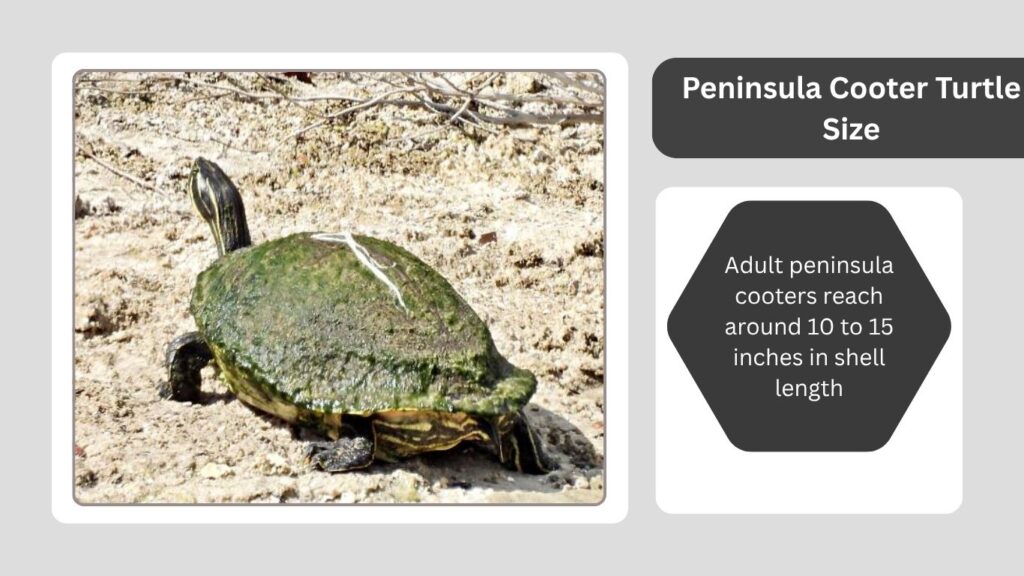
Peninsula cooter turtle size is one of the most important things to understand before keeping one. Baby peninsula cooter turtles may look small and easy to manage, but adults need a large aquatic setup.
Most adult peninsula cooters reach around 10 to 15 inches in shell length, with females usually growing larger than males. Some care sheets list adult size around 35 to 40 cm, which is roughly 14 to 16 inches. Males are often smaller and slimmer, while females are heavier and need more space.
How Big Do Peninsula Cooter Turtles Get?
If you are asking, “how big do peninsula cooter turtles get?” the safest answer is: plan for a large turtle. A small aquarium may work briefly for a hatchling, but it will not be suitable for an adult.
A full-grown peninsula cooter needs deep swimming water, strong filtration, a large basking area, and enough room to turn around comfortably. Many adults are better suited to large stock tanks, custom turtle tanks, or outdoor ponds in safe climates.
| Life Stage | Approximate Size | Care Note |
|---|---|---|
| Hatchling | 1–2 inches | Needs shallow access points and stable warmth |
| Juvenile | 3–7 inches | Grows quickly with proper diet and UVB |
| Adult male | Often smaller than females | Needs a large aquatic enclosure |
| Adult female | Often 10–15+ inches | May need nesting space when mature |
Peninsula Cooter Turtle Identification
Peninsula cooters usually have an olive, brown, or dark shell with lighter markings. Their head and neck show yellow striping, and the shell may have a smooth, broad shape. They do not have the red ear patch seen in red-eared sliders.
They are often confused with other basking turtles because young cooters, sliders, and painted turtles can share similar shell shapes and striped heads. The best clues are body size, head markings, shell pattern, and location.
Peninsula Cooter Turtle vs Painted Turtle
A peninsula cooter turtle vs painted turtle comparison usually comes down to size and markings. Painted turtles are generally smaller and often have brighter red or orange markings around the shell edge or limbs. Peninsula cooters grow larger and usually have more yellow striping on the head and neck.
Painted turtles are also more common across a wider part of North America, while peninsula cooters are associated strongly with Florida and nearby southeastern habitats.
Peninsula Cooter Turtle Compared to Yellow Bellied Slider
A peninsula cooter turtle compared to yellow bellied slider can be tricky because both are aquatic basking turtles with yellow markings. Yellow-bellied sliders usually have a bold yellow patch behind the eye. Peninsula cooters have more striped head markings and lack the typical slider “ear” patch.
Both species need large aquatic enclosures, UVB light, basking heat, and strong filtration. Neither should be treated as a small desktop pet.
Peninsula Cooter Turtle Care
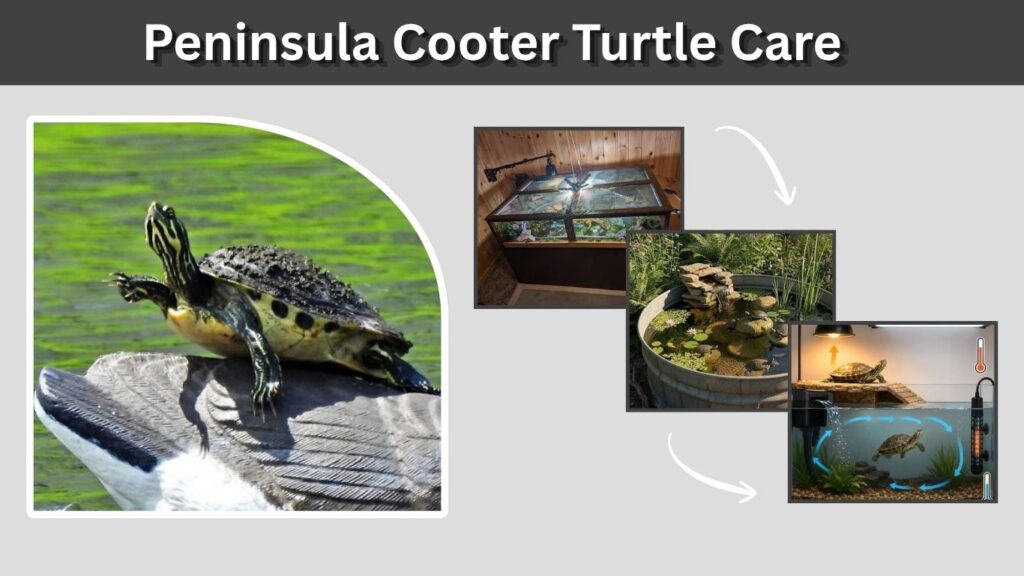
Peninsula cooter turtle care requires a proper aquatic habitat. These turtles are active swimmers and heavy waste producers, so water quality is one of the biggest parts of successful care.
A hatchling can begin in a smaller setup, but owners should plan early for adult housing. Upgrading too late can lead to poor swimming space, dirty water, shell issues, and stress.
Basic Setup Requirements
A good peninsula cooter enclosure should include:
- Large tank, stock tank, or pond
- Deep swimming water
- Strong canister filter or pond filter
- Dry basking platform
- UVB light for indoor turtles
- Heat lamp over the basking area
- Water heater if temperatures are too low
- Thermometer for water and basking area
- Secure lid or barrier to prevent escape
The basking area must allow the turtle to climb fully out of the water and dry its shell. If the dock sinks, stays wet, or is too small, the turtle may not bask properly.
Lighting and Temperature
Indoor peninsula cooter turtles need UVB lighting. UVB helps them process calcium and supports healthy bones and shell growth. Without UVB, turtles can develop serious shell and bone problems.
A heat lamp should warm the basking area enough to encourage daily basking. The water should stay warm and stable, especially for babies and juveniles. Sudden temperature drops can stress the turtle and may contribute to illness.
What Do Peninsula Cooter Turtles Eat?
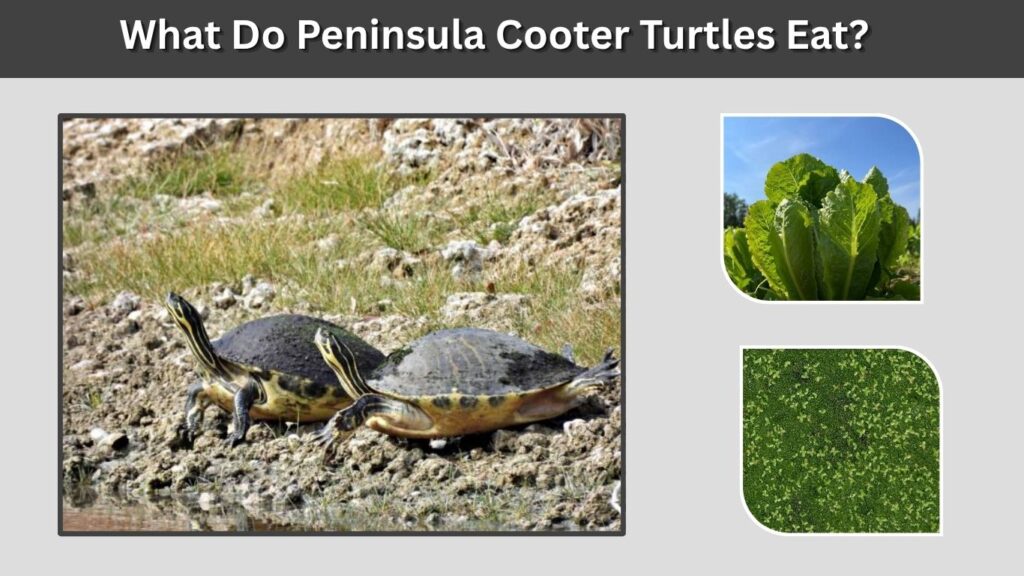
People often ask, “what does a peninsula cooter turtle eat?” The answer changes somewhat with age. Baby peninsula cooter turtles may eat more protein, while adults become more plant-focused.
In the wild, cooters feed heavily on aquatic vegetation. In captivity, they should receive a varied diet built around greens, aquatic plants, and quality turtle pellets. Animal protein can be offered more often to juveniles, but adults should not be fed a meat-heavy diet.
Good Foods for Peninsula Cooters
Healthy food choices include:
- Commercial aquatic turtle pellets
- Romaine lettuce
- Collard greens
- Mustard greens
- Turnip greens
- Dandelion greens
- Duckweed
- Water lettuce
- Anacharis
- Zucchini
- Squash
- Small amounts of carrot
- Occasional insects or worms for young turtles
Avoid relying on dried shrimp, feeder fish, cooked meat, or human leftovers. These foods can create nutritional imbalance when used as staples.
Feeding Schedule
Young turtles can be fed small portions daily, with greens available often. Adults can be fed pellets several times per week and greens more frequently. Remove uneaten food to keep the water clean.
Calcium is also important. Many keepers provide cuttlebone, calcium blocks, or supplements designed for aquatic turtles.
Baby Peninsula Cooter Turtle Care
A baby peninsula cooter turtle needs extra attention because hatchlings are small, delicate, and still learning to feed. They need clean water, gentle access to the surface, and a basking platform they can climb easily.
Do not place a tiny hatchling in a deep, bare tank with no resting points. Even strong swimmers benefit from plants, ramps, and shallow resting areas.
Baby Care Tips
For baby peninsula cooter turtles, focus on:
- Warm, clean water
- Easy basking access
- Gentle filter flow
- UVB and heat lighting
- Small floating pellets
- Finely chopped greens
- Resting spots near the surface
- Careful daily observation
A baby turtle that will not eat, floats unevenly, has swollen eyes, or keeps its mouth open while breathing may need reptile veterinary care.
Peninsula Cooter Turtle Nests and Breeding
Peninsula cooter turtle nests are made on land. Mature females leave the water to dig nests in soil, sand, or loose ground. Like many aquatic turtles, females may lay eggs even if they have not recently been with a male, though unfertilized eggs will not hatch.
Captive adult females need access to a suitable nesting area if they show nesting behavior. A female that cannot lay eggs may become egg-bound, which can be dangerous.
Painted Turtle and Peninsula Cooter Breeding
People sometimes search for painted turtle and peninsula cooter breeding. These are different turtle types, and intentional crossbreeding is not recommended. Mixed-species breeding can create identification problems and should not be encouraged by responsible keepers.
If multiple turtles are housed together, monitor behavior carefully. Males may harass females, and turtles may bite or compete for basking areas.
Can Peninsula Cooters Live With Other Turtles?
Peninsula cooters can sometimes live with other similar-sized aquatic turtles in very large enclosures, but this is not guaranteed. Space, temperament, feeding behavior, and basking access all matter.
A peninsula cooter may outgrow or outcompete smaller turtles. Painted turtles, musk turtles, and sliders should not be placed together casually without a backup plan for separation.
Watch for Problems
Separate turtles if you notice:
- Biting
- Chasing
- Shell nipping
- One turtle blocking the basking area
- Food aggression
- Stress hiding
- Repeated mating harassment
Even peaceful turtles can become aggressive as they mature.
Is a Peninsula Cooter Turtle a Good Pet?
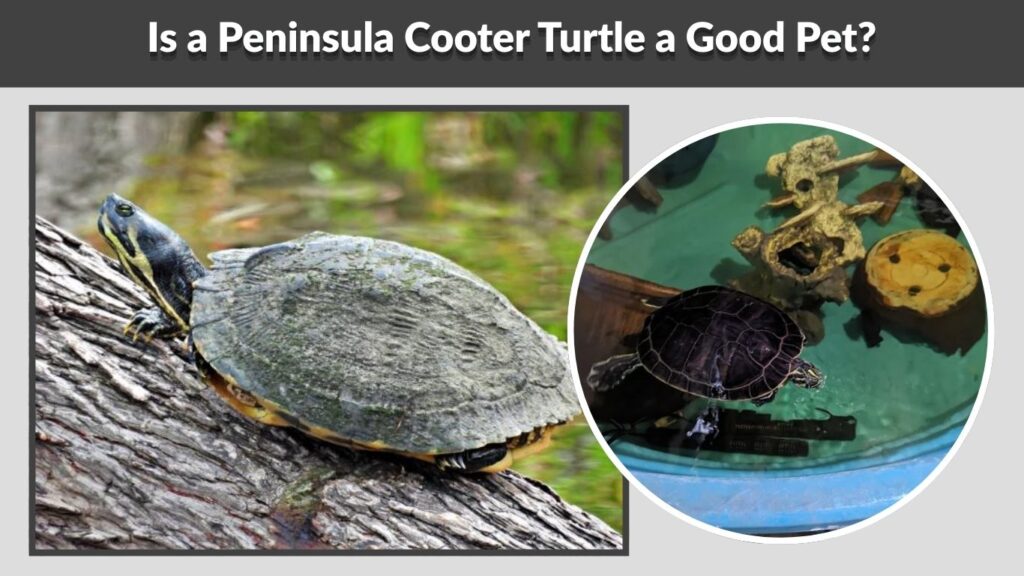
A peninsula cooter turtle can be a good pet for someone who wants a large, active aquatic turtle and can provide proper housing. It is enjoyable to watch, usually hardy, and often adapts well to captivity when cared for correctly.
However, it is not ideal for everyone. Adults need large enclosures, strong filters, lighting, electricity, regular cleaning, and long-term commitment. These turtles can live for decades, so buying a baby should never be an impulse decision.
FAQs
How big do peninsula cooter turtles get?
Peninsula cooter turtles commonly grow around 10 to 15 inches, with females usually larger than males. Some individuals may reach the upper end of that range, so owners should plan for a large adult turtle rather than buying equipment only for a hatchling.
What does a peninsula cooter turtle eat?
A peninsula cooter turtle eats aquatic plants, leafy greens, and quality turtle pellets. Babies may eat more protein, such as insects or worms, but adults should have a plant-heavy diet. Good greens include romaine, collard greens, dandelion greens, mustard greens, and turnip greens.
Are baby peninsula cooter turtles easy to care for?
Baby peninsula cooter turtles are hardy when kept correctly, but they still need warm clean water, UVB lighting, a heat lamp, a safe basking area, and proper food. They also grow into large adults, so long-term housing should be planned from the beginning.
What is the difference between a peninsula cooter and painted turtle?
A peninsula cooter is usually larger, has yellow head striping, and is closely associated with Florida habitats. Painted turtles are generally smaller and often show brighter red or orange markings on the shell edge and limbs. Young turtles can look similar, so careful identification helps.
Can a peninsula cooter live with a yellow-bellied slider?
A peninsula cooter may live with a yellow-bellied slider only in a very large, well-filtered enclosure with multiple basking spots. Sliders can be pushy, and cooters grow large. Separate them if there is biting, bullying, food aggression, or repeated stress behavior.