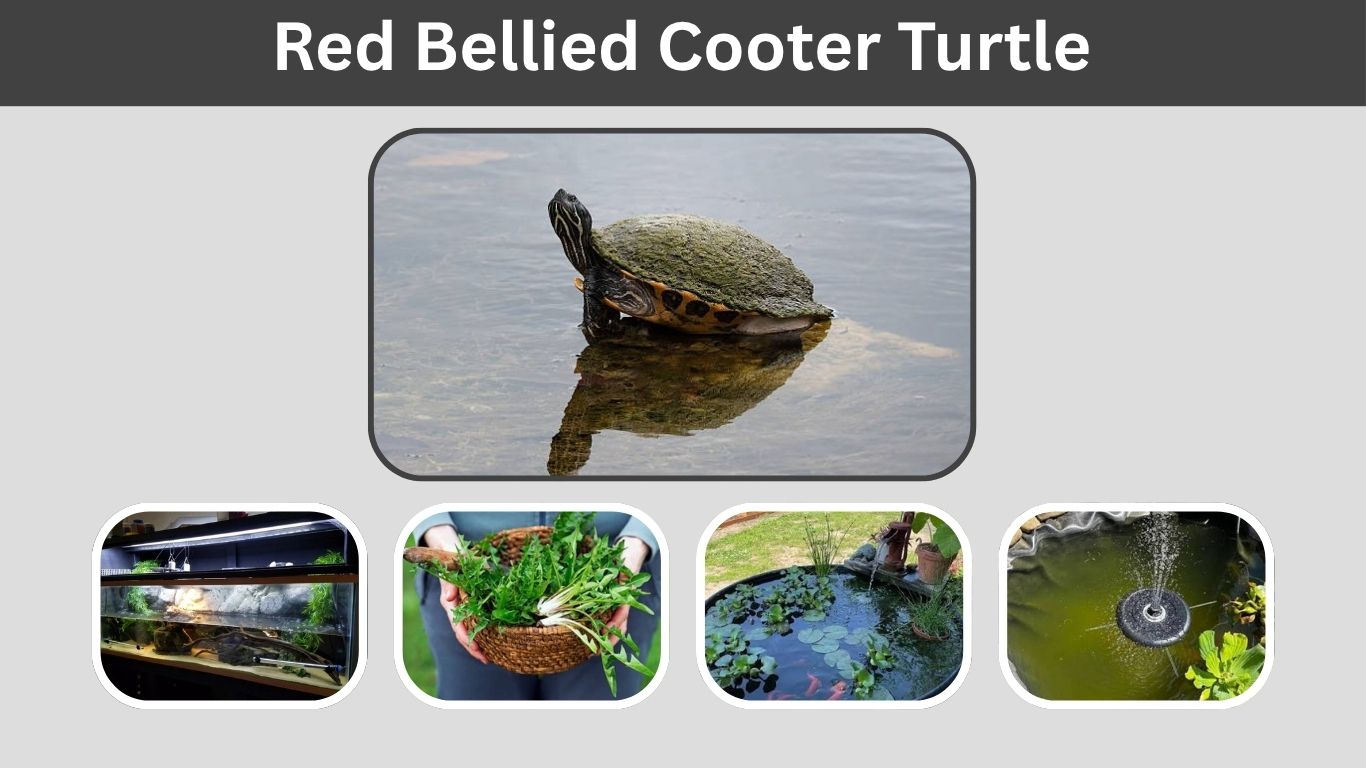
The red bellied cooter turtle is a large, active freshwater turtle known for its reddish-orange underside, strong swimming ability, and love of basking. Many people search for “red belly cooter turtle,” “northern red bellied cooter turtle,” or “red cooter turtle” when trying to identify one or learn whether it makes a suitable pet. This guide explains identification, habitat, feeding, baby care, gender differences, and how it compares with painted turtles and sliders.
What Is a Red Bellied Cooter Turtle?
A red bellied cooter turtle is a freshwater basking turtle from the genus Pseudemys. The best-known species is the northern red-bellied cooter, also called the American red-bellied turtle. Florida red-bellied cooters are closely related and are often discussed in pet care guides because they appear in the reptile trade more often.
These turtles are usually found in slow-moving rivers, ponds, marshes, lakes, and wetlands. They spend much of their day swimming, feeding on aquatic vegetation, and basking on logs or rocks. Unlike small beginner turtles, red bellied cooters can grow large and need spacious housing.
Common Names People Use
You may see this turtle called by several names:
- Red bellied cooter turtle
- Red belly cooter turtle
- Northern red bellied cooter turtle
- Red cooter turtle
- Florida red-bellied cooter turtle
- American red-bellied turtle
These names are sometimes used loosely, so correct identification matters before buying, adopting, or caring for one.
Red Bellied Cooter Turtle Identification
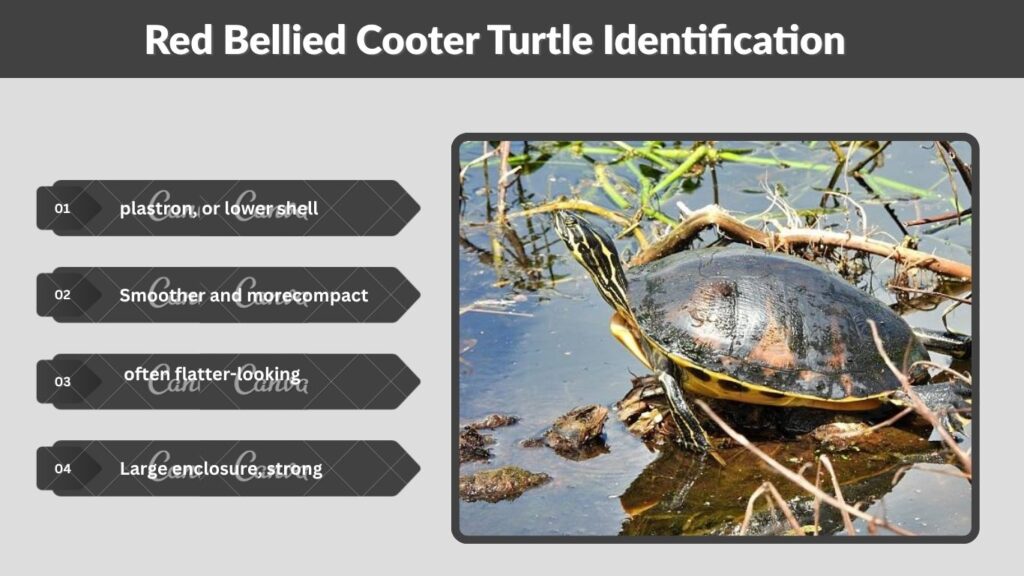
The easiest feature to notice is the plastron, or lower shell. In many red bellied cooters, it has a reddish, orange, pinkish, or salmon-colored tone. The upper shell is usually dark olive, brown, or black with lighter markings. The head and neck often have yellow stripes.
Red bellied cooters are sometimes confused with painted turtles, sliders, river cooters, and Alabama red-bellied turtles. Size, shell shape, head markings, and plastron color can help separate them.
| Feature | Red Bellied Cooter | Painted Turtle |
|---|---|---|
| Adult size | Usually larger and heavier | Usually smaller |
| Plastron color | Often red, orange, or salmon | Yellow, orange, or patterned depending on type |
| Shell shape | Broad, often flatter-looking | Smoother and more compact |
| Head markings | Yellow striping, usually no bold yellow spot behind eye | Often has brighter facial markings |
| Care needs | Large enclosure, strong filtration | Still needs space, but usually smaller setup |
Difference Between Red Bellied Cooter and Painted Turtle
The difference between a red bellied cooter and painted turtle is mostly size, shell pattern, and head markings. Red bellied cooters are generally larger, bulkier turtles. Painted turtles often have more vivid red or yellow edge markings on the shell and limbs.
If you are comparing an eastern painted turtle vs red bellied cooter, look closely at the shell and head. Red bellied cooters tend to have a broader shell and a less obvious bright patch behind the eye. Painted turtles usually remain smaller and are easier to house long-term.
Natural Habitat and Behavior
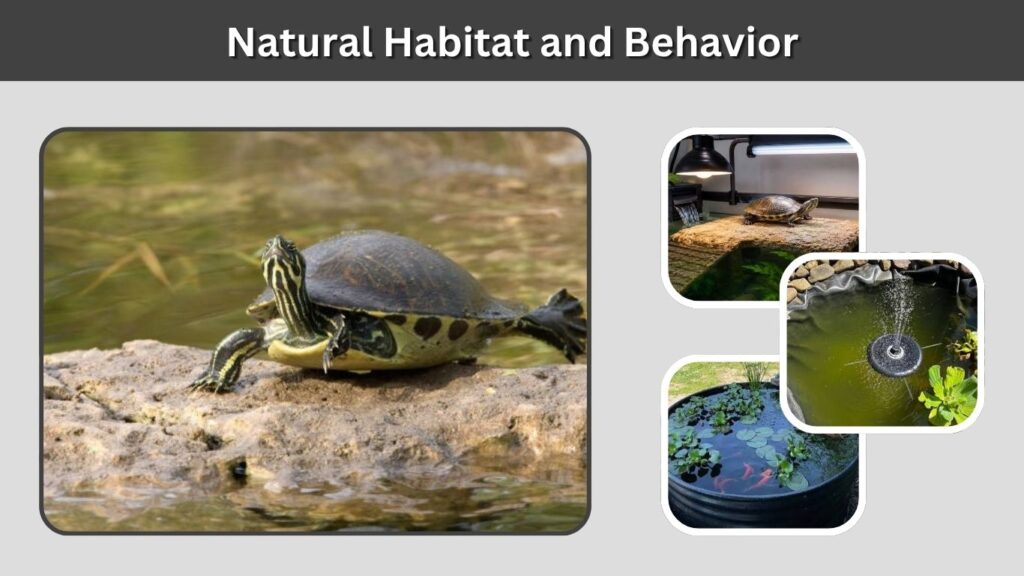
Red bellied cooters are aquatic turtles, but they are not fully water-bound. They need deep swimming water and a dry basking area where they can climb out completely. In the wild, they use ponds, marshes, rivers, and quiet backwaters with aquatic plants.
They are usually calm but active. A healthy cooter will swim often, bask daily, and forage for greens. They are not pets that enjoy frequent handling. Too much handling can cause stress, so they are best appreciated as display animals rather than cuddly pets.
Basic Habitat Needs
A proper setup should include:
- Large aquarium, stock tank, or outdoor pond
- Deep, clean swimming water
- Strong canister or pond-style filtration
- Dry basking dock under heat and UVB lighting
- Water heater if indoor temperatures are too cool
- Safe hiding areas and aquatic plants
- Secure lid or fencing to prevent escape
Adult red bellied cooters need much more space than hatchlings. Many owners underestimate their final size and upgrade too late.
Red Bellied Cooter Turtle Care
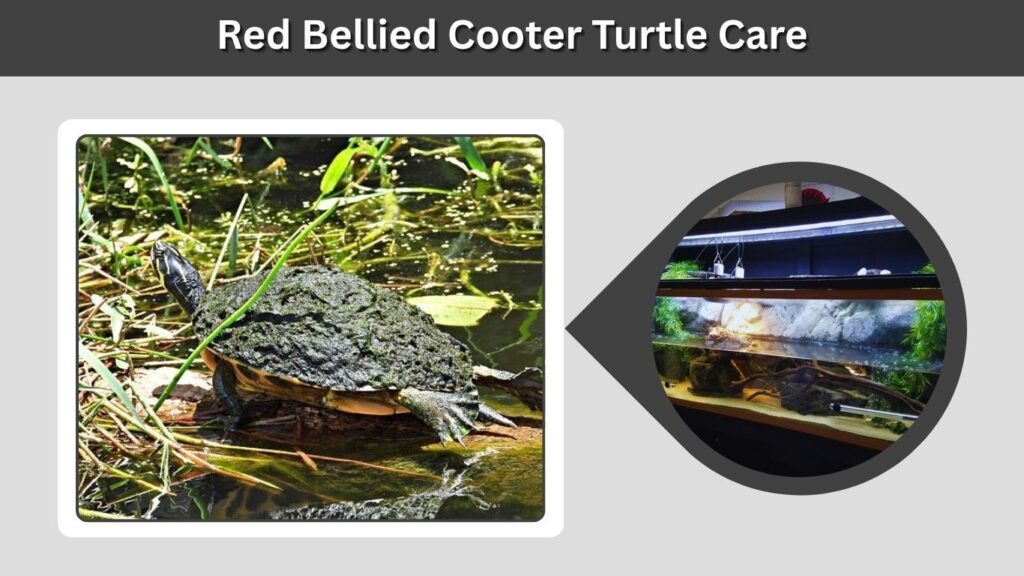
Good red bellied cooter turtle care starts with space, water quality, lighting, and diet. These turtles produce a lot of waste, so weak filters quickly lead to dirty water, odor, shell problems, and illness.
Indoor turtles need UVB lighting because UVB helps them process calcium properly. Without enough UVB and calcium, they can develop shell deformities or metabolic bone disease. The basking area should be warm enough to encourage drying, digestion, and normal activity.
Care Checklist
For a healthy setup, provide:
- A large tank or pond with room to turn and dive
- Water deep enough for natural swimming
- A basking platform that stays completely dry
- UVB bulb replaced according to manufacturer guidance
- Heat lamp over the basking area
- Dechlorinated water
- Regular water changes
- Calcium source, such as cuttlebone or proper supplements
- A varied diet with plenty of plant matter
A red bellied cooter is not a low-maintenance pet. It can live for decades, so planning for adult size is essential.
Florida Red-Bellied Cooter Turtle: What to Feed
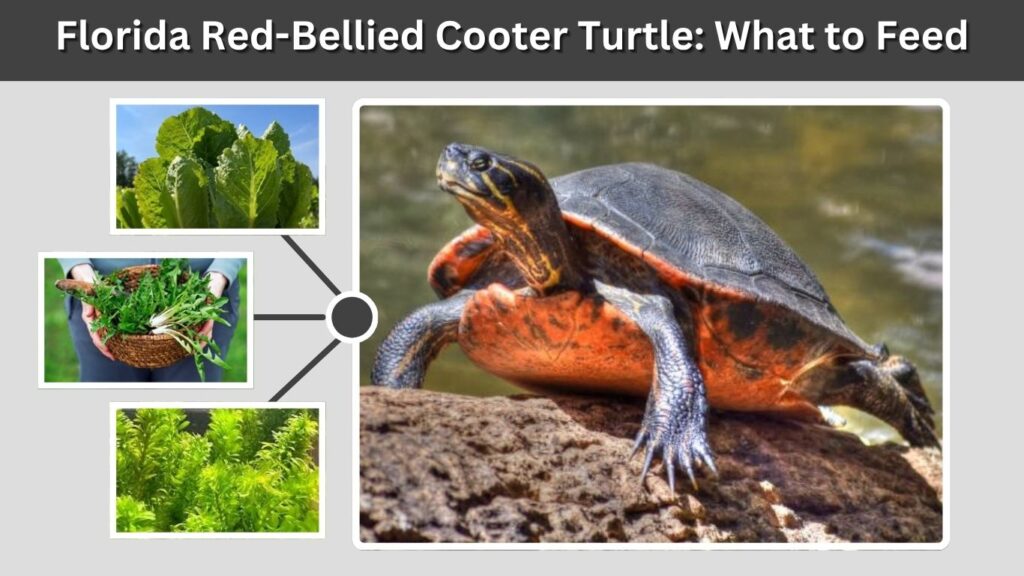
People often ask, “Florida red-bellied cooter turtle what to feed?” or “what vegetables to feed it?” These turtles are mostly plant-focused as they mature, although babies and juveniles may eat more protein.
A balanced diet should include commercial aquatic turtle pellets, leafy greens, aquatic plants, and selected vegetables. Protein should be limited for adults because too much can contribute to fast growth, obesity, and shell issues.
Good Foods to Offer
Safe food options include:
- Commercial turtle pellets
- Romaine lettuce
- Dandelion greens
- Collard greens
- Mustard greens
- Turnip greens
- Duckweed
- Water lettuce
- Anacharis
- Squash
- Carrot shavings in moderation
- Occasional insects for young turtles
Avoid feeding mostly shrimp, meat, or fish. These foods may be accepted eagerly, but they should not become the main diet.
Vegetables to Feed a Florida Red-Bellied Cooter
Good vegetables include leafy greens first, then small amounts of squash, zucchini, carrot, and aquatic plants. Iceberg lettuce should be avoided because it has little nutritional value. Spinach should be limited because it can interfere with calcium use when fed too often.
Red Bellied Cooter Turtle Baby Care
A red bellied cooter turtle baby looks small and manageable, but it will not stay tiny. Hatchlings need clean warm water, a safe basking platform, UVB lighting, and a gentle diet that supports steady growth.
Baby turtles may eat more protein than adults, but they still need greens early so they learn to accept plant foods. Feed small portions and remove leftovers to keep the water clean.
Baby Turtle Setup Tips
For a baby red bellied cooter, focus on:
- Shallow-to-moderate water with easy resting spots
- Gentle filter flow
- Stable warm water temperature
- Small floating pellets
- Finely chopped greens
- Daily observation for appetite and swimming strength
A baby that floats sideways, refuses food, keeps swollen eyes, or cannot dive may need reptile veterinary care.
Northern Red Bellied Cooter Turtle Gender
Many owners search for “northern red bellied cooter turtle gender” because males and females look similar when young. Gender is easier to identify once the turtle is older.
Males are usually smaller, with longer front claws and a longer, thicker tail. Females are usually larger and heavier, with shorter front claws and a shorter tail. In many aquatic turtles, female size is important because mature females may need a nesting area even if no male is present.
Male vs Female Signs
Common gender clues include:
- Males often have longer front claws
- Males usually have longer tails
- Females usually grow larger
- Females may need nesting space
- Young turtles are difficult to sex accurately
Do not rely on one feature alone. Size, age, tail shape, and claw length should be considered together.
Cooter and Red Belly Turtles With Other Species
Some keepers ask about cooter and red belly turtles living with painted turtles, sliders, or river cooters. Mixed-species housing can work in large outdoor ponds, but it carries risks. Turtles may compete for basking space, bite during feeding, or stress each other.
A red eared slider and cooter turtle may look compatible, but sliders can be pushy. Painted turtles are usually smaller and may be outcompeted by a large cooter. Any shared habitat must be oversized, filtered heavily, and monitored.
Buying or Adopting a Red Bellied Cooter Turtle
Because some red-bellied turtle populations are protected or locally regulated, never collect one from the wild. Laws vary by region, and wild collection can harm native populations. Choose a reputable breeder, rescue, or adoption source that can identify the turtle correctly.
Buyer Checklist
Before getting one, confirm:
- The exact species or subspecies
- Whether ownership is legal in your area
- The turtle is captive-bred or legally obtained
- Eyes are clear and open
- Shell is firm, not soft or foul-smelling
- The turtle swims normally
- You can provide adult-sized housing
- You have access to a reptile veterinarian
A cheap baby turtle can become expensive once you add a large tank, filtration, lighting, heating, and long-term food costs.
Common Health Problems
Most red bellied cooter health issues come from poor water, weak lighting, bad diet, or inadequate basking. Shell rot, swollen eyes, respiratory infections, soft shell, and poor appetite are common warning signs.
If your turtle wheezes, floats unevenly, has mucus around the nose, refuses food for several days, or develops soft shell areas, consult a reptile vet. Home remedies are not enough for serious infections.
FAQs
Are red bellied cooter turtles good pets?
Red bellied cooter turtles can be good pets for experienced keepers with enough space. They grow large, need strong filtration, UVB lighting, and long-term care. They are better for observation than handling, so they are not ideal for people wanting a small, interactive pet.
What is the difference between a red bellied cooter and painted turtle?
A red bellied cooter is usually larger, bulkier, and has a reddish or orange plastron. Painted turtles are generally smaller and often show brighter red or yellow markings along the shell and body. The two can look similar when young, so compare size, head markings, and shell pattern.
What vegetables can a Florida red-bellied cooter turtle eat?
Florida red-bellied cooters can eat leafy greens such as romaine, collard greens, dandelion greens, mustard greens, and turnip greens. They may also eat aquatic plants, squash, zucchini, and small carrot pieces. Avoid iceberg lettuce as a staple because it offers little nutrition.
How big does a red bellied cooter turtle get?
Red bellied cooters can become large aquatic turtles, especially females. Many adults need pond-sized or very large indoor enclosures. Their final size depends on species, sex, diet, genetics, and care quality, but owners should plan for a turtle that may outgrow small aquariums.
Can a red bellied cooter live with a red eared slider?
A red bellied cooter can sometimes live with a red eared slider in a very large, well-managed pond or enclosure. However, sliders may compete aggressively for food and basking spots. Mixed housing should be watched closely, and turtles should be separated if biting, bullying, or stress appears.