
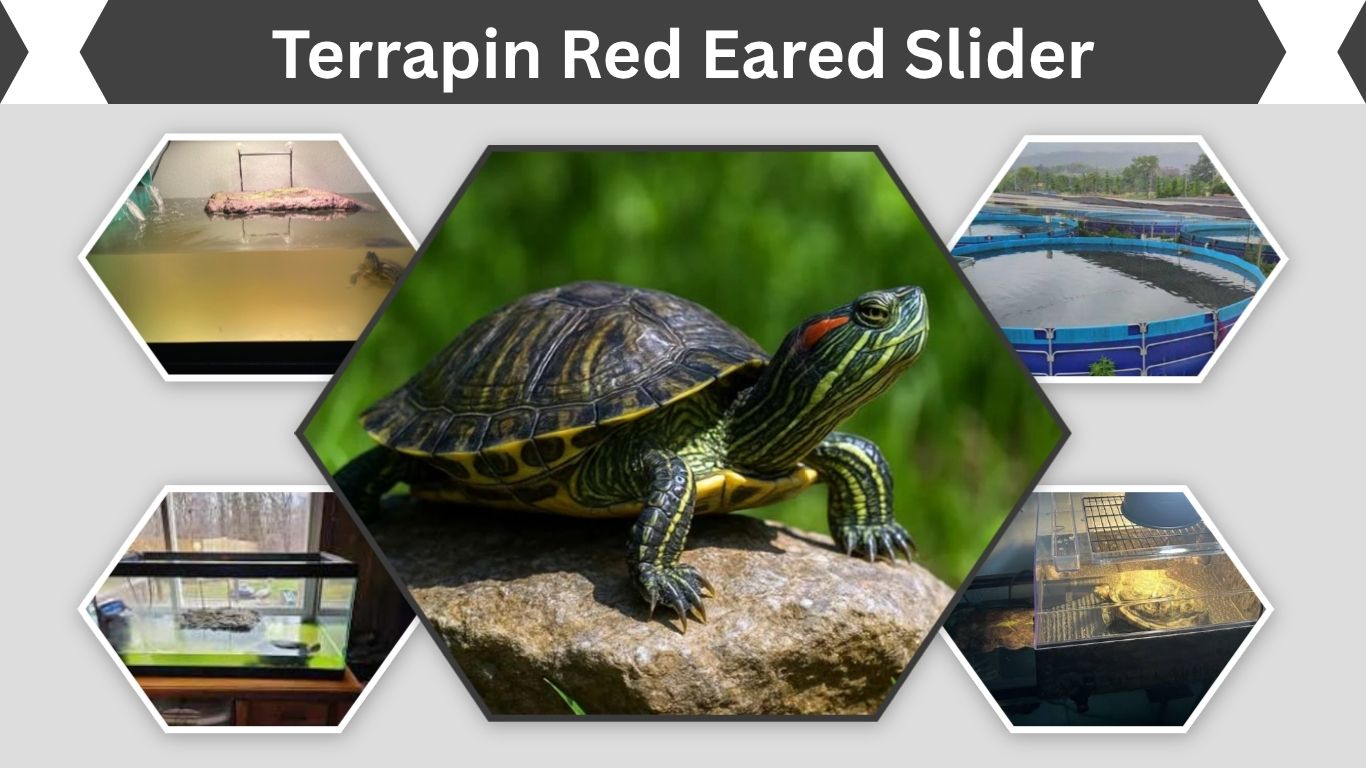
The red-eared slider is one of the most searched pet turtles, but many people call it a terrapin, turtle, or slider without knowing the difference. This guide explains what a red-eared slider terrapin is, how big it gets, how long it lives, what care it needs, and whether it can live with other terrapins like the diamondback terrapin.
What Is a Red-Eared Slider Terrapin?
A red-eared slider is a semi-aquatic freshwater turtle known for the red stripe behind each eye. Its scientific name is Trachemys scripta elegans. It is called a “slider” because it often slides quickly from rocks or logs into the water when disturbed.
Many people use the word “terrapin” for freshwater or semi-aquatic turtles, especially in casual pet care searches. So, when someone searches for a “terrapin red eared slider,” they usually mean a red-eared slider turtle kept as a pet.
However, technically, not every turtle called a terrapin is the same species. A red-eared slider is different from a diamondback terrapin, map turtle, painted turtle, or musk turtle. These turtles may look similar to beginners, but their habitat, water needs, diet, and behavior can vary a lot.
Is a Red-Eared Slider a Terrapin?
In everyday language, yes, many people call a red-eared slider a terrapin. In stricter biological terms, it is a freshwater turtle, not the same as a diamondback terrapin.
This matters because “terrapin” can be confusing. In some places, terrapin simply means a small turtle that lives in or near water. In other contexts, “terrapin” may refer to specific species, especially diamondback terrapins.
For pet owners, the most important point is this: a red-eared slider needs care designed for red-eared sliders, not general terrapin care. A care sheet for a diamondback terrapin, box turtle, or tortoise may not be suitable.
Red-Eared Slider vs Terrapin: What’s the Difference?
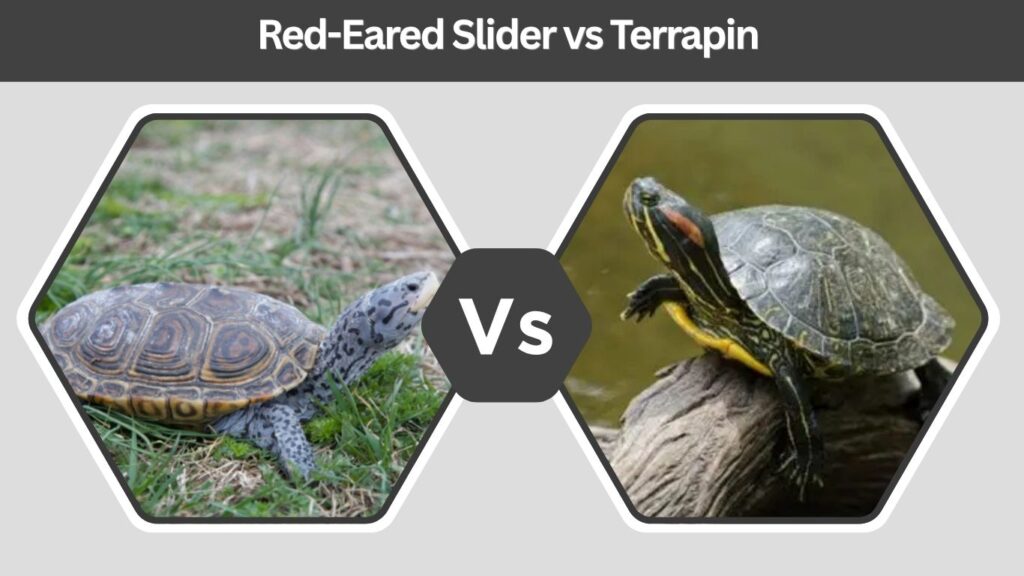
A red-eared slider is a type of aquatic turtle commonly kept as a pet. A terrapin is a broader common name that may refer to different semi-aquatic turtles depending on region and species.
Here is a simple comparison:
| Feature | Red-Eared Slider | Diamondback Terrapin |
| Common habitat | Freshwater ponds, lakes, marshes | Brackish coastal marshes |
| Water type | Freshwater | Slightly salty/brackish water |
| Common pet status | Very common | Less common and more specialized |
| Adult size | Usually medium to large | Medium-sized, varies by sex |
| Beginner-friendly? | Manageable with proper setup | Better for experienced keepers |
| Best housed with | Usually alone or carefully matched sliders | Other compatible terrapins, not sliders |
The biggest difference is water type. Red-eared sliders need freshwater. Diamondback terrapins naturally live in brackish water, which contains some salt. This is one of the main reasons they should not be kept together.
Red-Eared Slider Size: How Big Do They Get?
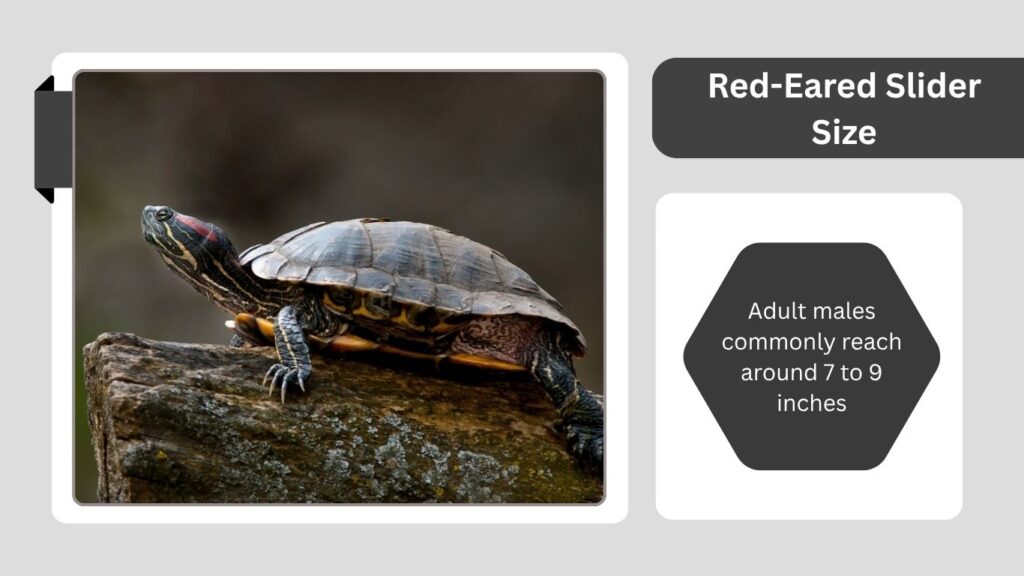
Red-eared sliders are often sold or adopted when they are small, but they do not stay tiny. A young slider may fit in your palm, but adults need a much larger enclosure.
Male red-eared sliders are usually smaller than females. Adult males commonly reach around 7 to 9 inches in shell length, while females can reach around 10 to 12 inches. Some individuals may be smaller or larger depending on genetics, care, diet, and environment.
Before getting one, plan for the adult size, not the baby size. A small starter tank may work only for a short time. As the turtle grows, it will need more swimming space, stronger filtration, and a larger basking area.
Red-Eared Slider Lifespan
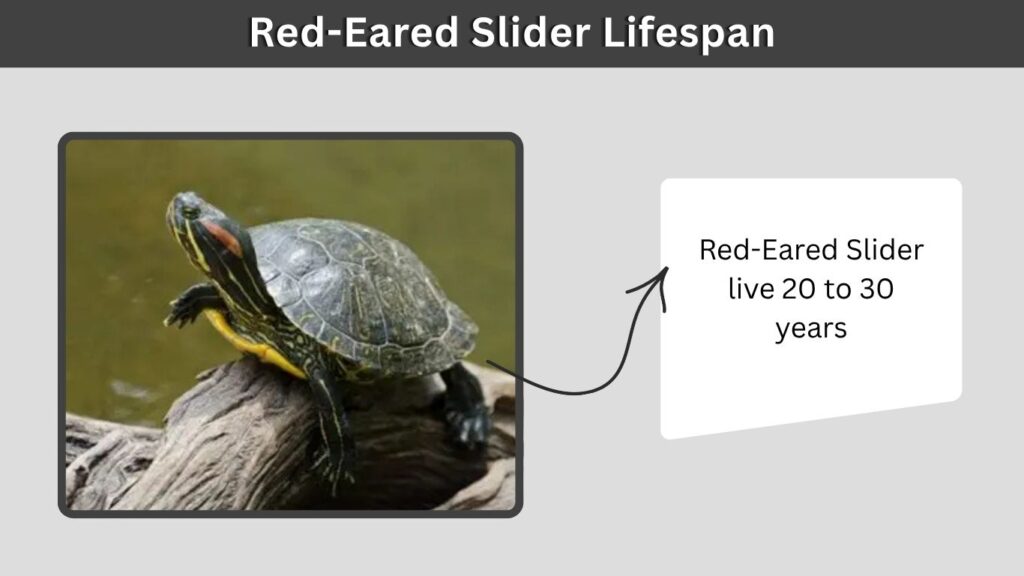
A red-eared slider can live for decades when cared for properly. Many live 20 to 30 years, and some can live longer. This makes them a long-term pet, not a short-term beginner animal.
Their lifespan depends on several factors:
- Clean water and strong filtration
- A large enough tank
- Proper basking temperature
- UVB lighting
- A balanced diet
- Regular observation for illness
- Safe handling and low stress
Poor care can shorten a slider’s life. Dirty water, no UVB, poor diet, and cramped housing can lead to shell problems, metabolic bone disease, infections, and stress.
Red-Eared Slider Care Sheet
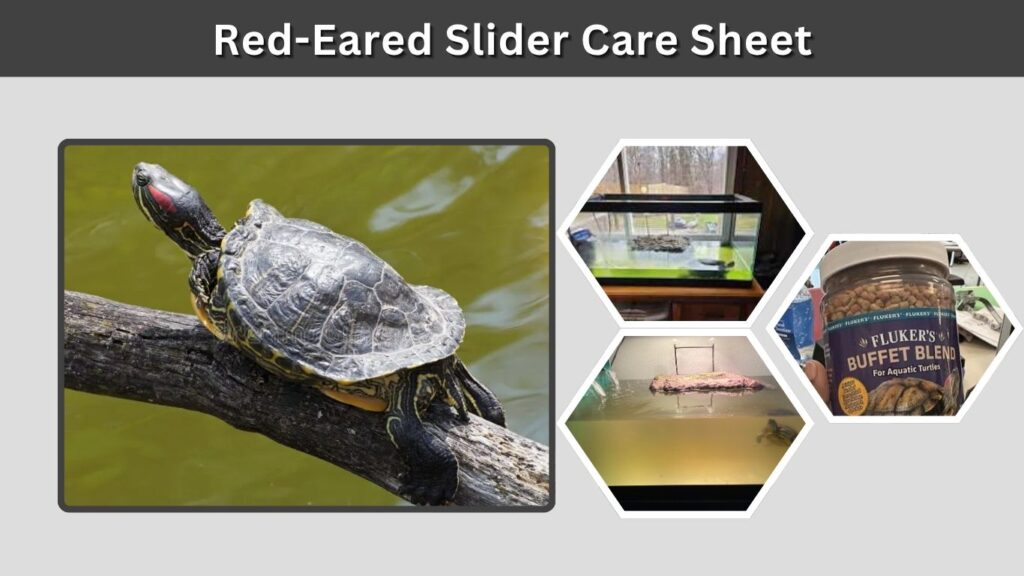
Red-eared sliders are hardy, but they are not low-maintenance pets. They need a proper aquatic setup with land access, heating, lighting, and filtration.
Tank Size
A common guideline is to provide about 10 gallons of water per inch of shell length. This means a 4-inch turtle may need around 40 gallons, while a large adult female may need 100 gallons or more.
Bigger is usually better because turtles are messy animals. More water helps dilute waste and gives the turtle room to swim naturally.
Water and Filtration
Red-eared sliders spend much of their time in water. The water should be clean, deep enough for swimming, and safely heated if the room temperature is too low.
A strong filter is essential. Turtles create more waste than fish, so many keepers use filters rated for tanks larger than the actual enclosure. Regular partial water changes are also important.
Basking Area
A red-eared slider needs a dry basking platform where it can climb fully out of the water. The platform should be stable, easy to access, and warm enough for the turtle to dry off and regulate body temperature.
Basking helps with digestion, shell health, and overall activity. If a slider never basks, the setup may be too cold, unsafe, hard to climb, or stressful.
Heat and UVB Lighting
Red-eared sliders need both heat and UVB light. A heat lamp warms the basking area, while UVB helps the turtle process calcium and maintain healthy bones and shell growth.
UVB bulbs lose effectiveness over time, even if they still produce visible light. Replace them according to the manufacturer’s instructions.
Diet
Red-eared sliders are omnivores. Young sliders often eat more animal protein, while adults usually need more plant matter.
A balanced diet may include:
- Commercial aquatic turtle pellets
- Leafy greens such as romaine, dandelion greens, or collard greens
- Aquatic plants
- Occasional insects or protein foods
- Calcium support when needed
Avoid feeding only shrimp, meat, or low-quality treats. An unbalanced diet can cause obesity, shell deformities, and vitamin deficiencies.
Can You Put a Diamondback Terrapin With a Red-Eared Slider?
No, a diamondback terrapin should not be housed with a red-eared slider. Even though they are both aquatic turtles, they have different environmental needs.
The main issue is water. Red-eared sliders are freshwater turtles. Diamondback terrapins usually require brackish water. If the water is set up for the slider, the terrapin may suffer. If it is set up for the terrapin, the slider may be stressed or unhealthy.
There are also other risks:
- Competition for food
- Aggression or biting
- Stress from different behaviors
- Disease transmission
- Unequal basking access
- Different dietary needs
Mixed-species turtle tanks are difficult even for experienced keepers. For most owners, the safest and most humane choice is to keep each species in its own enclosure.
Diamondback Terrapin vs Red-Eared Slider
A diamondback terrapin and a red-eared slider may look somewhat similar to beginners, but they are very different pets.
Diamondback terrapins are associated with coastal marshes and brackish environments. They often require more specialized water management. Red-eared sliders are freshwater turtles and are more common in the pet trade.
A red-eared slider is usually easier for beginners to research because care information and supplies are widely available. However, it still needs a large tank and proper equipment. A diamondback terrapin may be better suited to someone with experience maintaining water quality, salinity, and species-specific care.
Red-Eared Slider Mating and Behavior
Red-eared sliders have interesting social and mating behavior. Males often have longer front claws and may flutter them near a female’s face during courtship. This behavior can look unusual, but it is normal in mature turtles.
However, mating behavior can become stressful in small tanks. A male may chase or harass a female, especially if she cannot escape. Keeping males and females together can also lead to eggs, even if the owner is not prepared for nesting needs.
Important behavior notes include:
- Males may become territorial.
- Females need a nesting area if they develop eggs.
- Two turtles may fight, even if they grew up together.
- Injuries from biting can become serious.
- Solitary housing is often easier and safer.
If you keep more than one slider, monitor them closely and be prepared to separate them permanently.
Are Red-Eared Sliders Good Pets?

Red-eared sliders can be rewarding pets for the right owner. They are active, alert, and interesting to watch. Many learn to recognize feeding routines and may swim toward the front of the tank when people approach.
But they are not ideal for everyone. They require space, equipment, cleaning, and long-term commitment. They are also not cuddly pets and usually do not enjoy frequent handling.
A red-eared slider may be a good pet if you can provide:
- A large tank or pond
- Strong filtration
- UVB and heat lighting
- A proper basking area
- A varied diet
- Long-term care for decades
- Responsible ownership without releasing it outdoors
They may not be a good choice for someone who wants a small, cheap, low-maintenance pet.
Can Red-Eared Sliders Be Released Into the Wild?
No, pet red-eared sliders should never be released into the wild. In many places, released sliders are considered invasive because they can compete with native turtles for food, basking space, and nesting areas.
Releasing a pet turtle can also spread disease to wild populations. Even if the turtle seems healthy, it may carry organisms that could harm local wildlife.
If you can no longer care for a red-eared slider, contact a reptile rescue, local animal shelter, exotic veterinarian, or responsible turtle keeper. Never dump it in a pond, river, canal, or park.
Red-Eared Slider Size Photo: What to Expect Visually
People often search for red-eared slider size photos because baby sliders can be misleading. A hatchling may be only a few inches long, but an adult female can become large enough to need a tank that dominates a room.
A useful size photo comparison would show:
- Hatchling slider beside a coin
- Juvenile slider in a small tank
- Adult male beside a ruler
- Adult female beside a hand
- Full adult tank setup
For SEO, adding original photos or labeled graphics can help the article compete in image search. Include alt text such as “adult red eared slider terrapin size comparison” or “red eared slider turtle basking on platform.”
Common Red-Eared Slider Care Mistakes
Many problems happen because owners underestimate the turtle’s adult needs. Avoid these common mistakes:
- Keeping an adult slider in a small tank
- Using weak filtration
- Skipping UVB lighting
- Providing no dry basking area
- Feeding only dried shrimp or treats
- Mixing incompatible turtle species
- Handling too often
- Releasing the turtle outdoors
- Ignoring shell softness, swelling, or appetite loss
A healthy red-eared slider should be alert, active, able to swim normally, and willing to bask. Its shell should be firm, not soft, slimy, or foul-smelling.
FAQs
Is a red-eared slider a terrapin?
A red-eared slider is often called a terrapin in casual language, but it is more accurately a freshwater aquatic turtle. The word “terrapin” can refer to different semi-aquatic turtles, so it is best to use species-specific red-eared slider care advice.
How big does a red-eared slider terrapin get?
Adult male red-eared sliders usually reach about 7 to 9 inches in shell length, while females can grow around 10 to 12 inches. Because they grow much larger than hatchlings, owners should plan for a large adult tank from the beginning.
How long does a red-eared slider live?
A red-eared slider can live 20 to 30 years or more with proper care. Clean water, UVB lighting, heat, a balanced diet, and enough swimming space all play a major role in lifespan and long-term health.
Can a diamondback terrapin live with a red-eared slider?
No. A diamondback terrapin should not live with a red-eared slider because their water requirements are different. Red-eared sliders need freshwater, while diamondback terrapins usually need brackish water. Housing them together can cause stress, illness, and aggression.
Are red-eared sliders easy to care for?
Red-eared sliders are hardy but not easy in the sense of being low-maintenance. They need a large tank, strong filter, basking dock, heat lamp, UVB light, and regular cleaning. They are best for owners prepared for decades of care.