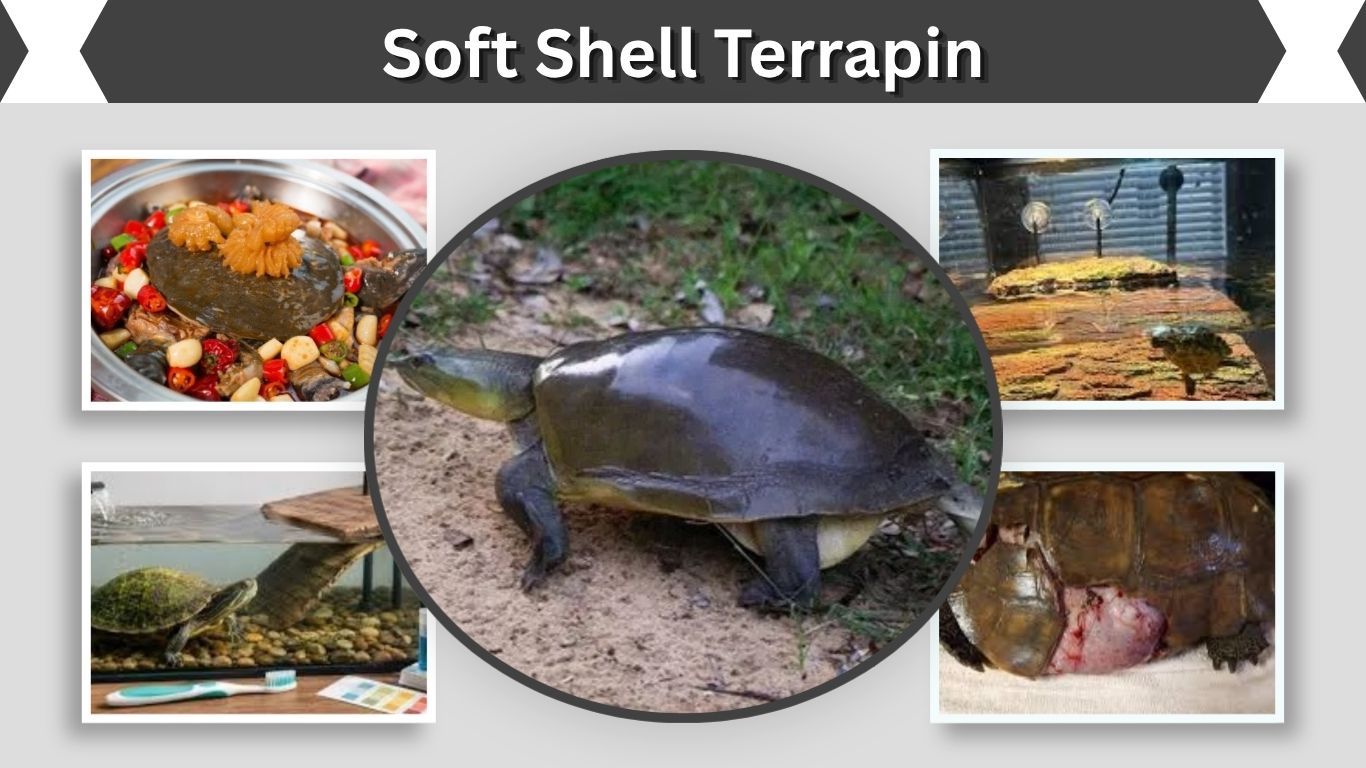
A “soft shell terrapin” can mean two different things. Some people use the phrase for softshell turtles, which naturally have flat, leathery shells. Others use it because their pet terrapin’s shell feels soft, rubbery, or weak. These are very different situations. This guide explains the difference, how to identify a softshell turtle, why a terrapin shell may become soft, and what care steps owners should understand.
What Is a Soft Shell Terrapin?
The phrase “soft shell terrapin” is not always used in a precise scientific way. In everyday searches, it may refer to a softshell turtle, a terrapin with shell problems, or a young turtle whose shell is still slightly flexible.
Softshell turtles are real turtles with naturally leathery, flexible-looking shells. They belong to the family Trionychidae and are known for their flattened bodies, long necks, pointed snouts, and strong swimming ability. Their shells do not look like the hard, domed shells of many common pet turtles.
A pet terrapin with a soft shell is different. Most terrapins and aquatic turtles should develop firm shells as they grow. If the shell feels rubbery, dents easily, smells bad, looks uneven, or is softer than before, that may be a sign of poor nutrition, lack of UVB light, calcium deficiency, shell rot, injury, or another health issue.
Softshell Turtle vs Terrapin With a Soft Shell
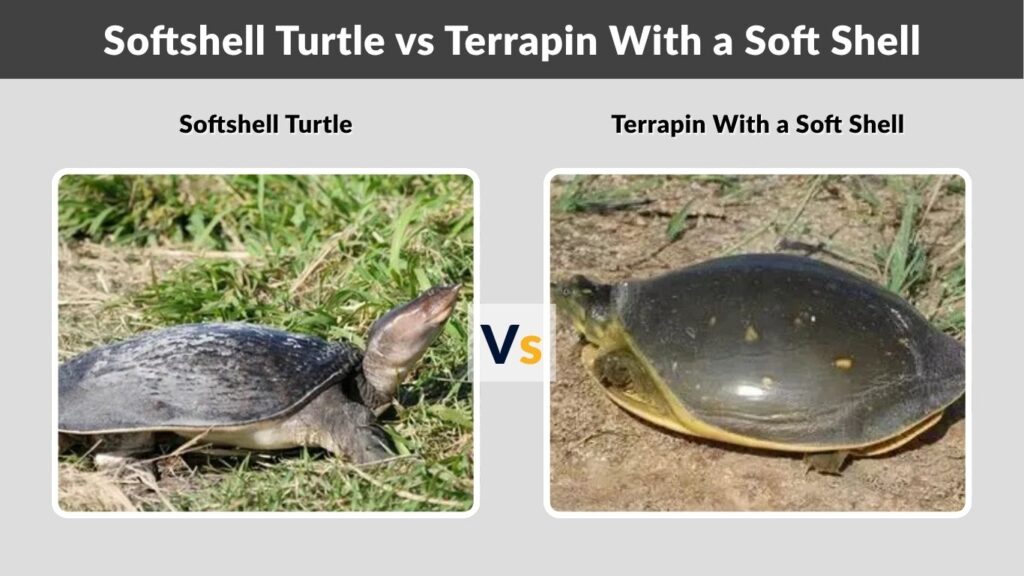
The most important difference is whether the animal is naturally a softshell species or whether a normally hard-shelled turtle has become soft.
A softshell turtle naturally has a flat, leathery carapace. This is part of its normal anatomy. Its shell may look smooth, flexible, and almost pancake-like. These turtles are usually fast swimmers and may bury themselves in sand or mud with only the head or snout exposed.
A terrapin with an unhealthy soft shell may be a red-eared slider, diamondback terrapin, map turtle, painted turtle, or another hard-shelled species. In these turtles, a soft shell is not a normal adult condition. It can signal a serious care or medical problem.
| Feature | Softshell Turtle | Terrapin With Soft Shell Problem |
| Shell texture | Naturally leathery | Abnormally soft or weak |
| Body shape | Very flat and streamlined | Depends on species |
| Cause | Normal species trait | Often diet, UVB, calcium, disease, or injury |
| Urgency | Normal if species is healthy | May require reptile vet care |
| Common concern | Specialized care needs | Metabolic bone disease or shell infection |
What Does a Softshell Turtle Look Like?
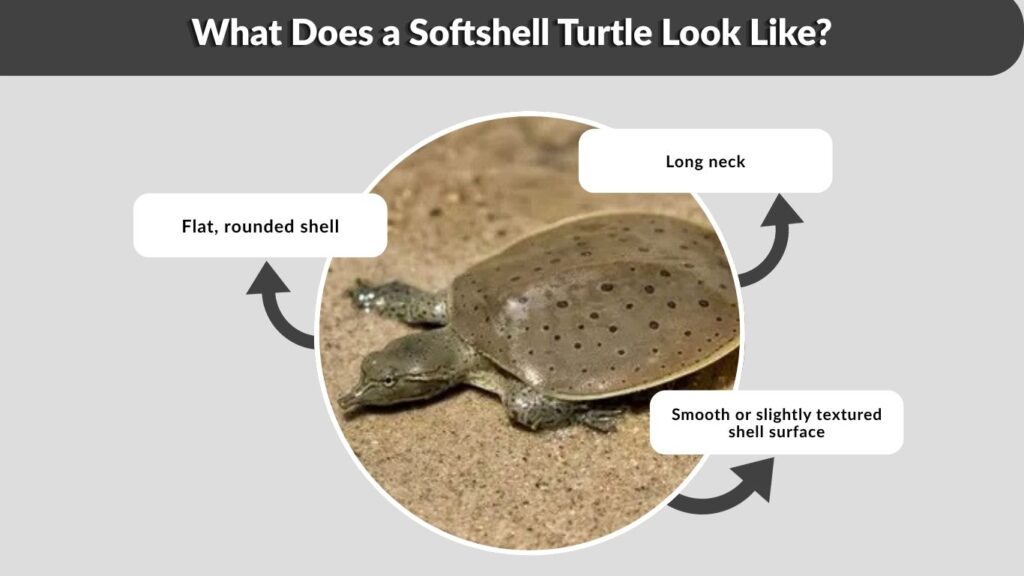
A softshell turtle has a very different appearance from most pet terrapins. Instead of a hard shell with visible scutes, it has a smoother, leathery shell covering a flattened body.
Common features include:
- Flat, rounded shell
- Long neck
- Pointed or tube-like snout
- Webbed feet
- Smooth or slightly textured shell surface
- Fast swimming movement
- Habit of burying in sand or mud
Many softshell turtles spend much of their time underwater. Their long neck and snorkel-like nose allow them to breathe while remaining mostly hidden. This makes them fascinating animals, but they are not always easy pets for beginners.
Are Softshell Turtles Good Pets?
Softshell turtles can be interesting pets, but they are usually better for experienced turtle keepers. They often need large aquatic enclosures, excellent water quality, soft substrate, careful handling, and species-specific feeding.
They may also be more sensitive than some common hard-shelled turtles. Their leathery shell and skin can be scratched by rough decorations, sharp rocks, or aggressive tank mates. Because of this, their enclosure must be designed carefully.
A softshell turtle may not be the best choice for someone who wants a simple beginner turtle. It can require more space, stronger filtration, and closer attention to water quality than many people expect.
Basic Softshell Turtle Care
Softshell turtles need an aquatic setup that supports swimming, hiding, basking, and clean water. Care needs can vary by species, so always research the exact species before buying or adopting one.
Tank Size
Softshell turtles are active swimmers. Many grow larger than new keepers expect, so a small tank is not suitable long term. A young turtle may start in a smaller enclosure, but adults often need a very large tank or indoor pond.
A cramped setup can cause stress, poor water quality, aggression, and injuries. Plan for the adult size from the beginning rather than buying equipment only for a hatchling.
Water Quality
Clean water is essential. Softshell turtles can be sensitive to poor water conditions, and dirty water increases the risk of skin and shell problems. Use a strong filter rated for more than the tank size, because turtles produce more waste than fish.
Regular partial water changes are also important. Even with a powerful filter, waste can build up over time. Test the water if possible and avoid letting uneaten food rot in the tank.
Substrate
Many softshell turtles like to bury themselves. Fine sand is often used because it allows natural burrowing behavior. Avoid sharp gravel, rough stones, or decorations that can scratch the shell or skin.
The substrate should be kept clean. Dirty sand can trap waste, so maintenance is important.
Basking and Lighting
Although many softshell turtles are highly aquatic, they still need access to a suitable basking area and proper lighting. Heat helps them regulate body temperature, while UVB lighting supports calcium metabolism and bone health.
A basking area should be easy to climb onto and should not damage the soft shell. If the turtle refuses to bask, check whether the platform is too steep, too exposed, too cold, or unstable.
Diet
Softshell turtles are often more carnivorous than many common pet turtles. Depending on species and age, they may eat aquatic turtle pellets, insects, worms, fish, shrimp, or other protein sources. Some may also accept plant matter, but diet should be based on the specific species.
Avoid feeding only one food. A varied, balanced diet helps prevent nutritional problems. Calcium support may be needed, especially for growing turtles.
Why Is My Terrapin Shell Soft?
If your terrapin is not a natural softshell turtle, a soft shell can be a warning sign. A mildly flexible shell may be normal in very young hatchlings, but a shell that is rubbery, dented, misshapen, or getting softer is not normal.
Common causes include:
- Lack of UVB lighting
- Low calcium intake
- Poor calcium-to-phosphorus balance
- Incorrect temperature
- Poor diet
- Dirty water
- Shell rot or infection
- Injury or trauma
- Long-term poor husbandry
Metabolic bone disease is one of the most common concerns when a turtle or terrapin develops a soft shell. It happens when the animal cannot properly build and maintain strong bones and shell structure.
Signs a Soft Terrapin Shell May Be Serious
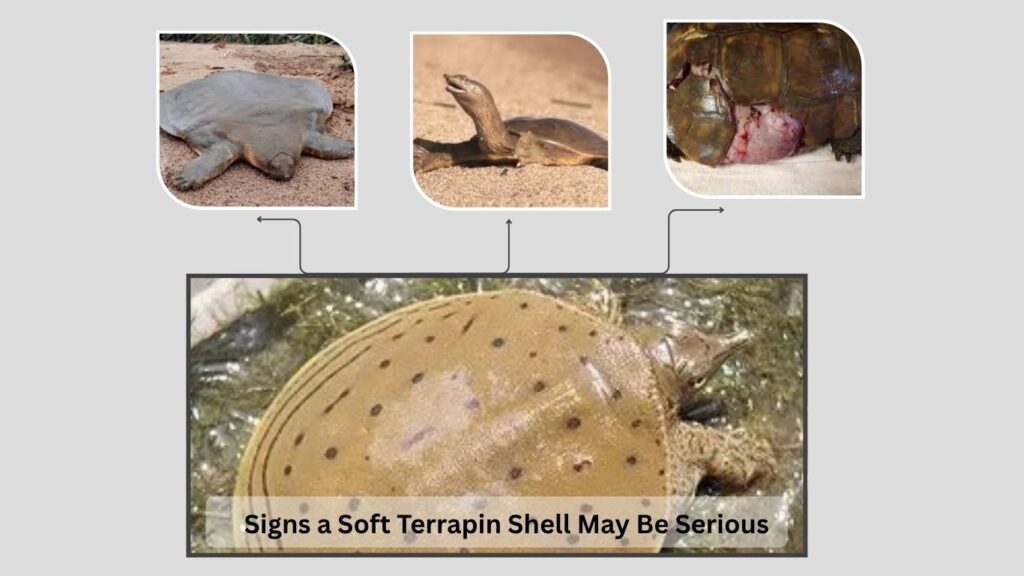
A shell problem should never be ignored, especially if the turtle is older than a young hatchling. Softness may be only one symptom of a wider health issue.
Watch for these warning signs:
- Shell feels rubbery or spongy
- Shell dents easily when gently touched
- Shell looks uneven or deformed
- Turtle is weak or inactive
- Poor appetite
- Swollen jaw or limbs
- Trouble swimming
- Tremors or shaking
- Bad smell from shell
- White, red, or soft patches
- Open wounds or discharge
If these signs appear, contact a reptile or exotic animal veterinarian. Shell and bone problems can become serious and may not improve without proper treatment.
Diamondback Terrapin Soft Shell: Is It Normal?
A diamondback terrapin hatchling may have a slightly more flexible shell than an adult, but a very soft, rubbery, damaged, or worsening shell is not normal. Adult diamondback terrapins should have firm, healthy shells.
Diamondback terrapins need specialized care. Unlike freshwater turtles, they are associated with brackish coastal environments. Incorrect water conditions, poor diet, lack of UVB, and weak calcium support can all affect shell development.
If a diamondback terrapin has a soft shell, review these areas immediately:
- Is the UVB bulb strong and not expired?
- Is the basking area warm and dry?
- Is the diet balanced?
- Is calcium available?
- Is water quality clean and stable?
- Is the enclosure appropriate for the species?
- Are there signs of shell rot or injury?
Because diamondback terrapins can have specific needs, a soft shell should be taken seriously.
Terrapin Shell Soft: What Should You Do First?
If your terrapin’s shell feels soft, do not press hard on it. A weak shell can be painful or fragile. Instead, observe carefully and check the care setup.
Start with these steps:
- Identify the species.
- Check whether the turtle is a hatchling or adult.
- Inspect the shell for smell, spots, wounds, or discharge.
- Review UVB lighting and basking temperature.
- Check diet and calcium sources.
- Improve water quality.
- Contact a reptile vet if the shell is clearly soft or the turtle acts sick.
Do not try to treat serious shell disease only with home remedies. Shell infections, metabolic bone disease, and injuries may need professional diagnosis and treatment.
How to Prevent Soft Shell Problems in Terrapins
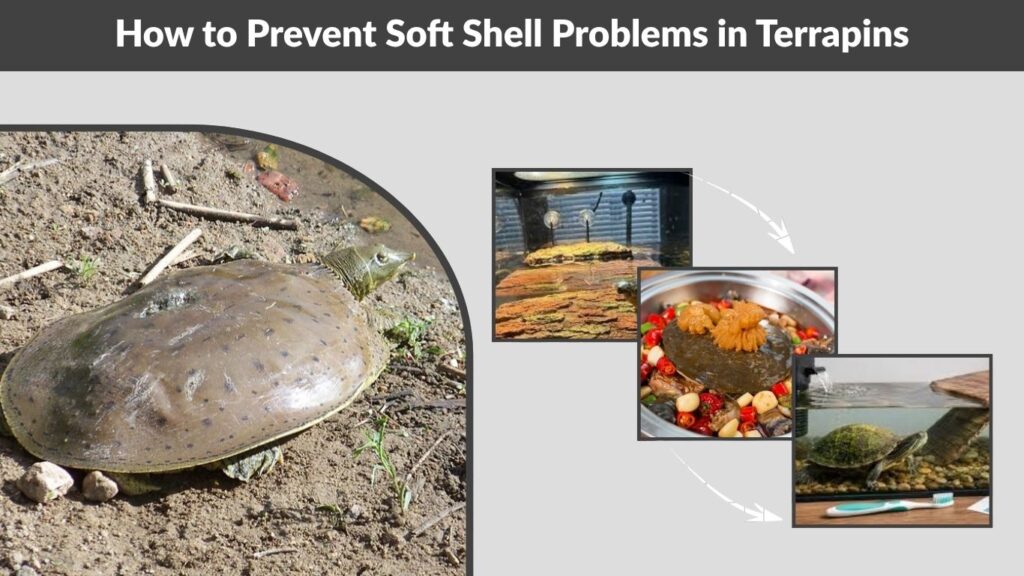
Good husbandry is the best prevention. Most shell problems develop slowly because something in the setup is missing or incorrect.
Provide UVB Lighting
UVB lighting is essential for many captive turtles and terrapins. Without proper UVB, they may struggle to use calcium correctly. Replace UVB bulbs on schedule because they can stop producing useful UVB even if they still look bright.
Feed a Balanced Diet
A healthy diet should match the species. Many aquatic turtles need quality pellets, leafy greens, calcium sources, and occasional protein foods. Diamondback terrapins and softshell turtles may have different needs, so avoid using one general diet for all species.
Maintain Clean Water
Dirty water contributes to shell and skin infections. Use strong filtration, remove uneaten food, and perform regular water changes. Good water quality is especially important for aquatic turtles that spend most of their time submerged.
Create a Proper Basking Area
A basking area allows the turtle to dry completely. This helps support shell health and reduces constant moisture on the shell. The basking area should be warm, stable, and easy to access.
Avoid Rough Tank Decor
Sharp rocks, abrasive platforms, and rough decorations can damage turtle shells and skin. This is especially important for softshell turtles because their shell covering is more delicate than a hard-shelled turtle’s scutes.
Can a Soft Terrapin Shell Heal?
A soft shell may improve if the cause is found early and corrected. Young turtles with mild husbandry-related problems may recover with proper UVB, diet, calcium, warmth, and veterinary guidance.
However, severe shell deformities may not fully reverse. Turtles grow slowly, and shell healing can take a long time. That is why early action matters.
If the turtle is weak, not eating, unable to swim properly, or has a shell that smells bad or has open wounds, treat it as urgent. Waiting too long can make recovery harder.
Common Myths About Soft Shell Terrapins
There is a lot of confusion around this topic. Here are some common myths to avoid:
- Myth: All terrapins with soft shells are softshell turtles.
Not true. Many hard-shelled turtles can develop abnormal shell softness from illness or poor care. - Myth: A soft shell always means the turtle is young.
Hatchlings can be slightly flexible, but a very soft or worsening shell is still a concern. - Myth: Sunlight through a window gives enough UVB.
Glass blocks much of the UVB turtles need, so proper reptile UVB lighting is usually required indoors. - Myth: Shell problems heal quickly.
Turtle shells grow and repair slowly. Recovery can take weeks, months, or longer. - Myth: A softshell turtle needs the same setup as a red-eared slider.
Softshell turtles often need more specialized care, including careful substrate and very clean water.
FAQs
What is a soft shell terrapin?
A soft shell terrapin may refer to a softshell turtle, which naturally has a flat, leathery shell. It may also describe a pet terrapin whose shell has become abnormally soft. The first can be normal; the second may be a health problem.
Why is my terrapin shell soft?
A soft terrapin shell can be caused by poor diet, lack of UVB light, low calcium, incorrect temperatures, dirty water, shell rot, or injury. A slightly flexible shell may be normal in very young hatchlings, but adult terrapins should usually have firm shells.
Is a softshell turtle the same as a terrapin?
Not exactly. A softshell turtle is a specific type of turtle with a naturally leathery shell. “Terrapin” is a common name used for different semi-aquatic turtles. Some people use the terms loosely, but care should always be based on the exact species.
Is a diamondback terrapin soft shell normal?
A hatchling diamondback terrapin may have slight shell flexibility, but a very soft, rubbery, damaged, or worsening shell is not normal. It may point to UVB, calcium, diet, water quality, or disease issues and should be checked by a reptile vet.
Can a terrapin recover from a soft shell?
A terrapin may recover if the problem is caught early and the cause is corrected. Proper UVB, calcium, diet, clean water, heat, and veterinary care can help. Severe deformity or infection may take a long time to heal and may not fully reverse.